UK Exhaust System Cost Estimator
Select your vehicle type and repair scenario to get a realistic price estimate based on current UK market rates.
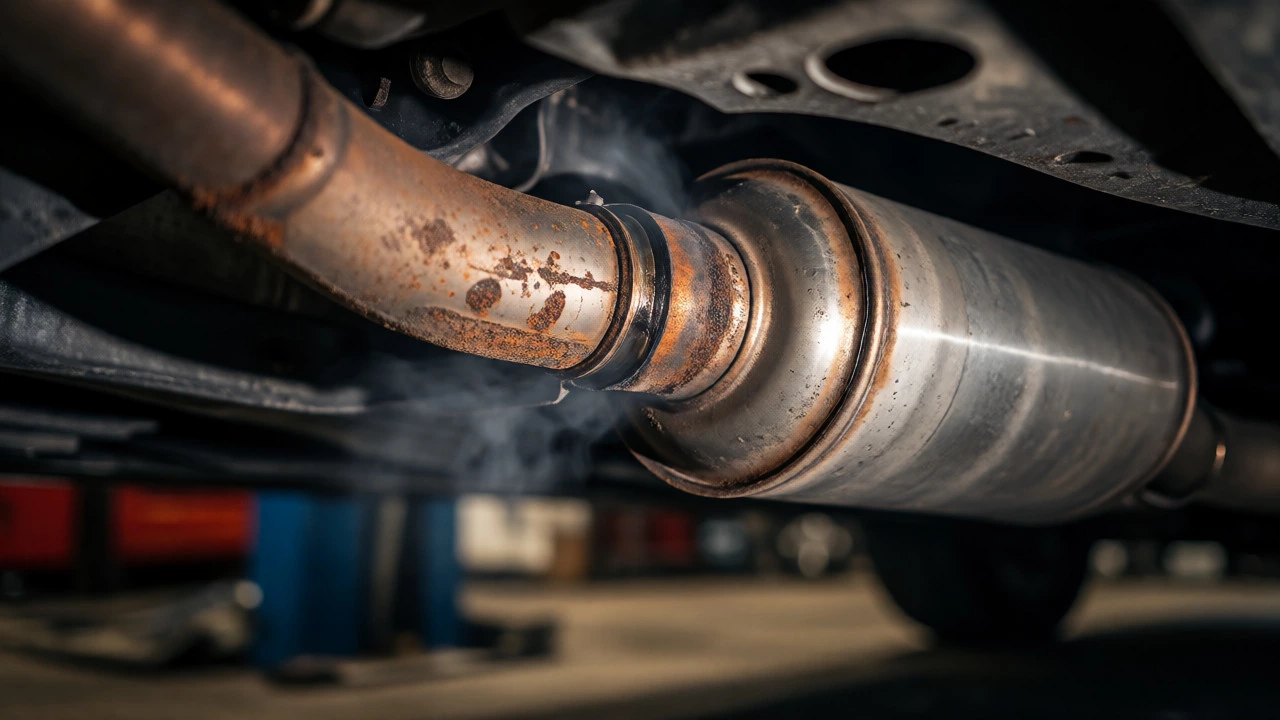
You’re driving along the M60 or sitting in traffic in Manchester city centre when you hear it-a deep, rumbling growl that definitely wasn’t there last week. Or maybe it’s a high-pitched hiss near the back bumper. Either way, your exhaust is waving a white flag. The first question popping into your head isn't just "is it broken?" but "how much is this going to sting my wallet?"
Here’s the blunt truth: there is no single price tag for an exhaust system. It depends entirely on what broke, what car you drive, and whether you’re buying factory-fresh parts or aftermarket alternatives. But don’t worry, we’ve crunched the numbers based on current UK market rates as of late 2026 to give you a realistic picture before you walk into a garage.
The Quick Answer: What You’ll Likely Pay
| Scenario | Parts Cost | Labour Cost | Total Estimate |
|---|---|---|---|
| Budget Aftermarket | £150 - £300 | £80 - £120 | £230 - £420 |
| Mid-Range / Brand Name | £350 - £600 | £100 - £150 | £450 - £750 |
| OEM (Dealer) Replacement | £600 - £1,200+ | £150 - £250 | £750 - £1,450+ |
| Cat Converter Only | £150 - £800 | £80 - £150 | £230 - £950 |
These figures assume a standard petrol hatchback like a Ford Fiesta or Vauxhall Corsa. If you’re driving a diesel SUV or a performance German saloon, add 30-50% to those totals. Diesel particulate filters (DPFs) are expensive beasts, and replacing the whole chain often involves them.
Breaking Down the Components: Where Does the Money Go?
An exhaust isn't just one big pipe. It’s a series of connected components, each with its own price point and failure rate. Understanding which part is failing helps you avoid paying for things you don’t need.
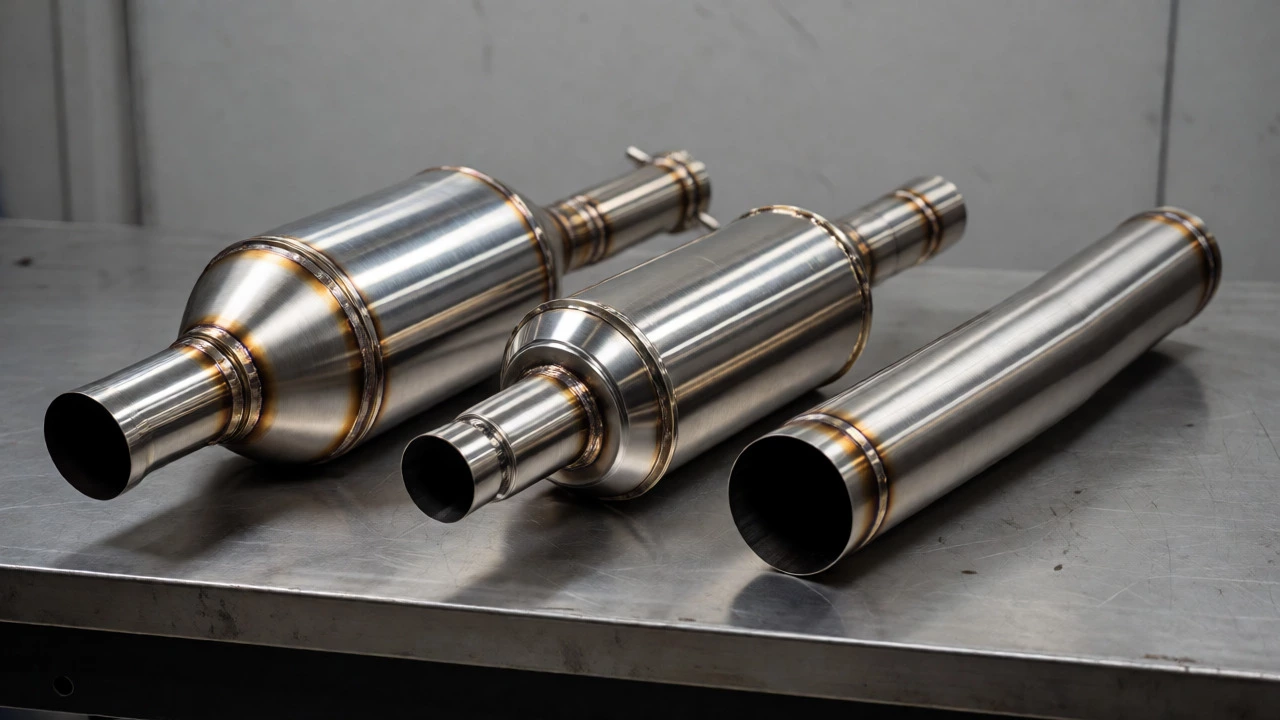
Muffler (Silencer) is usually the cheapest part to replace. It’s the big can at the back that keeps the noise down. If it’s rusted through or rattling, you might get away with a quick weld or a cheap swap. Aftermarket units start around £40-£80, but fitting costs often outweigh the part itself if you aren’t handy with a jack and wrench.
The real budget killer is the catalytic converter. This component cleans up harmful gases before they leave the tailpipe. It contains precious metals like platinum, palladium, and rhodium. Because these metals fluctuate in value, so does the price of the converter. A basic aftermarket unit might cost £150, but an OEM one for a modern turbocharged engine can easily hit £600+. If your MOT failed due to emissions, this is likely the culprit.
Then there’s the resonator, located between the catalytic converter and the muffler. Its job is to cancel out specific sound frequencies. It’s less critical for passing an MOT than the cat converter, but if it’s holed, it sounds awful. Replacements are generally affordable, ranging from £50 to £150 depending on the vehicle.
Aftermarket vs. OEM: Is the Price Difference Worth It?
This is the biggest decision you’ll face. OEM (Original Equipment Manufacturer) parts come from the same supplier that built your car’s original exhaust. They fit perfectly, match the exact acoustic profile, and usually carry a longer warranty. But you pay for that precision. For a Volkswagen Golf, an OEM full exhaust line could cost £800 in parts alone.
Aftermarket parts are made by third-party manufacturers. Brands like Walker, Bosal, or generic unbranded imports fall here. The quality varies wildly. A good mid-range aftermarket exhaust performs 95% as well as OEM for 50% of the cost. However, cheap imports might be thinner steel that rusts out in two winters instead of five. If you plan to keep the car for another decade, spend the extra on branded aftermarket or OEM. If you’re selling it next year, go for the cheapest functional option.
Labour Costs: Why Fitting Isn’t Just Bolting On
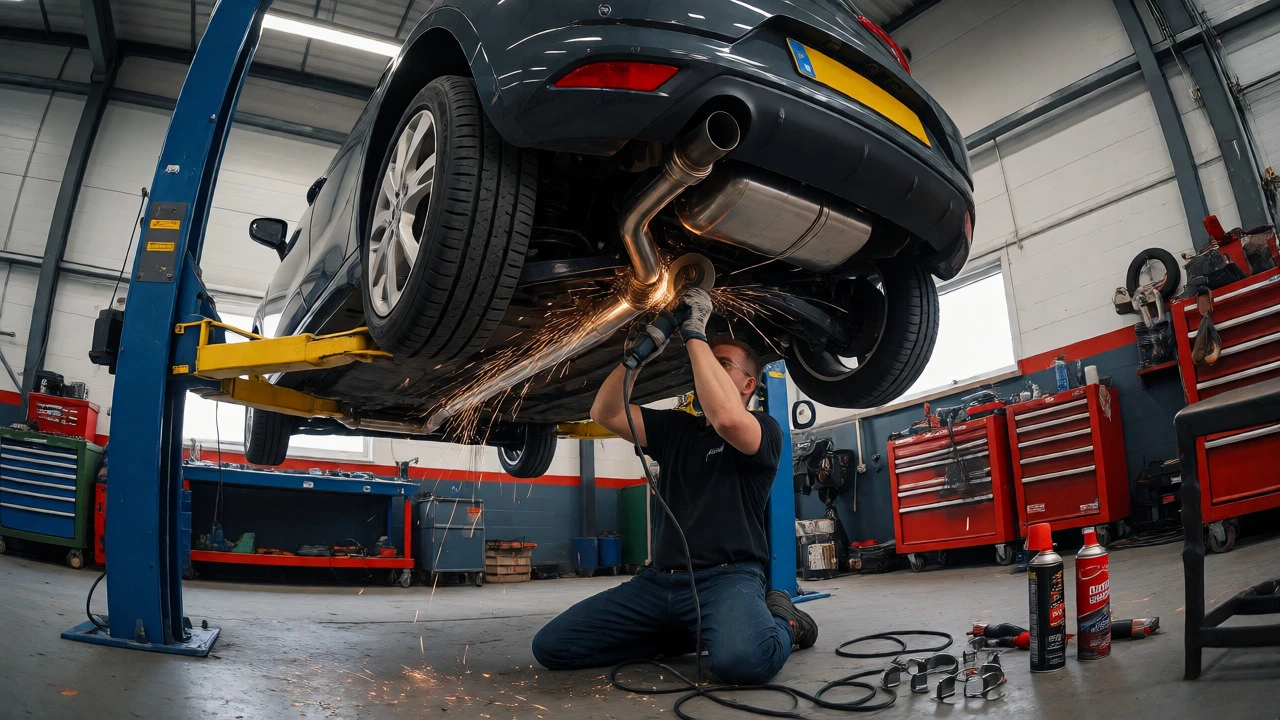
Exhaust work looks simple-cut off old pipes, clamp on new ones-but it’s rarely straightforward. Rust seizes bolts. Hangers rot. Sometimes the flange gaskets are fused solid. A mechanic might quote 1 hour of labour (£60-£90), but if everything is seized, that turns into 2 hours (£120-£180).
Also, consider welding. Many modern cars use welded joints rather than clamps. If your exhaust needs cutting and re-welding, labour costs jump significantly. A mobile fitter might charge £100-£150 for a simple clamp-on swap, while a workshop doing a full welded reconstruction could charge £200+. Always ask if the quote includes removal of the old system. Some garages charge extra for disposal.
Diesel vs. Petrol: The DPF Factor
If you drive a diesel, your exhaust system is more complex because of the Diesel Particulate Filter (DPF). This filter traps soot particles. When it gets clogged, you have two options: clean it (approx. £150-£250) or replace it (£400-£1,000+). Cleaning works if the filter is intact; replacement is necessary if the ceramic honeycomb has melted or cracked.
Replacing a DPF often triggers other issues. If the DPF failed because of a faulty injector or turbo seal, fixing just the filter won’t solve the root cause. Mechanics will inspect the engine management lights and error codes. Ignoring this leads to a new DPF blocking up again within months. Budget for diagnostics (£50-£80) if your diesel exhaust warning light is on.
DIY vs. Professional Installation: Can You Save Money?
Can you do it yourself? Yes, if you have a hydraulic jack, axle stands, angle grinder, penetrating oil (like PB Blaster), and new clamps/gaskets. DIY saves you £100-£200 in labour. But it comes with risks:
- Rust Seizure: If bolts snap, you’re stuck calling a pro anyway, and they’ll charge more for the mess.
- Alignment: An exhaust hanging too low scrapes speed bumps. Too tight against the heat shield causes rattles.
- Emissions Compliance: If you install a non-compliant cat converter, you’ll fail your MOT later. In the UK, you must use approved converters.
For most people, paying a professional is worth the peace of mind. They guarantee the work and handle the legal compliance paperwork.
Hidden Costs to Watch Out For
The quoted price for the exhaust rarely tells the whole story. Here are common add-ons:
- Heat Shields: These metal plates protect the floor from heat. If they’re rusted, they might need replacing (£20-£50 each).
- Flexi-Pipes: The braided section connecting the manifold to the rest of the system absorbs engine vibration. If this tears, it’s a leak. Replacing it is cheap (£30-£60), but often done alongside a full system change.
- Sensors: Oxygen sensors screw into the exhaust. If threads are stripped during removal, you might need new sensors (£40-£100 each).
- VAT: Remember that quotes are often ex-VAT. Add 20% if not included.
How to Get the Best Deal
Don’t just accept the first quote. Follow these steps:
- Get Your Reg Number Ready: Any reputable shop can look up the exact fitment using your registration. Avoid shops that guess.
- Ask for Options: Request quotes for both aftermarket and OEM. See the difference.
- Check for Clamps vs. Welds: Ask if they intend to cut/weld or reuse existing clamps. Cutting/welding is more durable but pricier.
- MOT Guarantee: Ensure the installer guarantees the work against MOT failure for at least 12 months.
In Manchester and across the UK, independent specialists often beat main dealers by 30-40%. Look for reviews mentioning "fair pricing" and "no upselling." Sites like Trustpilot or local Facebook groups are goldmines for honest recommendations.
How long does a full exhaust system last?
Typically 5-10 years, depending on climate and driving habits. Short trips prevent the exhaust from getting hot enough to evaporate condensation, leading to internal rust. Coastal areas with salt air corrode systems faster.
Will a loud exhaust fail my MOT?
Yes, if it exceeds the manufacturer's specified noise level or has leaks before the silencer. The MOT tester uses a decibel meter. A modified 'sports' exhaust without a proper silencer often fails.
Is it cheaper to patch a hole than replace the whole system?
If the damage is isolated to one small section (like a cracked flexi-pipe), yes. Patch kits cost £10-£20. However, if multiple sections are rusted, replacing the whole system is more cost-effective long-term to avoid repeated repairs.
Do I need to replace the catalytic converter every time?
No. Catalytic converters rarely wear out mechanically. They only need replacing if they are physically damaged, stolen, or fail emissions tests. Keep the old one if it's intact; it retains value even if the rest of the exhaust is replaced.
What causes exhaust rattles?
Broken internal baffles in the muffler, loose heat shields, or detached rubber hangers allowing the pipe to touch the underbody. Rattles are annoying but not always urgent unless accompanied by smoke or power loss.