Car Radiator Lifespan & Risk Estimator
Enter your vehicle details to estimate if your radiator is nearing the end of its typical service life or requires immediate attention.
Estimated Status:
Calculating...--
Analysis Details
Recommended Actions:
You’re driving down the highway, the engine temperature gauge starts creeping up, and a sinking feeling hits your stomach. Is it time for a new car radiator? For most drivers, this isn’t just a hypothetical panic moment-it’s a real question that determines whether you spend $300 on a repair or face a $3,000 engine rebuild. The short answer to "how many years do radiators last" is usually between 8 and 10 years, but that number is dangerously misleading if taken out of context.
A radiator doesn’t have an expiration date like milk. It fails based on stress, chemistry, and neglect. Some fail in five years due to poor maintenance; others survive fifteen years on a highway commuter car. Understanding what actually kills these components helps you predict failure before steam starts pouring from under your hood. Let’s break down the real factors that determine your radiator’s life expectancy and exactly when you need to replace it.
The Real Lifespan: Years vs. Miles
Manufacturers rarely publish a specific mileage limit for radiators because they are designed to last the life of the vehicle under ideal conditions. However, in the real world, the average lifespan of a modern automotive radiator is typically 8 to 10 years or roughly 100,000 to 150,000 miles. Why the wide gap? Because heat cycles and vibration degrade materials over time, regardless of how far you drive.
Consider two identical sedans. One spends its life commuting 10 miles each way on smooth highways. The other navigates stop-and-go city traffic, idles in summer heat, and occasionally deals with minor front-end collisions. The city car’s radiator will likely fail closer to the 8-year mark. The highway car might push past 12 years. The critical variable isn't just distance; it's thermal cycling-the repeated expansion and contraction of metal and plastic as the engine heats up and cools down.
| Usage Scenario | Typical Lifespan (Years) | Typical Mileage Limit | Primary Stress Factor |
|---|---|---|---|
| Highway Commuter | 10-15+ | 150,000+ | Vibration & Age |
| City Stop-and-Go | 8-10 | 100,000-120,000 | Thermal Cycling |
| Towing/Hauling | 6-9 | 80,000-100,000 | Extreme Heat Load |
| Poor Maintenance | 5-7 | Variable | Corrosion/Clogging |
Why Radiators Actually Fail
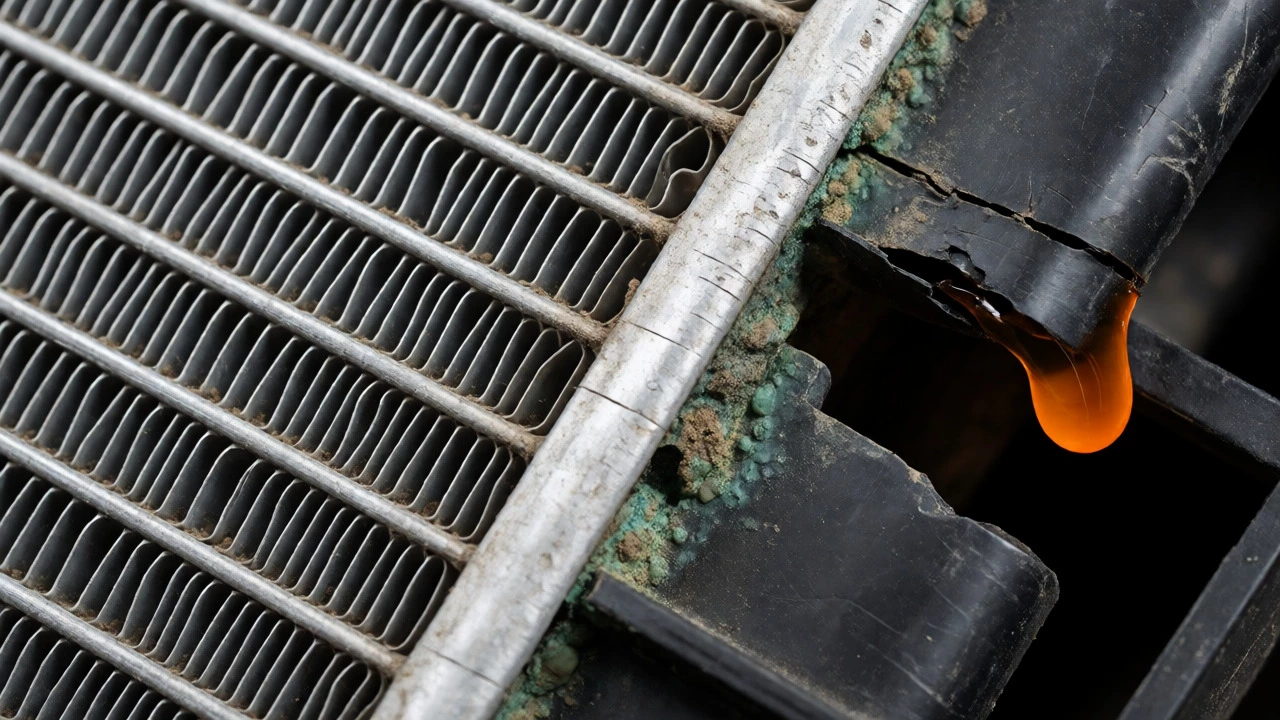
It’s rarely a single catastrophic event. Most radiators die a slow death caused by internal corrosion or external physical damage. The core component here is the coolant. Modern engines use complex chemical coolants designed to prevent rust inside the aluminum core and copper tubes. Over time, these additives deplete. When the protective layer breaks down, electrolysis occurs. This process essentially turns your cooling system into a weak battery, eating away at the metal fins and tubes from the inside out.
External factors play a huge role too. Road debris-rocks, gravel, and even bugs-hits the front of the radiator constantly. Small bends in the fins reduce airflow efficiency. If you’ve ever seen a radiator with crushed fins, you know it looks ugly, but does it matter? Yes. Crushed fins restrict air passage, forcing the fan to work harder and raising overall engine temperatures. This extra heat accelerates the degradation of the plastic tanks often found on modern radiators.
Speaking of plastic tanks, this is a major shift from older vehicles. Older cars used all-metal radiators which could be soldered and repaired. Today, most plastic end tanks are bonded to aluminum cores. These plastic sections become brittle with age and UV exposure. They don’t crack immediately; they develop micro-fissures that only open up when the system is pressurized and hot.
Signs Your Radiator Is Dying
You won’t always get a check-engine light before a radiator blows. In fact, by the time the light comes on, you might already be losing coolant. Watch for these subtle indicators:
- Discolored Coolant: Open the reservoir cap (when cold). If the fluid looks rusty, muddy, or has oil slicks floating on top, internal corrosion is happening. Clean coolant should be bright green, orange, pink, or blue depending on the type.
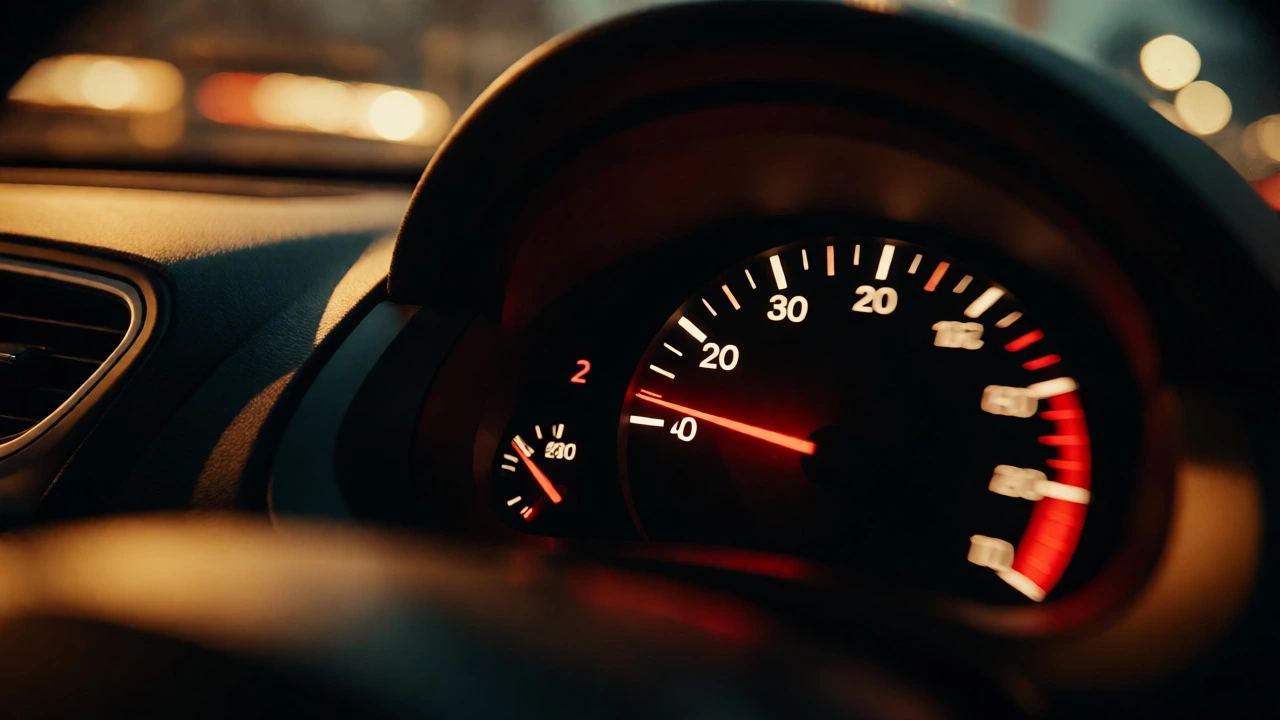
- Temperature Fluctuations: If your gauge bounces around instead of staying steady, you might have a partially clogged radiator or a failing thermostat working overtime to compensate.
- Damp Patches: Look behind the grille and under the car after parking. Green or orange stains on the ground or dampness on the radiator fins indicate a slow leak.
- Bulging Tanks: Inspect the plastic side tanks. If they look swollen or warped, the structural integrity is compromised. A burst tank means instant loss of pressure and rapid overheating.
One tricky sign is "cold spots." Touch the radiator hoses while the engine is running and warm. Both should feel hot. If one hose is hot and the other is lukewarm, flow is restricted. This usually points to a clog within the radiator core itself, meaning the internal passages are blocked by sludge or corrosion buildup.
Maintenance Habits That Extend Life
If you want your radiator to hit the 15-year mark, treat the cooling system like a living organism. It needs clean blood (coolant) and clear arteries (hoses). Here is the routine that works:
- Flush Every 3-5 Years: Don’t just top off the reservoir. Old coolant loses its anti-corrosion properties. A full flush removes sediment and replenishes inhibitors. Check your owner’s manual; some extended-life coolants last 5 years, others only 2.
- Inspect Hoses Annually: Squeeze the upper and lower radiator hoses. They should feel firm but resilient. If they feel spongy, hard, or cracked, replace them. A blown hose can cause immediate overheating and damage the radiator pump seals.
- Keep the Front Clean: Use a garden hose (low pressure) to spray dirt and bugs off the radiator fins from the engine bay side toward the grille. Never use a pressure washer directly on the fins; you’ll bend them.
- Fix Leaks Immediately: A dripping water pump or weeping hose clamp lets air into the system. Air pockets cause localized hot spots that warp aluminum cores faster than normal operation.
Using the wrong coolant is another silent killer. Mixing incompatible coolants (like green ethylene glycol with orange OAT) can create a gel-like sludge that clogs the narrow tubes of the radiator instantly. Always stick to the specification listed in your owner’s manual or the coolant container label.
Repair vs. Replace: Making the Call
When failure happens, can you fix it or must you buy a new unit? Ten years ago, repairing was common. Today, replacement is almost always the smarter financial move. Why? Labor costs. To repair a plastic tank, you often have to remove the entire assembly, disassemble it, bond new parts, and reassemble it. That labor often exceeds the cost of a new aftermarket radiator.
New radiators are mass-produced and relatively affordable. An OEM (Original Equipment Manufacturer) part might cost $150-$400, while high-quality aftermarket options range from $80-$200. Adding $150-$300 for labor brings the total to $250-$700. Compare that to the risk of an overheated engine causing a warped head gasket-a repair that can easily top $1,500-and replacement becomes a no-brainer insurance policy.
Exceptions exist. If you drive a classic car with an all-copper/brass radiator, repair shops can still solder leaks effectively. But for 95% of modern daily drivers, swap it out.
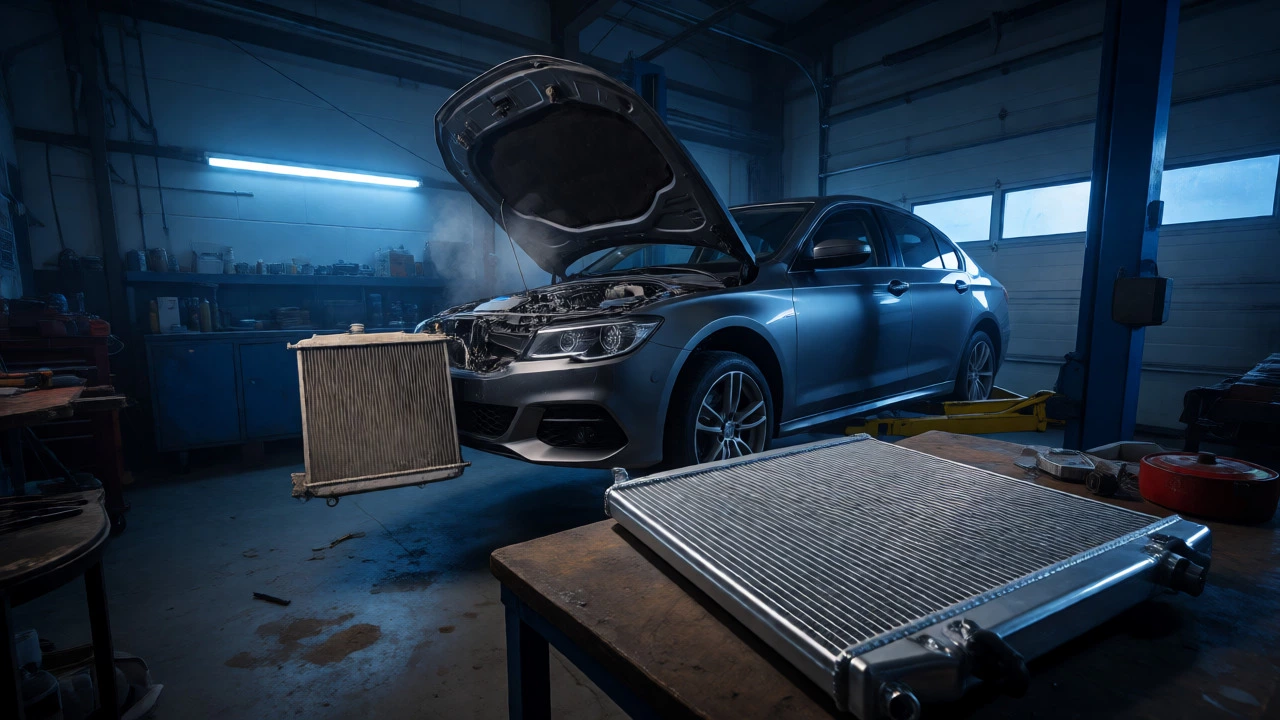
What Happens If You Ignore It?
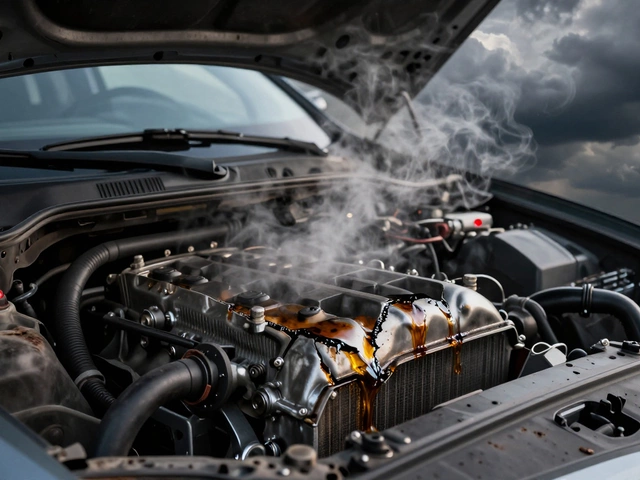
Ignoring a failing radiator doesn’t just mean higher AC bills. It risks the heart of your car. When a radiator fails, the engine loses its ability to dissipate heat. Within minutes, cylinder heads can warp. Once a head warps, the seal between the block and head breaks. Combustion gases leak into the coolant, or coolant leaks into the cylinders. This is known as a blown head gasket.
Replacing a head gasket is labor-intensive. Often, mechanics recommend replacing the entire engine if the block is also damaged. So, spending $400 now on a radiator prevents spending $4,000 later on an engine. It’s not fear-mongering; it’s basic mechanical logic. Heat is the enemy of every moving part in your engine, and the radiator is the primary shield against it.
Frequently Asked Questions
Can I drive with a leaking radiator?
Only for a very short distance to a safe location or mechanic shop. Driving with a significant leak allows air into the system, leading to rapid overheating. If the leak is a tiny drip, you might make it home, but monitor the temperature gauge closely. If it climbs above halfway, pull over immediately.
Do aluminum radiators last longer than copper ones?
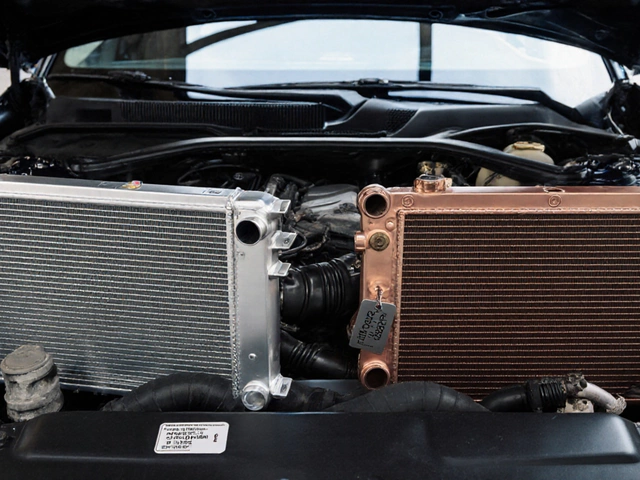
Copper radiators are more durable and easier to repair, but they are heavier and more expensive. Aluminum radiators, standard since the 1980s, are lighter and cheaper but prone to corrosion if coolant maintenance is ignored. With proper care, both types can last 10+ years, but aluminum failures are often sudden due to plastic tank cracking.
How much does it cost to replace a car radiator?
As of 2026, expect to pay between $300 and $800 total. Parts range from $100 to $400 depending on the vehicle make and model. Labor typically takes 1.5 to 3 hours. Luxury vehicles or those requiring significant disassembly (like removing headlights or bumper covers) will be on the higher end.
Does the climate affect radiator lifespan?
Yes. Hot climates increase thermal stress, accelerating the breakdown of coolant and plastic components. Cold climates pose different risks, such as freeze damage if the coolant mixture is incorrect. Salt air in coastal areas can also accelerate external corrosion on the radiator fins and brackets.
Should I replace the radiator if my heater stops working?
Not necessarily. A lack of heat usually indicates a clogged heater core or low coolant levels, not a failed main radiator. However, if the heater core is clogged with debris, the main radiator might be contaminated too. It’s worth flushing the entire system to see if heat returns before condemning the radiator.
Final Verdict
Your car’s radiator is a silent guardian. It doesn’t ask for attention until it screams through rising temperature gauges. While 8 to 10 years is the statistical average, your driving habits and maintenance schedule dictate the reality. Treat your coolant with respect, keep the fins clean, and inspect the hoses. If you notice any discoloration or bulging, act fast. Replacing a radiator is a manageable expense; replacing an engine is a financial headache. Keep your eyes on the gauge, and your radiator will keep you cool for the long haul.