Radiator Failure Risk Calculator
Radiator Status
Results
Time until engine overheats
Cost Comparison
Radiator replacement
$300-$700
Engine damage
$1,200+
What This Means
Driving with a bad radiator isn't just risky-it's a one-way ticket to a costly engine repair. You might think you can limp home if the coolant light flickers, or that a small leak won’t matter. But a failing radiator doesn’t just cause inconvenience. It can destroy your engine in under 20 minutes. Let’s cut through the myths and show you exactly what happens when you keep driving with a bad radiator.
What a radiator actually does
Your engine runs hot-real hot. Under normal operation, it hits temperatures between 195°F and 220°F. That’s hotter than a pizza oven. The radiator’s job is simple: pull that heat out of the engine coolant and dump it into the air. Without it, the coolant turns into steam, pressure builds, and your engine starts to cook from the inside.
A radiator isn’t just a metal box. It’s a heat exchange system with thin tubes, fins, and a network of hoses. When one part fails-whether it’s a cracked tank, a clogged core, or a leaking seal-the whole system breaks down. And once coolant starts escaping, your engine loses its only defense against overheating.
What happens when you drive with a bad radiator
At first, you might notice nothing. Maybe the temperature gauge creeps up a little. Or the heater blows cold air. But those are early warnings. Here’s what follows:
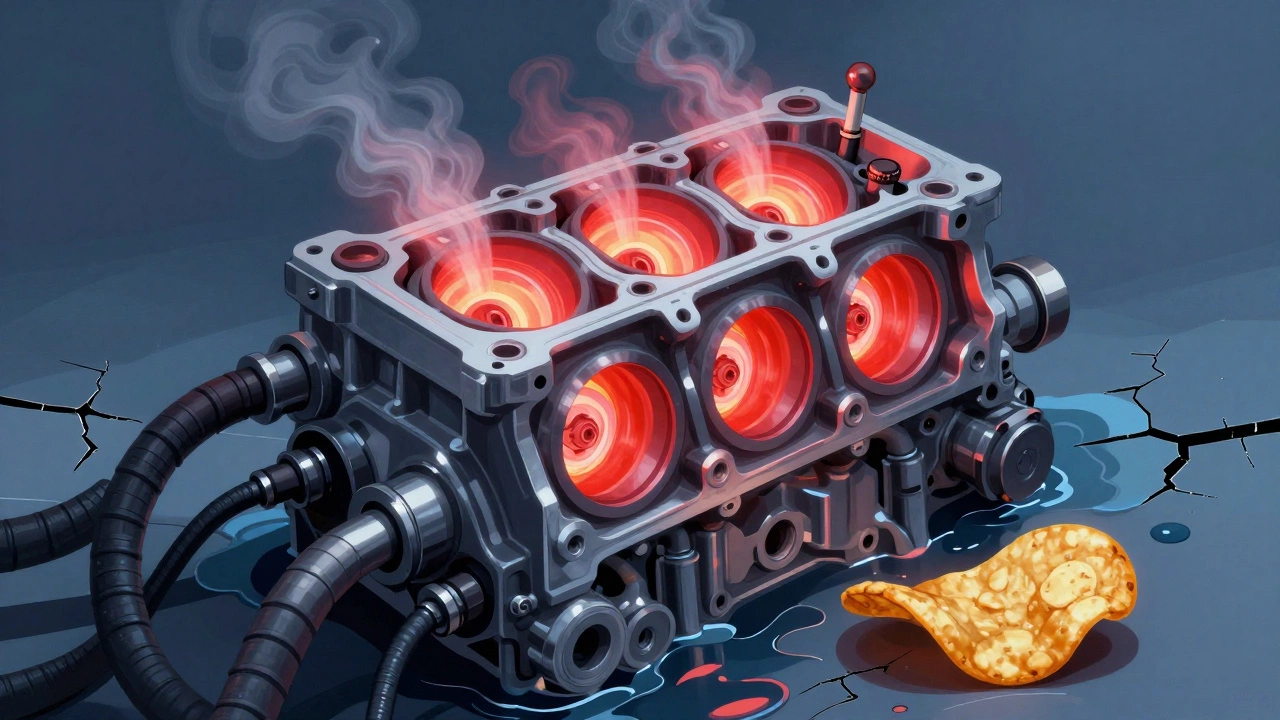
- Overheating within 10-15 minutes: Modern engines are designed to run hot, but not scorching. Once coolant levels drop, the engine temperature can spike past 260°F. That’s the point where aluminum cylinder heads warp.
- Head gasket failure: When metal parts expand unevenly from heat, the head gasket-the seal between the engine block and cylinder head-blows. Replacing it costs $1,200 to $2,500. Often, it’s not worth fixing.
- Warped or cracked cylinder heads: Aluminum heads can warp like a potato chip. Once that happens, the engine loses compression. You’ll hear knocking, lose power, and burn oil. Repair? Usually means a full engine rebuild.
- Engine seizure: If you ignore the warning signs, the pistons can expand so much they lock inside the cylinders. The engine stops dead. You won’t hear it coming. One minute you’re driving, the next, your car won’t turn over. Total loss.
Real-world example: A 2018 Honda Civic owner drove 30 miles with a leaking radiator, thinking a top-off would help. By the time he pulled over, the engine had overheated three times. The head gasket blew. The cylinder head cracked. Repair cost: $4,200. A new radiator? $180.
Signs your radiator is failing
You don’t need a mechanic to spot a bad radiator. Here’s what to look for:
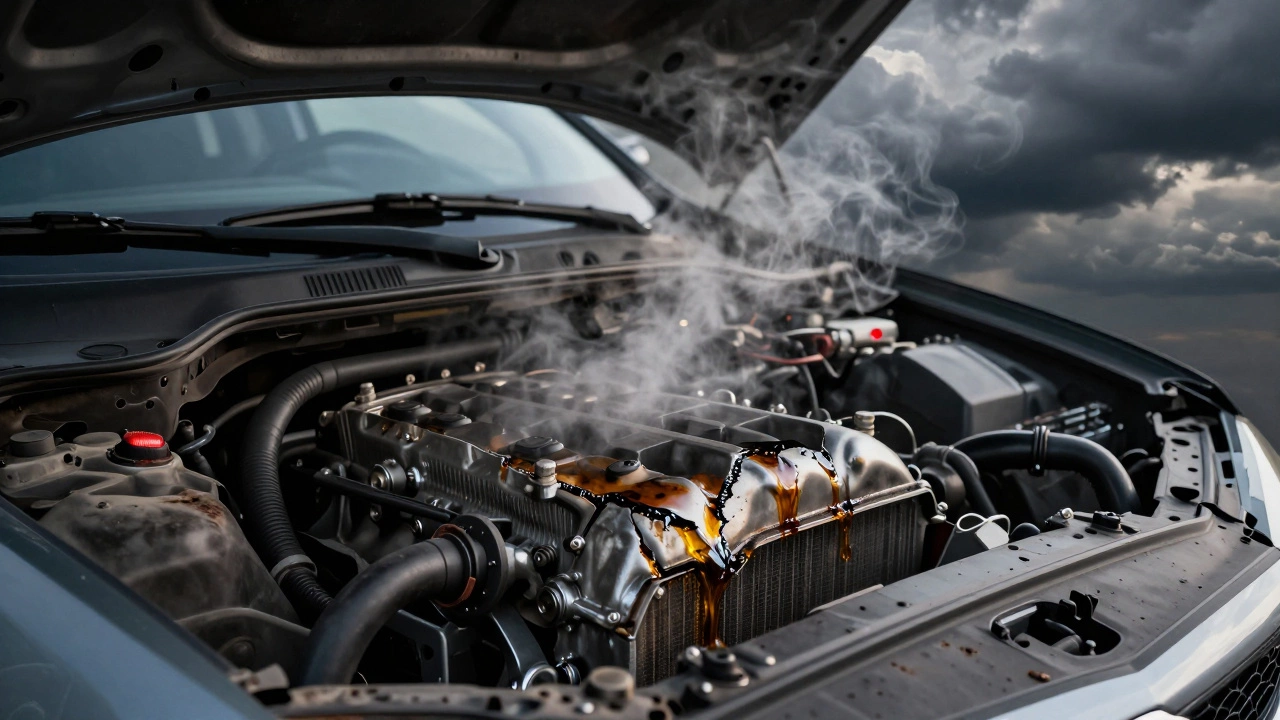
- Steam or smoke from under the hood: White, sweet-smelling smoke? That’s coolant vaporizing. Stop immediately.
- Coolant puddles under the car: Bright green, orange, or pink fluid? It’s not oil. It’s coolant. Even a small puddle means a leak.
- Temperature gauge in the red: Don’t wait for the warning light. If the needle hits 220°F or higher, pull over.
- Unusual noises: Gurgling or hissing from the engine bay? Air bubbles in the coolant mean the system isn’t sealed.
- Low coolant level: If you’re topping off more than once a month, something’s leaking.
Check your coolant reservoir every time you fill up. It’s the easiest diagnostic step you can do. If the level is below the cold line, don’t wait. Get it checked.
Can you drive a short distance?
Some people say, “I just need to get to the mechanic 5 miles away.” That’s a dangerous gamble. Even 2 miles can be too far. Here’s why:
- Engines overheat faster than you think: A 2023 Consumer Reports test showed that a car with a 10% coolant loss overheated in under 8 minutes at highway speeds.
- Modern engines are more sensitive: Newer cars use tighter tolerances. Even a 10°F spike can cause permanent damage.
- There’s no safety buffer: Unlike older cars, today’s engines don’t have extra cooling capacity. Once the coolant is gone, there’s no fallback.
If your radiator is bad, do not drive. Call a tow truck. It’s cheaper than replacing an engine.
What to do instead
If you suspect radiator trouble:
- Stop driving as soon as you see any warning signs.
- Let the engine cool for at least 30 minutes. Never open the radiator cap while hot-steam can burn you.
- Check coolant level when cool. If low, top off with the correct type (check your owner’s manual). Use distilled water only if you’re stranded and have no coolant.
- Get it inspected by a mechanic. A pressure test can find leaks you can’t see.
- Replace it if it’s cracked, corroded, or clogged. Don’t try to patch it. A $200 radiator is cheaper than a $4,000 engine.
Pro tip: Replace your radiator every 8-10 years, even if it’s not leaking. Corrosion builds up inside over time, reducing cooling efficiency. Preventive replacement saves money long-term.
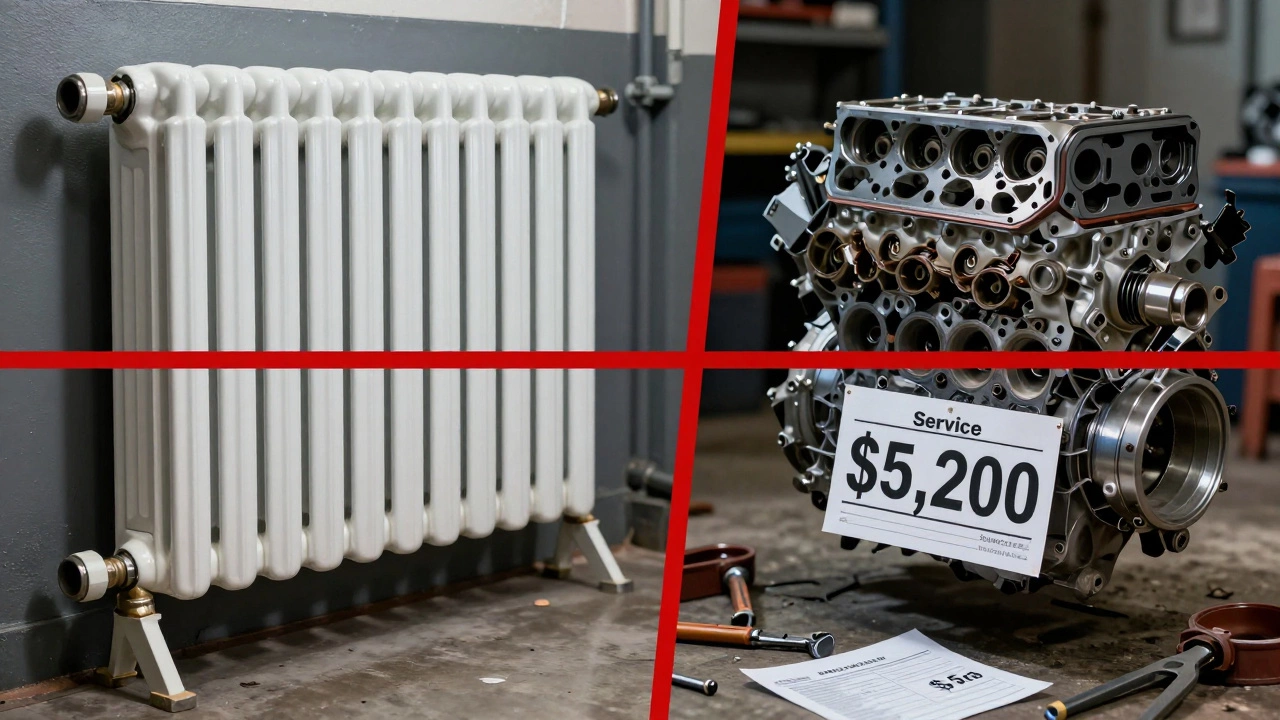
What a bad radiator costs vs. what it breaks
| Item | Cost Range |
|---|---|
| New radiator (labor included) | $300-$700 |
| Head gasket replacement | $1,200-$2,500 |
| Cylinder head repair or replacement | $2,000-$4,000 |
| Engine rebuild or replacement | $3,500-$8,000+ |
The math is clear. Fixing the radiator is a small, smart investment. Ignoring it? That’s gambling with your entire engine.
Myth vs. Reality
- Myth: “I can drive if I keep adding coolant.”
Reality: You’re just delaying the inevitable. The leak won’t seal itself. The damage keeps getting worse. - Myth: “A little rust on the tank is normal.”
Reality: Rust means corrosion is eating through the metal. It’s a ticking clock. - Myth: “Electric cars don’t need radiators.”
Reality: EVs have coolant systems too-for the battery and motor. They still overheat if the radiator fails.
Final word
There’s no safe way to drive with a bad radiator. It’s not a matter of how far you go. It’s a matter of when the engine gives out. And when it does, you won’t get a second chance. A $250 radiator repair now saves you from a $5,000 tow bill and a rental car for weeks. Don’t risk it. If your radiator is acting up, don’t drive. Get it fixed. Your wallet-and your engine-will thank you.
Can I drive my car if the radiator is leaking a little?
No. Even a slow leak will drain your coolant over time. A car can lose enough coolant to overheat in under 15 minutes of driving. The leak won’t fix itself, and the damage to the engine is cumulative. Replace the radiator before it fails completely.
What happens if I ignore the overheating warning light?
Ignoring the warning light can lead to catastrophic engine damage within minutes. The engine may warp, the head gasket can blow, or the pistons can seize. Once that happens, repairs cost thousands. The warning light is your last chance to stop damage before it’s irreversible.
Can I use water instead of coolant temporarily?
Yes, but only as a last resort. Water doesn’t have the corrosion inhibitors or high boiling point of proper coolant. It can cause rust inside the radiator and boil over faster under load. Use it to get to a shop, then replace it with the right fluid as soon as possible.
How long does a radiator usually last?
Most radiators last 8 to 12 years, depending on driving conditions and maintenance. If you live in a cold climate with road salt, or drive in stop-and-go traffic often, expect them to wear out sooner. Corrosion and clogs are the main causes of failure.
Is it cheaper to repair or replace a bad radiator?
Repairing a radiator rarely works. Patching leaks or soldering cracks is temporary and unreliable. Radiators are designed as sealed systems. Once they’re damaged, replacement is the only safe, long-term solution. A new radiator costs less than 10% of what an engine replacement would.