Fuel Pump Replacement Time Calculator
Find out how long it takes to replace your fuel pump based on your vehicle and experience level.
Estimated Time:
Based on vehicle type, experience level, and complexity
Replacing a fuel pump isn’t like changing a lightbulb. It’s messy, it’s tricky, and if you get it wrong, your car won’t start-or worse, it could leave you stranded on the motorway. So how long does it actually take? The answer isn’t one-size-fits-all. It depends on your car, your tools, your experience, and whether the fuel tank has to come out. For most people, it’s between 2 to 5 hours. But that’s just the starting point.
Why Fuel Pump Replacement Takes So Long
Fuel pumps aren’t mounted on the outside of the engine like an alternator. They’re usually tucked inside the fuel tank, hidden behind a cover plate under the rear seat or in the trunk. That means you can’t just pop the hood and swap it out. You have to drain fuel, disconnect lines, remove the tank, and then access the pump assembly. Even on cars with an access panel, you’re still dealing with fuel vapors, electrical connectors, and a heavy, potentially dangerous tank full of gasoline.
On older cars like a 2005 Ford Focus, you might find a simple access panel under the back seat. On newer models like a 2020 Volkswagen Golf, the pump is often integrated into the fuel sender unit, and the tank has to be lowered. Some SUVs and trucks, like a Toyota Land Cruiser or Ford F-150, require the tank to be fully removed-which adds hours to the job.
DIY vs Professional: Time Breakdown
If you’re doing it yourself, expect to spend more time than a mechanic. Why? You’re learning as you go. You might spend 30 minutes figuring out where the access panel is. Another 20 minutes struggling with stuck fuel lines. Then you realize you didn’t buy the right gasket, so you have to go back to the parts store.
Here’s what typical timing looks like:
- DIY (first time): 4 to 8 hours
- DIY (experienced): 2 to 4 hours
- Professional mechanic: 2 to 3 hours
- Complex vehicles (SUVs, trucks, rear-mounted tanks): 3 to 5 hours
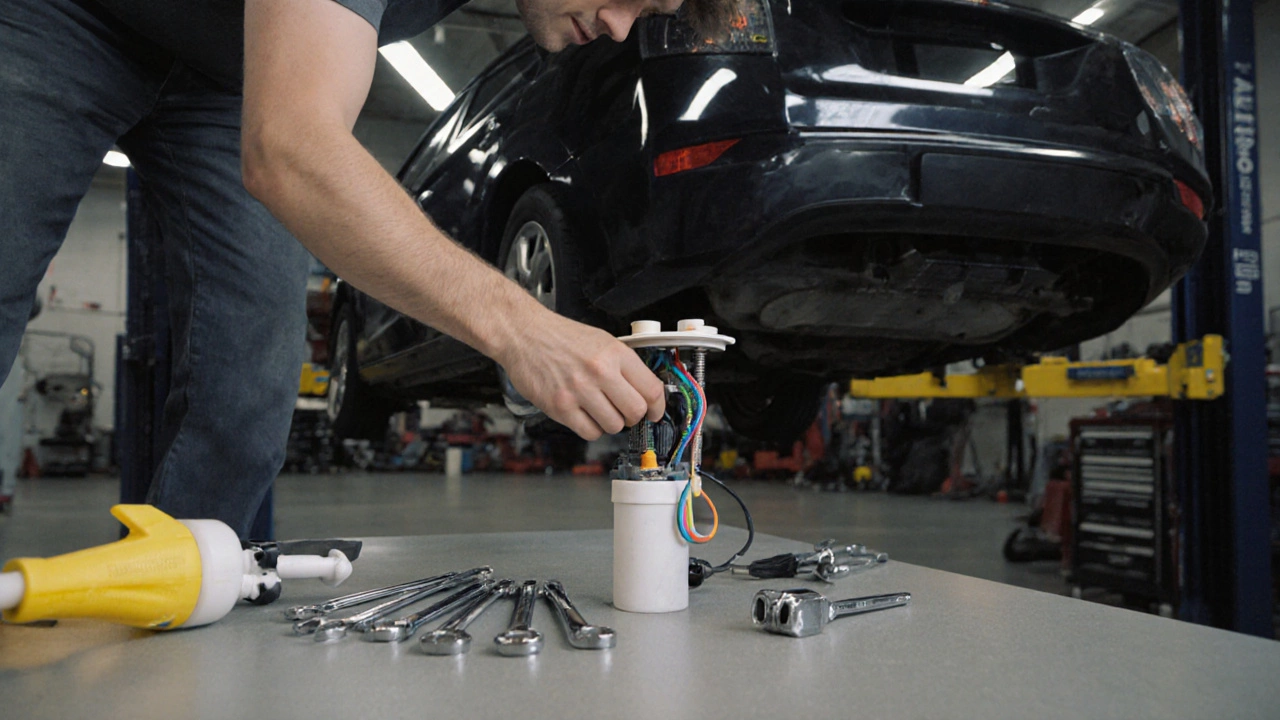
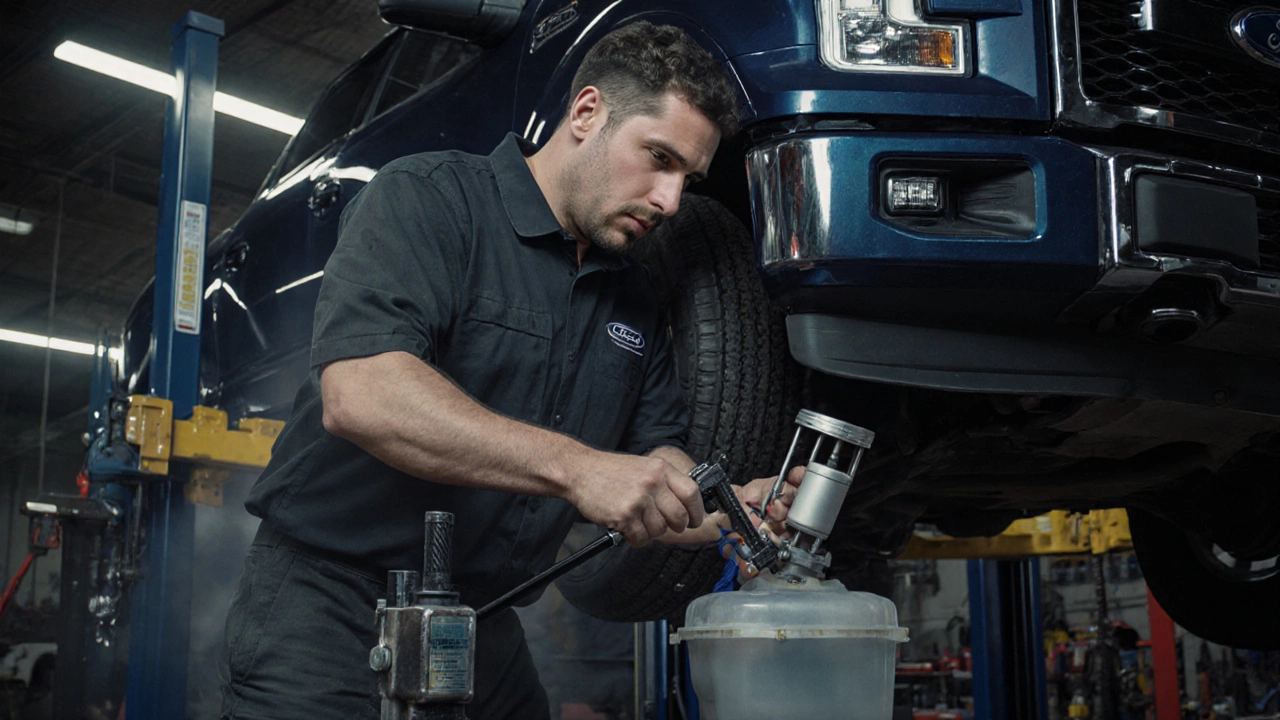
Professional shops work faster because they’ve done this dozens of times. They have specialized tools-like fuel line disconnect kits, tank support jacks, and torque wrenches for reassembly. They also know which bolts are prone to stripping and which fuel lines are notorious for leaking.
What Makes It Take Longer?
Not all fuel pump replacements are created equal. Here are the big time-suckers:
- Stuck fuel lines: Rubber hoses harden over time and fuse to metal fittings. Forcing them off can crack the connector or spray fuel everywhere. A good mechanic uses a line disconnect tool to avoid this.
- Corroded mounting bolts: Especially in coastal areas or places that use road salt, bolts rust into place. You might need a heat gun, penetrating oil, or even an impact driver to get them loose.
- Integrated pump and sender unit: On many modern cars, the fuel pump and fuel level sensor are one unit. If the sender is faulty too, you’re replacing the whole assembly-no way around it.
- No access panel: Some cars, like older BMWs or certain Hondas, require the fuel tank to be dropped. That’s a full 2-hour job just to get the tank down, then another hour to swap the pump, then 90 minutes to put it all back.
- Draining the tank: You can’t just leave fuel in there. You need a siphon pump, a safe container, and patience. Some people skip this and risk a spill. Don’t.
Which Cars Are Easiest or Hardest?
Some models are known for being straightforward. Others? Not so much.
Easiest to replace:
- 2010-2015 Honda Civic (access panel under rear seat)
- 2008-2012 Ford Focus (same access panel, clear labeling)
- 2011-2017 Toyota Corolla (simple design, low risk of leaks)
Hardest to replace:
- 2015-2020 BMW 3 Series (no access panel, tank must be lowered)
- 2018-2025 Ford F-150 (dual tanks, complex wiring, fuel line pressure)
- 2012-2019 Volkswagen Passat (fuel pump integrated with tank module, expensive parts)
- 2010-2016 Subaru Outback (tank tucked under rear axle, hard to reach)
Check your repair manual or a trusted site like AllData or Haynes before you start. Knowing what you’re up against saves hours-and maybe your garage floor.
What Happens If You Rush It?
Skipping steps or forcing parts together leads to problems later. Here’s what goes wrong when people cut corners:
- Leaking fuel lines: A loose or damaged connector can cause a fuel smell inside the cabin or even a fire risk.
- Wrong gasket: Using a generic seal instead of the OEM one? You’ll get a slow drip that turns into a major leak after a few weeks.
- Bad electrical connection: Fuel pumps need a clean ground. If the connector isn’t seated right, the pump might work for a day, then die.
- Contaminated fuel system: If you don’t clean the tank before installing the new pump, debris can clog the new unit. That’s a second replacement-and a second day of work.
Take your time. Clean the area. Double-check every connection. A 5-hour job done right is better than a 3-hour job that leaves you stranded.
Cost vs Time: Is DIY Worth It?
A new fuel pump costs between £120 and £350, depending on your car. Labor at a garage? Usually £150 to £300. So if you do it yourself, you’re saving £150-£300.
But here’s the catch: if you mess it up, you’ll pay more. A fuel leak can damage the fuel tank, the EVAP system, or even the catalytic converter. One mistake could cost you £800 in extra repairs.
For most people, if you’re not comfortable working with fuel systems, hire a pro. If you’ve replaced a water pump or brake caliper before and you’ve got the right tools, go for it. Just make sure you have:
- A fuel siphon pump
- Fuel line disconnect tool
- New OEM fuel pump and gasket
- Fire extinguisher (yes, really)
- Good lighting and a clean workspace

How to Know If You Really Need a New Pump
Before you spend hours replacing it, make sure it’s actually the pump. Symptoms like stalling, rough idle, or no start can also come from:
- A clogged fuel filter
- A bad relay
- A faulty fuel pressure regulator
- Dirty injectors
Use a fuel pressure gauge. Most auto parts stores will lend you one. If the pressure is below the manufacturer’s spec (usually 45-65 psi for most gasoline cars), then the pump is likely failing. If pressure is normal, look elsewhere.
Also, listen. A healthy fuel pump makes a quiet hum when you turn the key. A loud whining or grinding noise? That’s your pump dying.
What to Do After Installation
Don’t just jump in and drive. After replacing the pump:
- Fill the tank with at least 5 gallons of fresh fuel.
- Turn the ignition to “on” (don’t start) for 5 seconds. Do this 3 times. This primes the fuel lines.
- Start the engine. Let it idle for 2 minutes.
- Check under the car for fuel leaks. Smell for gasoline fumes.
- Take a short drive. Listen for unusual noises.
If the car starts but stalls after 30 seconds, you might have air in the lines. Repeat the priming steps. If it still won’t run, check the electrical connection again.
Can you replace a fuel pump without dropping the tank?
Yes, on many cars-especially sedans and hatchbacks from the 2000s to early 2010s-there’s an access panel under the rear seat or in the trunk. But on SUVs, trucks, and some European models, the tank must be lowered. Always check your vehicle’s service manual first.
How long does a new fuel pump last?
A quality aftermarket or OEM fuel pump should last 100,000 to 150,000 miles. But running your tank low often causes premature failure. Fuel acts as a coolant for the pump. If you’re always running on empty, the pump overheats and wears out faster.
Do you need to replace the fuel filter at the same time?
If your fuel filter is old or hasn’t been replaced in 40,000+ miles, yes. It’s a good idea to replace it while you’re already working on the fuel system. It’s cheap insurance against debris entering the new pump.
Can a bad fuel pump damage the engine?
Not directly. But if the pump fails completely, the engine will stall and could overheat from lack of fuel. In rare cases, if the pump breaks apart internally, metal debris can clog fuel injectors or damage the fuel rail. That’s why it’s important to clean the tank before installing a new pump.
Is it safe to drive with a failing fuel pump?
No. A failing pump can cause sudden stalling, especially at highway speeds. That’s dangerous. If you hear loud whining, notice poor acceleration, or the engine cuts out under load, get it checked immediately. Don’t wait until it dies on a busy road.
Final Thoughts
Replacing a fuel pump isn’t a weekend project you can rush. It’s a job that demands patience, preparation, and respect for fuel safety. Whether you do it yourself or hire someone, knowing the time involved helps you plan. Most cars take 2 to 5 hours. Complex ones take longer. The key isn’t speed-it’s getting it right the first time. One mistake can cost you more than the pump itself.