Spark Plug Quantity Calculator
Select your engine configuration below to determine how many spark plugs you need to buy.
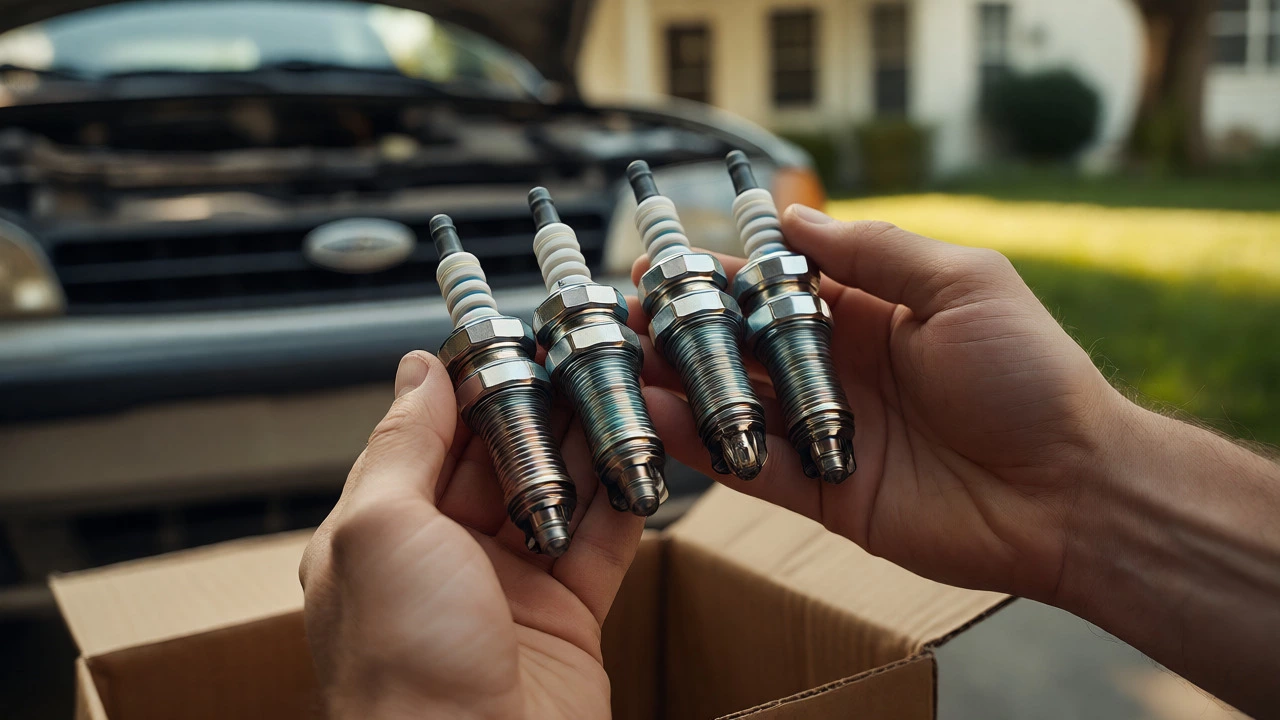
You’re standing in your driveway with a box of new spark plugs, staring at four shiny metal components while wondering if you bought enough. It’s a common panic moment for DIY mechanics. The short answer is simple: most cars have one spark plug per cylinder. But the reality gets trickier when you consider that some engines have two plugs per cylinder, and others don’t use them at all.
If you own a standard petrol (gasoline) car from the last 30 years, you almost certainly need four or six spark plugs. If you drive a diesel, you need zero. If you drive a high-performance luxury sedan, you might need eight, twelve, or even sixteen. Getting this number wrong means either wasting money on parts you don’t need or leaving your engine running rough because you missed a spot.
The Golden Rule: One Plug Per Cylinder
The fundamental logic behind spark plug quantity is tied directly to the internal combustion cycle. Each cylinder needs an electrical spark to ignite the air-fuel mixture. Therefore, the baseline calculation is straightforward:
- 4-cylinder engine: 4 spark plugs
- 6-cylinder engine: 6 spark plugs
- 8-cylinder engine: 8 spark plugs
- 12-cylinder engine: 12 spark plugs
This applies to the vast majority of vehicles on the road today. Whether you drive a Ford Focus, a Toyota Camry, or a Honda Civic, if it has a four-cylinder engine, you buy a box of four. If you drive a V6 SUV, you buy six. It’s that predictable. However, manufacturers sometimes break this rule for efficiency or performance reasons, which is where things get interesting.
When You Need Two Plugs Per Cylinder
Some modern engines are designed with dual ignition. This means each cylinder has two spark plugs instead of one. Why would an engineer do this? Usually, it’s about burning fuel more completely and reducing emissions.
You’ll often find dual-plug setups in specific European brands. For example, certain BMW N54 and N55 engines (found in many 3-series and 5-series models from the late 2000s and early 2010s) use two plugs per cylinder. So, a six-cylinder BMW doesn’t take six plugs; it takes twelve. Similarly, some Alfa Romeo Twin Spark engines and older Mercedes-Benz designs followed this pattern.
How do you know if your car falls into this category? Don’t guess based on the cylinder count alone. Check your owner’s manual under the "Maintenance" or "Engine Specifications" section. Look for terms like "dual ignition," "twin spark," or simply count the ignition coils. In many modern cars, there is one coil pack per spark plug. If you see twelve coil packs on top of a six-cylinder engine, you need twelve plugs.
Diesel Engines: The Zero-Plug Reality
If you drive a diesel, you can skip the spark plug aisle entirely. Diesel engines rely on compression ignition rather than spark ignition. They squeeze air until it’s hot enough to ignite diesel fuel injected into the cylinder. Because there’s no spark, there are no spark plugs.
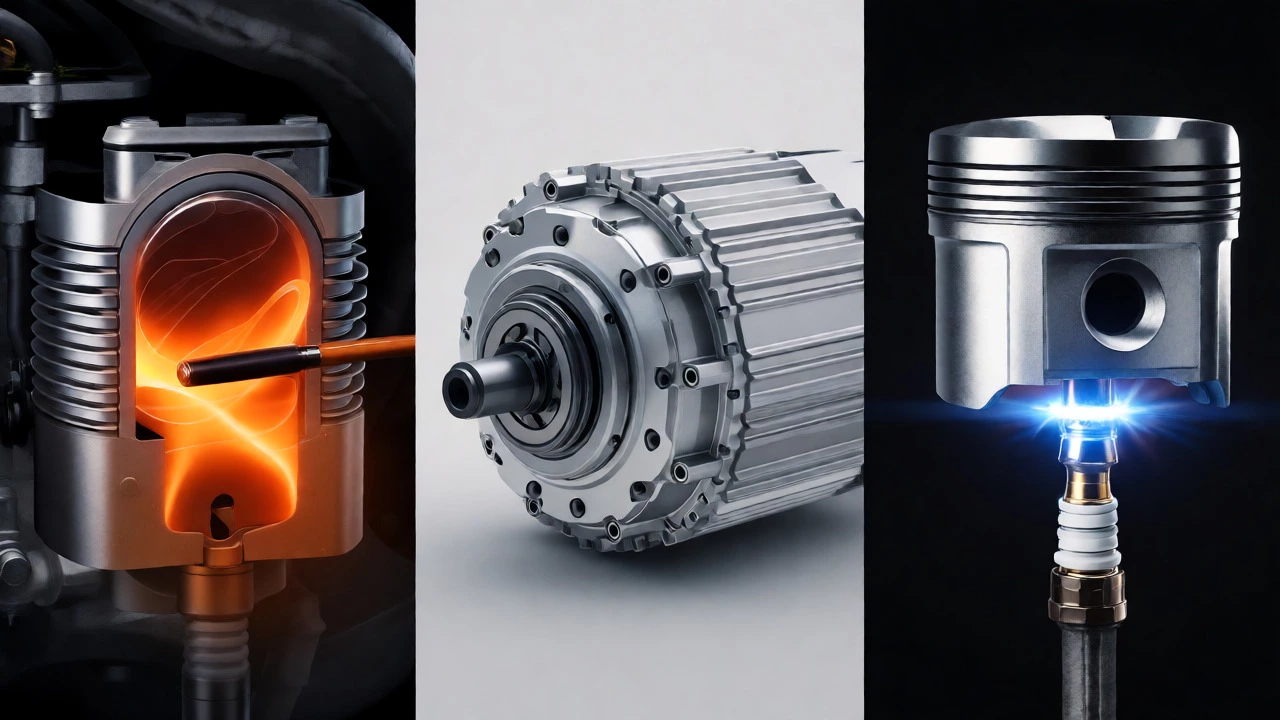
Instead, diesel owners worry about glow plugs. These are heating elements that help warm up the engine block during cold starts. While they look somewhat similar to spark plugs, they serve a different purpose and are usually replaced less frequently. Confusing the two is a classic beginner mistake. If your mechanic says you need "plugs," clarify immediately whether they mean spark plugs (for petrol) or glow plugs (for diesel).
Hybrid and Electric Vehicles
Modern powertrains complicate the picture further. Fully electric vehicles (EVs) like the Tesla Model 3 have no internal combustion engine, so they have zero spark plugs. There’s nothing to ignite.
Hybrids are a middle ground. A standard hybrid, like the Toyota Prius, still uses a petrol engine, so it follows the standard rules (usually 4 plugs for a 4-cylinder). However, some advanced hybrids use Atkinson-cycle engines that run at lower loads, potentially extending spark plug life. But the count remains the same as a traditional petrol engine of the same size.
| Engine Configuration | Standard Plug Count | Dual Ignition Count | Common Examples |
|---|---|---|---|
| Inline 3-Cylinder | 3 | Rare | Ford Fiesta EcoBoost, Mazda SkyActiv-X |
| Inline 4-Cylinder | 4 | 8 (Rare) | Honda Civic, VW Golf, BMW N52 |
| V6 / Inline 6 | 6 | 12 (Common in BMW/Mercedes) | Toyota Camry, BMW 335i, Audi S4 |
| V8 | 8 | 16 (High Performance) | Chevrolet Corvette, Porsche Panamera |
| Diesel (Any Size) | 0 | N/A | All TDI, CDI, BlueHDi engines |
| Electric Vehicle | 0 | N/A | Tesla, Nissan Leaf, BYD |
Why Getting the Number Right Matters
Buying the wrong number of plugs isn’t just an inconvenience; it affects your wallet and your engine health. Spark plugs aren’t cheap anymore. Modern iridium or platinum-tipped plugs can cost between £15 and £30 each in the UK. If you mistakenly buy twelve plugs for a car that only needs four, you’ve wasted nearly £200. Conversely, if you buy four for a car that needs eight, you’ll be stuck halfway through the job with a half-running engine.
There’s also a mechanical risk. If you assume one plug per cylinder but your car actually has dual ignition, you might replace only half the plugs. The old plugs will continue to fire weakly, causing misfires, poor fuel economy, and potential damage to the catalytic converter. Unburnt fuel entering the exhaust system can overheat the cat, leading to a repair bill that dwarfs the cost of the extra plugs.
How to Confirm Your Specific Count
Don’t rely solely on general knowledge. Here is a foolproof checklist to determine exactly how many spark plugs your car needs before you open your wallet:
- Check the VIN Decoder: Most manufacturer websites allow you to enter your Vehicle Identification Number (VIN). This will pull up the exact build sheet for your car, including engine code and part numbers.
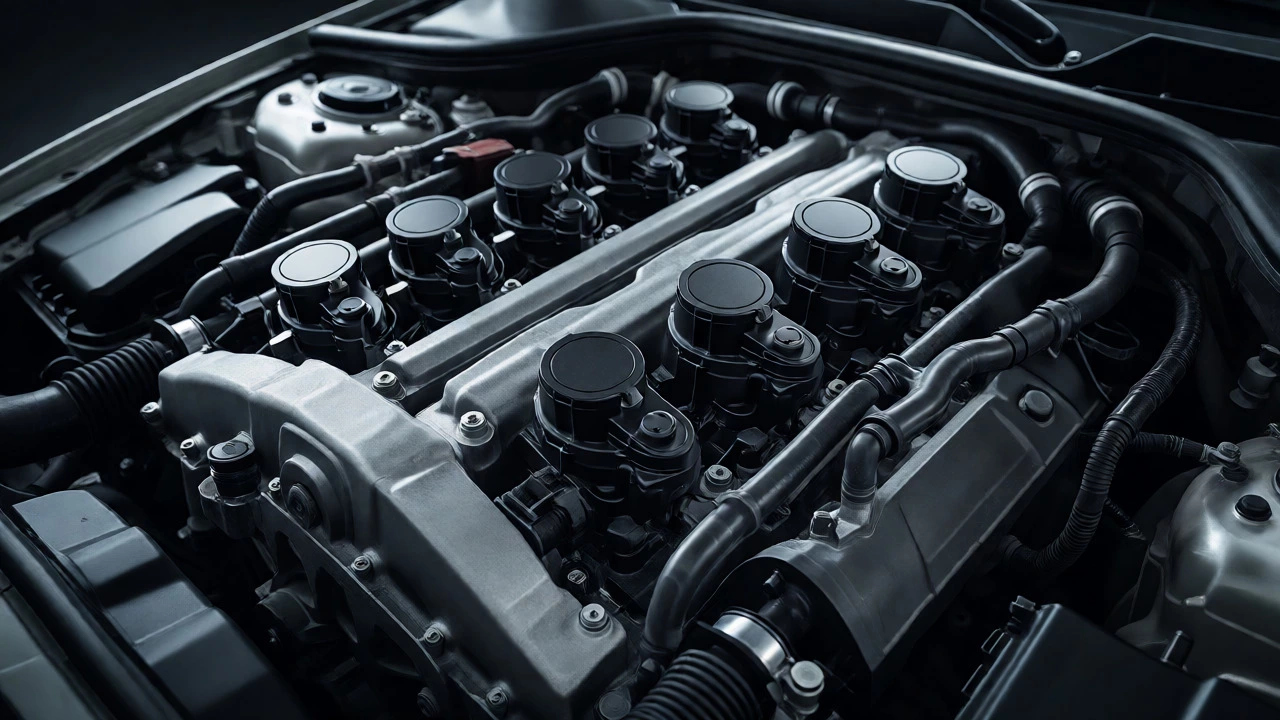
- Count the Coil Packs: Pop the hood. On most modern cars, the ignition coil sits directly on top of the spark plug (coil-on-plug design). Count the visible coils. That number equals the number of spark plugs. If you see six coils on a V6 engine, you need six plugs. If you see twelve, you need twelve.
- Consult the Owner’s Manual: Look for the "Scheduled Maintenance" table. It often lists "Replace Spark Plugs every X miles/km" and specifies the quantity or part number.
- Ask a Parts Specialist: Give them your registration plate (in the UK) or VIN. They can cross-reference databases instantly. This is faster and more accurate than guessing.
Signs You Might Need to Replace Them Soon
Knowing the count is step one. Knowing when to change them is step two. Modern long-life plugs can last 60,000 to 100,000 miles (approx. 96,000 to 160,000 km), but neglect leads to symptoms. Watch out for these red flags:
- Rough Idling: The car shakes slightly when stopped at a traffic light.
- Misfires Under Load: Hesitation or jerking when accelerating onto a motorway.
- Poor Fuel Economy: You’re visiting the pump more often without changing your driving habits.
- Difficulty Starting: The engine cranks longer than usual, especially in cold weather.
If you notice these issues, check the plugs. Sometimes, replacing just one faulty plug fixes the problem, but it’s best practice to replace all of them simultaneously. New plugs work better with other new plugs. Mixing old and new creates uneven firing, which stresses the engine.
Cost Implications of High-Plug Counts
Let’s talk money. A four-cylinder car is relatively cheap to service regarding ignition. Four premium plugs might cost £60-£80 total. Labor adds another £40-£60 depending on accessibility. Total job: roughly £100-£140.
Now compare that to a BMW 335i with a twin-turbo inline-six and dual ignition. You need twelve plugs. At £20 each, parts alone are £240. Because the engine bay is tight, labor takes longer-often 2-3 hours. Total job could easily hit £400-£500. Always budget accordingly if you drive a German luxury car with a complex ignition system.
It’s worth noting that some cars, particularly those with transverse-mounted V6 engines (like in many Audis or Volvos), hide the rear bank of cylinders deep against the firewall. Accessing these plugs requires removing intake manifolds or other components, skyrocketing labor costs. If your car has six cylinders but the plugs are buried, expect a higher bill not because of the plug count, but because of the difficulty of access.
Final Thoughts on Maintenance
The question "how many spark plugs are in a car?" seems basic, but the answer dictates your maintenance strategy. For 90% of drivers, it’s equal to the number of cylinders. For the remaining 10%, it’s double that. And for diesel and EV drivers, it’s zero.
Take five minutes this weekend to pop your hood and count your coil packs. Write the number down in your glovebox. Next time you’re at the auto shop, you won’t feel vulnerable when the mechanic suggests a replacement. You’ll know exactly what your car needs, ensuring you pay for precision, not padding.
Do all cars have spark plugs?
No. Diesel engines and fully electric vehicles do not use spark plugs. Diesel engines use glow plugs for cold starts, while electric vehicles rely on battery-powered motors with no internal combustion process.
Can I drive my car with one bad spark plug?
You can drive short distances, but it is not recommended. A bad plug causes misfires, which can overheat the catalytic converter due to unburnt fuel entering the exhaust. This can lead to expensive repairs costing hundreds of pounds.
How much does it cost to replace spark plugs?
In the UK, parts typically range from £15 to £30 per plug. Labor costs vary by vehicle complexity, ranging from £40 for accessible 4-cylinder engines to over £200 for hard-to-reach V6 or V8 configurations. Total costs generally fall between £100 and £500.
How often should I change my spark plugs?
Traditional copper plugs need replacement every 30,000 miles. Modern platinum or iridium plugs, found in most cars since 2005, last between 60,000 and 100,000 miles. Always check your owner’s manual for the specific interval recommended by the manufacturer.
What happens if I put the wrong type of spark plug in?
Using the wrong heat range or thread length can cause engine damage. Too cold, and they foul with carbon; too hot, and they can melt or cause pre-ignition. Pre-ignition can crack pistons. Always match the OEM specification exactly.