Shock Health Assessment Tool
Assess Your Shock Condition
Answer a few questions about your vehicle's handling and symptoms to get an assessment of your shock condition.
If your car feels bouncy, shaky, or like it’s floating over bumps, your shocks might be failing. It’s not always obvious until something goes wrong-like your tires wearing unevenly, your brakes taking longer to stop, or your car dipping forward every time you hit the brakes. Shocks don’t just make your ride smoother; they keep your tires on the road, help you steer, and stop your car safely. When they go bad, you’re not just uncomfortable-you’re at risk.
Signs Your Shocks Are Worn Out
Most people don’t check their shocks until something feels wrong. By then, damage might already be done. Here’s what to look for:
- Excessive bouncing after hitting a bump-if your car keeps bobbing up and down three or four times, your shocks are losing their grip.
- Nose dive when braking-if your front end dips hard every time you slow down, the shocks aren’t controlling the weight transfer anymore.
- Uneven tire wear-shocks keep tires flat on the road. When they fail, tires bounce, leading to cupping: scalloped dips along the tread edges.
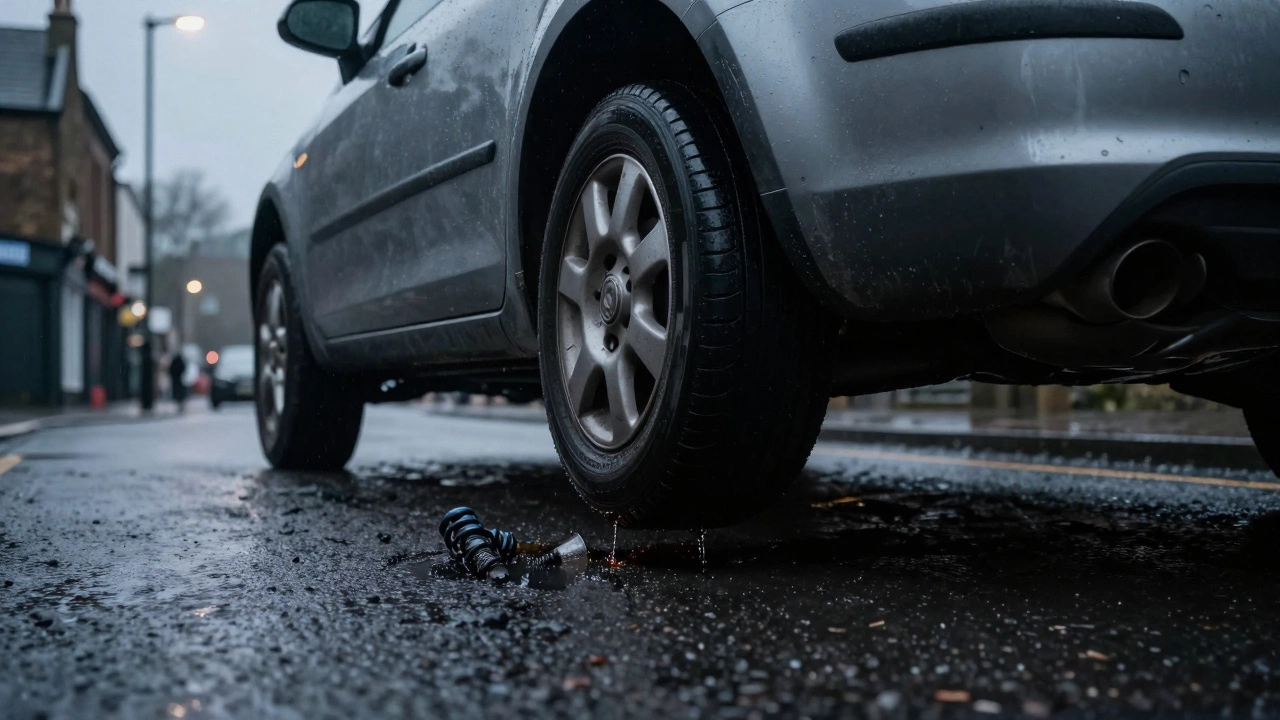
- Oil leaks-shocks are filled with hydraulic fluid. If you see oily residue on the shock body or dripping onto your wheels, it’s leaking and needs replacing.
- Clunking or knocking noises-especially over rough roads or speed bumps. This often means the shock mount or internal parts are broken.
These symptoms don’t always show up at once. One car might leak oil but ride fine. Another might bounce badly but show no leaks. The key is noticing changes. If your ride feels different than it did a year ago, something’s off.
How Shocks Work (And Why They Matter)
Shocks, or shock absorbers, don’t support your car’s weight-that’s the job of springs. Instead, they control how fast the springs move. Without shocks, your car would bounce like a pogo stick every time you hit a pothole. They use hydraulic fluid and valves to dampen movement, keeping the tires in constant contact with the road.
This isn’t just about comfort. When shocks fail, your tires lose traction. That means:
- Longer stopping distances-your brakes have to work harder because the tires aren’t gripping.
- Worse handling in turns-you feel the car sway or roll more than usual.
- Increased risk of hydroplaning in rain-your tires can’t maintain contact with wet pavement.
A 2023 study by the UK’s Road Safety Foundation found that vehicles with worn shocks took up to 17% longer to stop on wet roads compared to those with healthy suspension. That’s the difference between stopping in time-or hitting the car ahead of you.
The Bounce Test: A Quick Check You Can Do Yourself
You don’t need tools to check your shocks. Try the bounce test:
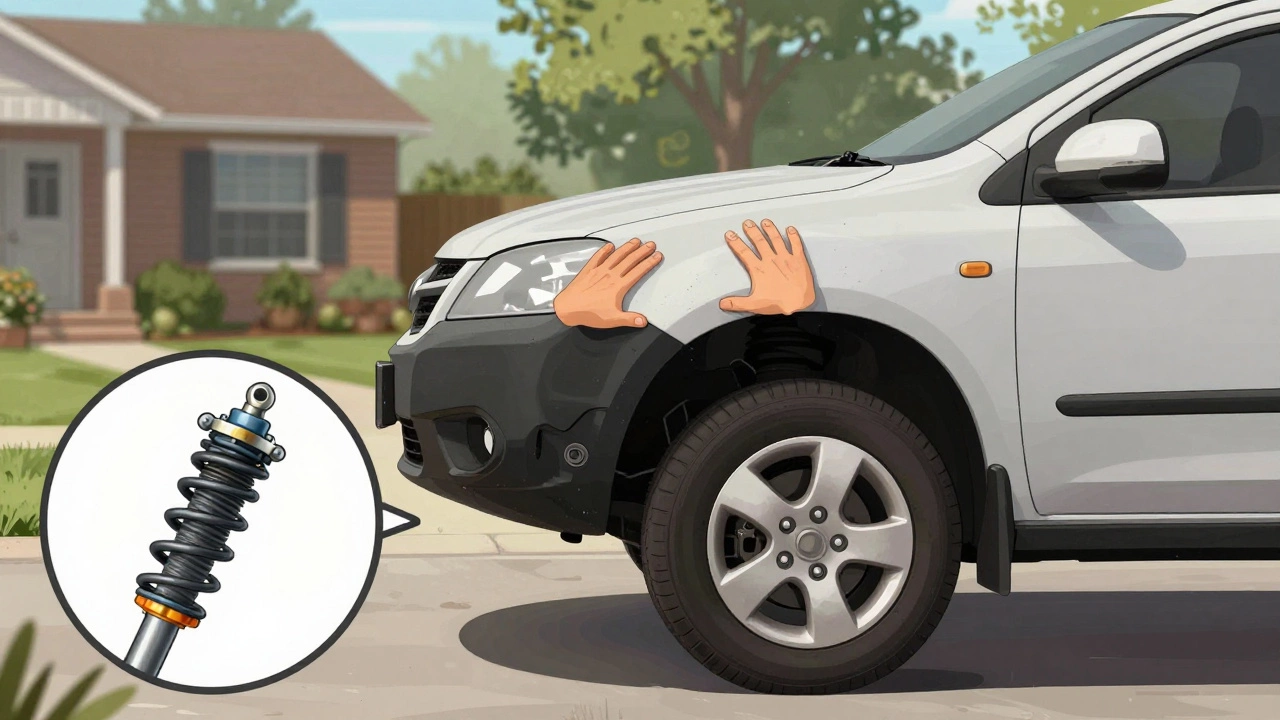
- Park on level ground and push down firmly on one corner of your car-front or rear.
- Let go and watch how the car reacts.
- If it bounces more than twice before settling, your shocks are likely worn.
- Repeat at all four corners.
This isn’t a lab test, but it’s a reliable indicator. If one corner bounces more than the others, that shock is probably the culprit. Don’t wait for all four to fail-replace them in pairs at minimum, and ideally all four together.
When to Replace Shocks
Most manufacturers say shocks last 50,000 to 100,000 miles. But that’s a rough estimate. Your driving habits matter more:
- If you drive mostly on smooth highways, shocks can last longer.
- If you live in Manchester and deal with potholes, gravel roads, or winter ruts, they may wear out by 40,000 miles.
- Heavy loads-like towing or carrying roof boxes-also shorten shock life.
There’s no magic mileage. The best rule: if you notice any of the symptoms above, get them checked. Don’t wait for a warning light-they don’t come on for shocks.
What Happens If You Ignore Damaged Shocks?
Ignoring worn shocks doesn’t just make your ride rough. It damages other parts:
- Tires-cupping and uneven wear mean you’ll need new tires sooner. A full set can cost £400+.
- Struts and springs-shocks protect them. When shocks fail, springs take extra stress and can snap.
- Steering and alignment-unstable suspension throws off alignment angles, causing pulling or vibration.
- Brakes-with less tire contact, brakes overheat and wear out faster.
Fixing one bad shock without replacing the others? That’s a false economy. You’ll end up paying twice: once for a partial job, then again when the other side fails six months later.
What to Look for When Buying New Shocks
Not all shocks are made equal. Here’s what to ask for:
- Brand reputation-Bilstein, Monroe, KYB, and Sachs are trusted by mechanics in the UK. Avoid no-name brands sold online without reviews.
- Match the original-if your car came with gas-charged shocks, replace them with the same type. Mixing types affects ride and safety.
- Warranty-good shocks come with at least a 2-year or 25,000-mile warranty. That’s a sign the maker stands behind them.
- Professional installation-shocks are under tension. Improper installation can cause injury or damage. Even if you’re handy, use a garage with proper tools.
Price isn’t everything. A £120 pair of shocks might seem cheap, but if they wear out in 20,000 miles, you’re paying more per mile than a £200 pair that lasts 80,000.
Real-Life Example: A Manchester Driver’s Story
A local mechanic in Salford told me about a customer who drove a 2018 Ford Focus with worn shocks for over a year. He ignored the bouncing and noise, thinking it was just an old car. Then, on a wet Tuesday morning, he braked for a junction-and skidded 20 feet further than expected. He didn’t hit anyone, but he totaled the front bumper and cracked the wheel rim. The repair bill: £1,800. New shocks would’ve cost £350.
That’s the hidden cost of delay.

How Often Should You Get Them Checked?
Make it part of your annual service. If you drive more than 15,000 miles a year, check them every 12 months. If you drive less, check them every 2 years-but pay attention to how the car feels. Don’t wait for the service light.
Also, get them inspected after any major road impact-like hitting a deep pothole or curbing a wheel hard. That kind of shock can break internal components even if nothing looks wrong.
| Symptom | Possible Cause | Urgency |
|---|---|---|
| Car bounces more than twice after pressing down | Worn internal valves or fluid leak | High |
| Nose dives when braking | Front shocks failing to control weight transfer | High |
| Oil on shock body | Seal failure-fluid is escaping | Immediate |
| Clunking over bumps | Broken mount, bushing, or internal component | High |
| Uneven tire wear (cupping) | Shocks not keeping tire flat on road | Medium to High |
| Car feels unstable in wind or during turns | Loss of damping control | Medium |
Frequently Asked Questions
Can I drive with damaged shocks?
You can, but it’s unsafe. Damaged shocks reduce control, increase stopping distance, and cause uneven tire wear. In wet or icy conditions, the risk of losing control rises sharply. Don’t risk it-get them checked as soon as you notice symptoms.
Do I need to replace all four shocks at once?
Yes, always. Shocks wear evenly over time. Replacing only one or two creates an imbalance in handling and ride quality. Even if one side looks fine, it’s likely just as worn. Replacing them in pairs (front or rear) is the minimum. For best safety and performance, replace all four together.
How long do shocks last in the UK?
In the UK, shocks typically last between 40,000 and 80,000 miles. Harsh roads, frequent rain, and winter conditions wear them faster than in drier climates. If you drive mostly in cities with poor road surfaces, expect to replace them closer to 50,000 miles.
Are shocks and struts the same thing?
No. Shocks are separate components that work with springs. Struts are a single unit that combines the shock and spring into one structural part of the suspension. Most modern cars use struts in the front and shocks in the rear, or struts on all four corners. They serve similar purposes but aren’t interchangeable. Always replace them with the exact type your car uses.
Can I check shocks myself, or do I need a mechanic?
You can do the bounce test and look for oil leaks yourself. But a full inspection requires lifting the car and checking mounts, bushings, and internal wear. A mechanic can also test rebound and damping with specialized tools. If you’re unsure, get a professional check-it’s usually free at reputable garages.
Next Steps
If you suspect your shocks are worn:
- Do the bounce test on all four corners.
- Look for oil leaks or physical damage on the shock bodies.
- Check your tires for cupping-run your hand over the tread. If it feels like waves, your shocks are likely the cause.
- Book a suspension inspection at a trusted garage. Don’t wait for a breakdown.
- If replacement is needed, choose quality parts and replace all four. It’s the safest, most cost-effective move in the long run.
Good shocks don’t just make your ride smoother. They keep you alive. Don’t ignore the signs. Your tires, your brakes, and your safety depend on them.