Quick Takeaways for a Clear View
- Difficulty: Very Low. No mechanical skills required.
- Time Needed: About 5 to 10 minutes for both sides.
- Tools Required: Usually none, though a paper towel and some glass cleaner help.
- Frequency: Every 6 to 12 months depending on your local weather.
Before you grab the new parts, let's talk about what we're actually dealing with. A Windscreen Wiper is a mechanism consisting of a rubber blade attached to a metal arm that clears rain and debris from a vehicle's windshield. Over time, the rubber dries out or gets chewed up by road grit. When that happens, no amount of windshield fluid will fix the streaks; you just need fresh rubber.
Knowing When to Swap Your Blades
You don't always need to follow a strict calendar. Sometimes a harsh winter or a sandy summer destroys the rubber faster than usual. Keep an eye out for these red flags. First, look for "chattering," where the blade hops across the glass instead of gliding. Second, look for visible cracks or chunks missing from the rubber edge. Finally, if you see distinct lines of water remaining on the glass after a swipe, your blade has lost its seal.
A pro tip: run your finger gently along the edge of the blade (when it's off the car). If it feels brittle or hard like plastic rather than flexible like rubber, it's time to go shopping. Replacing them now is much cheaper than replacing a windshield later because of scratches caused by degraded wiper arms.
Choosing the Right Blades for Your Car
You can't just buy any blade; they come in different lengths and attachment styles. If the blade is too short, you'll have a blind spot. Too long, and it might hit the trim or overlap with the passenger blade. Most auto parts stores have a digital catalog where you enter your make and model to find the exact fit.
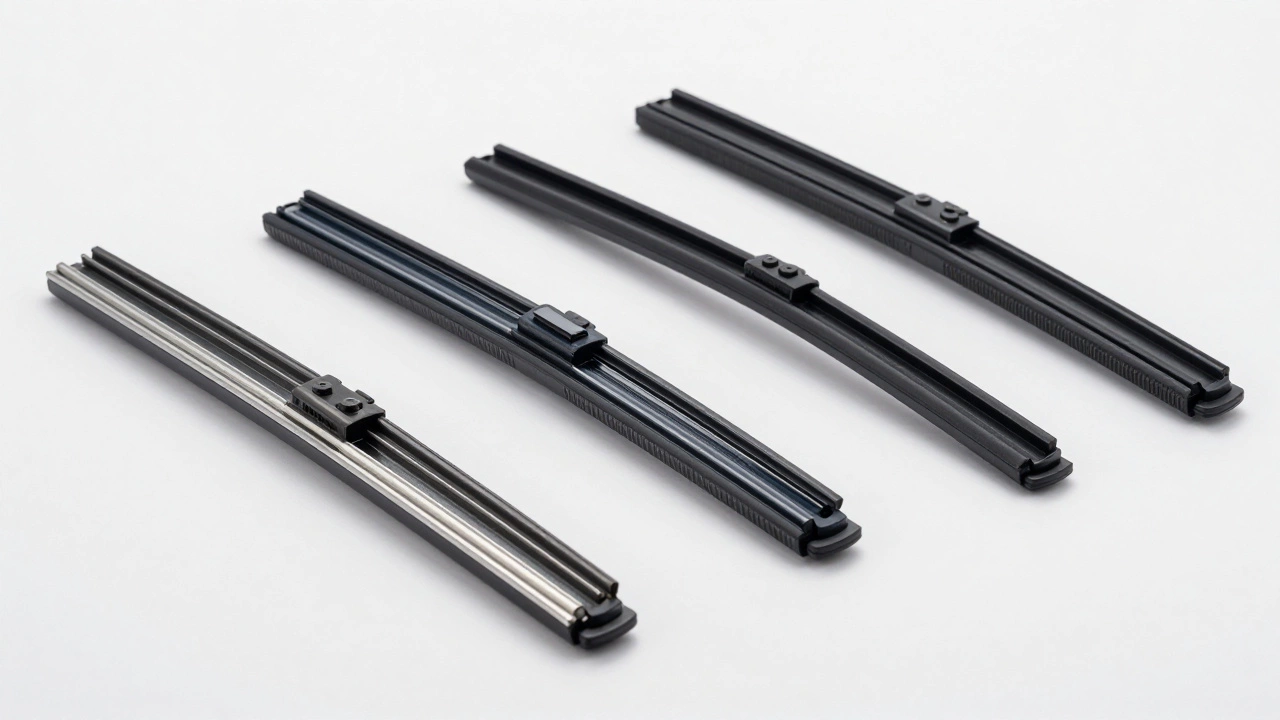
You'll generally encounter three main types of blades. Conventional Beam Blades are the old-school style with a metal frame. Flat Blades (often called beam blades) have a curved, one-piece design that hugs the glass better. Then there are Hybrid Blades, which combine the strength of a frame with the aerodynamics of a beam blade.
| Type | Durability | Wind Performance | Price Point |
|---|---|---|---|
| Conventional | Moderate | Low (lifts at high speed) | Budget-friendly |
| Beam/Flat | High | Excellent (stays flush) | Mid-to-High |
| Hybrid | Very High | Great | Premium |
The Step-by-Step Process of Replacing Wiper Blades
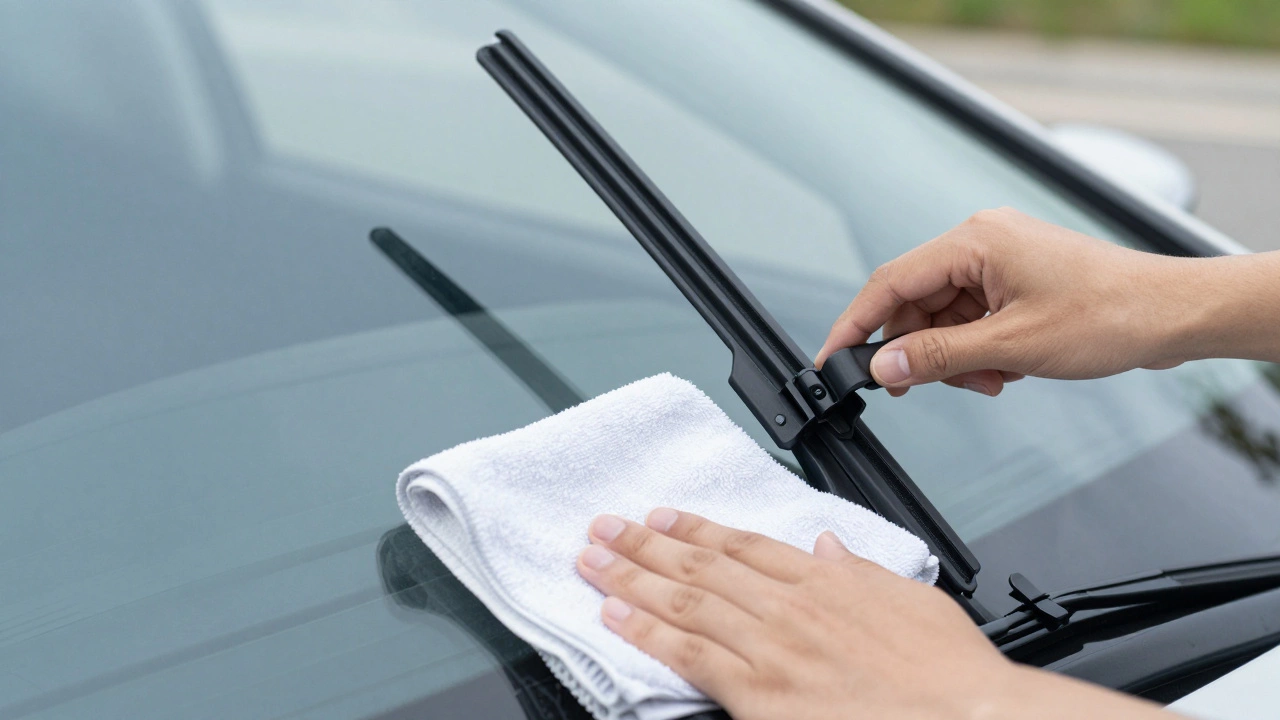
Since you're doing this yourself, the most important rule is to protect your glass. If a metal wiper arm snaps back down without a blade attached, it can crack your windshield instantly. Always lay a folded towel on the glass where the arm will rest during the process.
- Lift the Arm: Gently pull the wiper arm away from the windshield until it locks in a vertical position.
- Locate the Release: Look at where the blade meets the arm. Most modern cars use a J-Hook or a push-button mechanism. For a J-Hook, there is usually a small tab you press to slide the blade off.
- Slide Out the Old Blade: Move the blade in the direction of the hook until it clicks out of place. Be careful not to force it; if it doesn't move, check for a small locking clip.
- Prep the New Blade: Remove the new blade from its packaging. If it comes with a plastic protective cover over the rubber, take it off now.
- Install the New Blade: Slide the blade onto the arm. You should hear or feel a distinct "click" when it locks in. Give it a gentle tug to make sure it's secure.
- Lower the Arm: Carefully lower the arm back onto the glass. Don't let it snap; guide it down slowly.
Once you've finished both sides, spray some Windshield Washer Fluid on the glass and test them. If they swipe cleanly without noise, you've nailed it. If you hear a squeak, check if the blade is seated fully in the arm.
Common Mistakes and How to Avoid Them
The biggest mistake people make is ignoring the "hidden" causes of streaks. If you put on brand new blades and they still leave lines, the problem isn't the rubber-it's the glass. Oil, tree sap, and road grime build up a layer that rubber can't cut through. This is where a deep clean comes in. Use a dedicated glass cleaner or a mixture of vinegar and water to strip the surface before you install the new blades.
Another pitfall is buying the cheapest possible generic blades. While the price is tempting, low-grade rubber wears out in a few months of sun exposure. Investing in a silicone-based blade usually lasts twice as long as standard rubber and handles extreme heat much better.
Beyond the Blades: Maintaining Your System
If your blades are new but the wiping pattern is uneven, your Wiper Arm might be bent. Over time, the tension spring in the arm weakens, or the arm gets knocked out of alignment. You can sometimes fix this by gently bending the arm back into place, but if the spring is shot, the arm itself needs replacing.
Don't forget the fluid. Using plain water in your reservoir during winter can lead to frozen lines, which can actually damage the pump. Always use a seasonal fluid that contains antifreeze agents. It also acts as a lubricant for your new blades, extending their life by reducing friction against the glass.
Do I really need to replace my wipers every year?
Not necessarily. If you park in a garage and live in a mild climate, they might last two years. However, if your car sits in the baking sun or freezing snow, the rubber will degrade faster. The best rule is to check them every six months. If they streak or squeak, replace them regardless of how long you've had them.
Can I just flip my wiper blades to make them last longer?
Some people do this by reversing the blade on the arm. While it might give you a few more weeks of use, it's not a long-term fix. The rubber is designed to wear in one specific direction. Flipping them often leads to uneven pressure and poor clearing performance.
Why do my new wipers make a loud noise?
This is usually caused by one of three things: a dirty windshield, the blade being installed incorrectly, or an improperly angled wiper arm. Try cleaning the glass with a degreaser first. If that doesn't work, ensure the blade "clicked" fully into the arm.
What is the difference between rubber and silicone blades?
Rubber blades are cheaper and standard, but they succumb to UV damage and heat. Silicone blades are more expensive but far more durable and heat-resistant. They also often leave a thin water-repellent layer on the glass, which helps rain bead off more effectively.
Is it possible to replace just the rubber insert?
On some older conventional frames, yes. You can slide the rubber strip out and slide a new one in. However, most modern beam and hybrid blades are integrated units, meaning you have to replace the entire assembly. Check your specific blade model to see if refills are available.
Next Steps for Car Owners
If you've just finished your replacing wiper blades task, now is a great time to check other visibility-related items. Take a look at your headlights for fogging or oxidation. Also, check your washer fluid level-there's nothing worse than running out of fluid right after you've installed a fresh set of blades. If you're feeling confident with this DIY win, you might consider looking into other simple maintenance tasks like changing your cabin air filter or topping off your coolant.