Clutch Stage Calculator
Clutch Stage Calculator
Enter your vehicle's power and usage to determine the appropriate clutch stage.
How Clutch Stages Work
Clutch stages are industry standards for performance upgrades. Stage 1 is for mild daily modifications, Stage 2 is for track weekends, Stage 3 is for serious enthusiasts, and Stage 4 is for extreme performance applications.
Recommended Clutch Stage
Enter your vehicle details to see the recommended clutch stage.
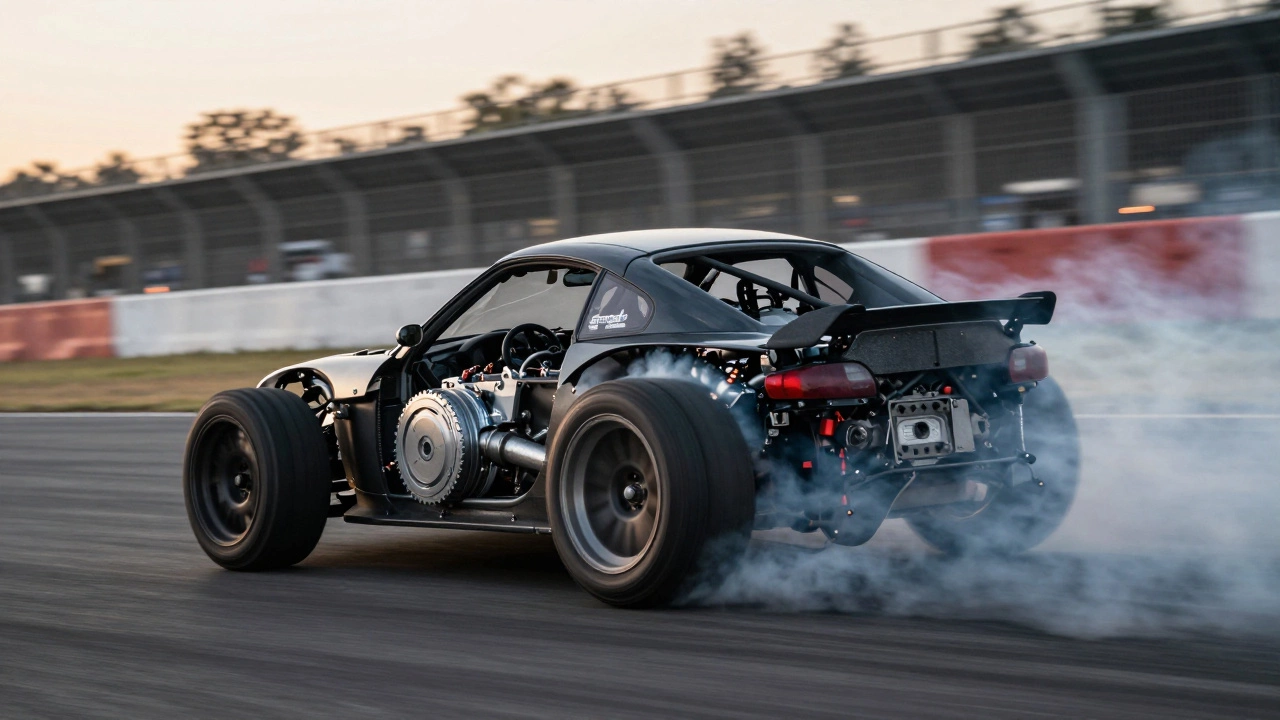
When you hear stage 4 clutch, you’re not talking about a standard replacement part. You’re talking about a piece of equipment built for one thing: handling serious power and abuse. If you’ve modified your car with a turbo, supercharger, or big engine swap, and you’re hitting 400+ horsepower, then your factory clutch is already dead. A stage 4 clutch is the next step - but it’s not for everyone.
What Makes a Clutch a Stage 4?
Clutch stages aren’t official ratings from manufacturers. They’re industry labels created by aftermarket brands to help buyers pick the right part. Stage 1 is a mild upgrade for daily drivers with minor mods. Stage 2 is for track weekends and mild turbo cars. Stage 3 is for serious enthusiasts running big turbos and drag strips. Stage 4? That’s the extreme end.
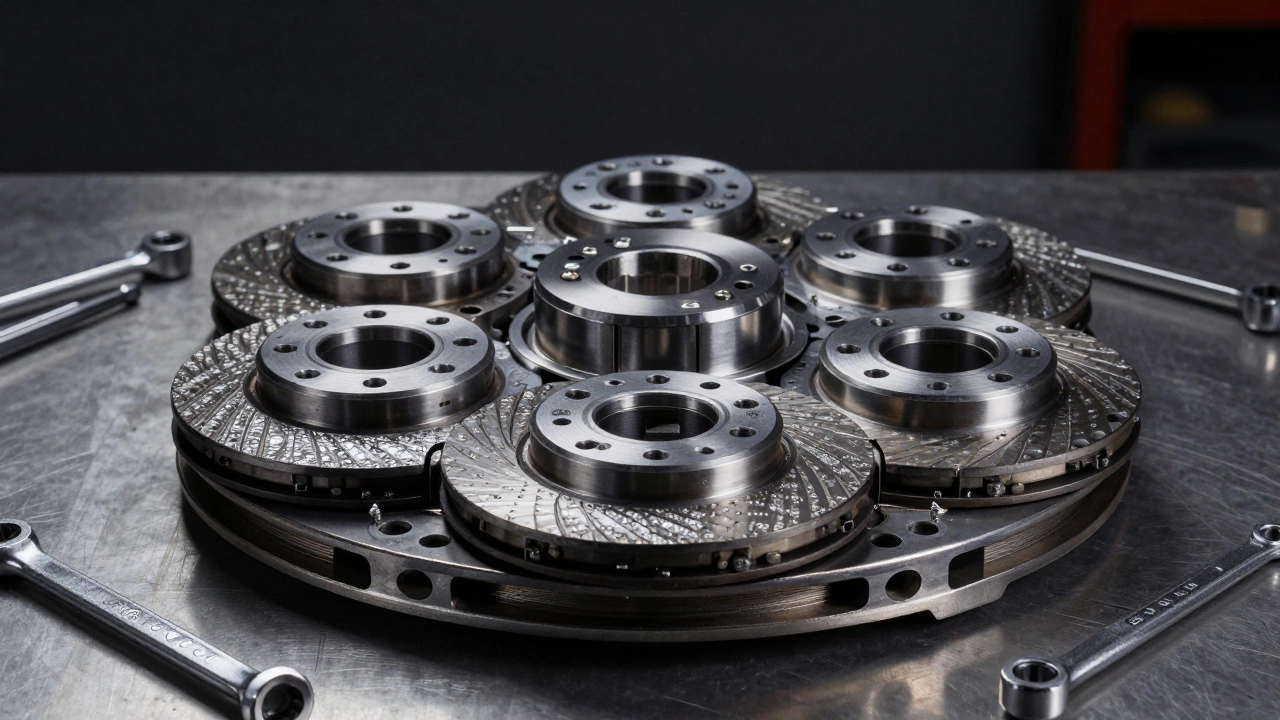
A stage 4 clutch typically uses a multi-plate design - often 6 or 8 discs - instead of the single disc you get in a stock clutch. These discs are made from sintered iron, ceramic, or even carbon-ceramic composites. These materials can handle temperatures over 1,000°F without fading. They also grip far harder than organic or even Kevlar-lined clutch facings.
But here’s the catch: that grip comes at a cost. Stage 4 clutches are notoriously harsh. The pedal feel is stiff, sometimes like pushing a brick. Engagement is abrupt - you can’t feather it like a stock clutch. If you drive this in stop-and-go traffic, you’ll be exhausted by the time you reach the next junction.
Who Actually Needs a Stage 4 Clutch?
You don’t need a stage 4 clutch if you’re running a stock 2.0L engine or even a mildly tuned 300hp turbo. That’s overkill. You need it if:
- Your car makes 450+ horsepower at the wheels
- You’re running a big turbo or twin-turbo setup
- You drag race regularly or do timed hill climbs
- You’ve swapped in a V8 or a race-built engine
- You’ve upgraded your transmission to handle more torque
For example, if you’ve put a 400hp 2.0L turbo into a Mk4 Golf and added a 6-speed manual from a Supra, you’re not going to survive a single launch with a stage 2 clutch. The stock pressure plate will warp, and the friction material will disintegrate in under 100 miles. A stage 4 clutch is the only thing that won’t let you down.
But if you’re just adding a cold air intake and a tune to your Civic, a stage 4 clutch will ruin your daily driving experience. You’ll be constantly fighting the pedal, and you’ll burn through the release bearing in six months.
How a Stage 4 Clutch Works Differently
Standard clutches use a single friction disc sandwiched between a flywheel and a pressure plate. A stage 4 clutch replaces that with multiple discs - sometimes three or four in a row - and a much stronger pressure plate. The pressure plate uses heavy-duty springs or diaphragms rated for 3,000+ pounds of clamping force. That’s nearly triple what a stock clutch applies.
The result? You get more surface area for friction, which means more torque can be transferred without slipping. But the trade-off is heat. Each engagement creates intense friction. That heat doesn’t just fade the clutch - it can warp the flywheel, melt the transmission input shaft, or even crack the pressure plate if it’s not made from billet steel.
That’s why most stage 4 clutch kits come with a lightweight, high-strength flywheel. Stock flywheels are cast iron and too heavy. They store too much rotational energy, making shifts sluggish. A stage 4 flywheel is usually made from chromoly steel or aluminum and is balanced to exacting specs. It spins up faster and lets you shift more crisply.
What Comes in a Stage 4 Clutch Kit
A true stage 4 clutch kit isn’t just a clutch disc. It’s a complete system. Here’s what you’ll typically find:
- Multi-plate clutch disc - 6 or 8 friction surfaces, sintered or ceramic
- Billet steel pressure plate - hardened, CNC-machined, rated for 2,500-4,000 lb-ft torque
- Lightweight flywheel - aluminum or chromoly, balanced to OEM specs
- Heavy-duty release bearing - rated for 50,000+ miles under abuse
- Alignment tool - ensures the clutch disc is centered during installation
- Hardware kit - high-tensile bolts, torque specs sheet
Some kits even include a hydraulic upgrade kit - because the stock clutch slave cylinder can’t handle the pressure. Others include a performance clutch line to reduce fluid expansion under heat.
Brands like ACT, Clutchmasters, Exedy, and Spec all make stage 4 kits. They’re not cheap. A full kit will set you back £800-£1,500, depending on your car. But if you’re running a 600hp engine, that’s cheaper than replacing a shredded transmission.
Common Mistakes With Stage 4 Clutches
People think buying a stage 4 clutch is the end of the story. It’s not. Here’s what goes wrong:
- Installing it on a stock engine - You’ll regret it. The pedal is brutal, and you’ll wear out the throw-out bearing fast.
- Not balancing the flywheel - A mismatched flywheel causes vibrations that can destroy your transmission bearings.
- Using the wrong fluid - Standard DOT 3 brake fluid boils under heat. Use DOT 4 or silicone-based fluid.
- Not bedding it in - You can’t launch hard on day one. You need 500 miles of gentle engagement to seat the friction surfaces.
- Ignoring the transmission - A stage 4 clutch can overload a stock gearbox. If your transmission is stock, you’re asking for trouble.
One customer in Manchester installed a stage 4 clutch on his tuned Subaru WRX without upgrading the gearbox. He blew the synchros on the second track day. He spent £2,200 on a rebuild - more than the clutch cost.

How Long Does a Stage 4 Clutch Last?
There’s no single answer. It depends entirely on how you drive it.
- Track use only - 10,000-15,000 miles
- Street and occasional track - 20,000-30,000 miles
- Aggressive street driving - 10,000 miles or less
- Properly broken in, gentle use - 40,000+ miles
Unlike a stock clutch that wears slowly, a stage 4 clutch can fail suddenly. The sintered material doesn’t gradually fade - it cracks or chips. You’ll hear a grinding noise, then the clutch slips under load. That’s your cue to stop driving and get it checked.
That’s why many racers keep a spare clutch kit in their garage. It’s not a matter of if - it’s when.
Is a Stage 4 Clutch Worth It?
Only if you need it. If you’re not making serious power, you’re wasting money. A stage 2 or stage 3 clutch will handle 90% of modified cars. A stage 4 is for the 5% of cars that are pushed to the edge - race-prepped, drag-built, or heavily turbocharged machines.
Think of it like buying race tires for your daily driver. Sure, they grip better. But they’re loud, wear out fast, and turn every pothole into a nightmare. The same logic applies to stage 4 clutches.
But if you’re running 500+ horsepower and you’re serious about performance? Then yes. A stage 4 clutch isn’t a luxury - it’s the only thing keeping your car from turning into a pile of broken parts.
What to Do Before Installing One
Don’t just order it and bolt it on. Follow these steps:
- Measure your engine’s actual power and torque output at the wheels - not the crank.
- Check your transmission’s torque rating. If it’s stock, consider upgrading it too.
- Choose a clutch kit that matches your power level - don’t over-spec.
- Use a professional shop for installation. This isn’t a DIY job unless you’ve done it before.
- Follow the break-in procedure exactly. No burnouts for the first 500 miles.
Skipping any of these steps is like putting racing fuel in a stock engine - it might run, but it won’t last.
Is a stage 4 clutch good for daily driving?
No. A stage 4 clutch is designed for high-power applications and track use. The pedal is extremely stiff, engagement is harsh, and it wears out quickly under stop-and-go traffic. Daily driving with a stage 4 clutch is uncomfortable and expensive in the long run.
What’s the difference between stage 3 and stage 4 clutch?
A stage 3 clutch handles 400-500 horsepower and uses a single or dual-disc design with ceramic or organic materials. A stage 4 clutch is multi-disc (6-8 plates), uses sintered iron or carbon-ceramic, and is rated for 500+ horsepower. Stage 4 is much harder to drive on the street and requires a stronger flywheel and transmission.
Do I need a new flywheel with a stage 4 clutch?
Yes. Stock flywheels are too heavy and not strong enough. Stage 4 kits include a lightweight billet steel or aluminum flywheel designed to handle the higher clamping force and heat. Using a stock flywheel can cause vibrations, premature wear, or even failure.
How much does a stage 4 clutch cost?
A complete stage 4 clutch kit costs between £800 and £1,500, depending on the brand and vehicle. Installation can add another £300-£600. This doesn’t include transmission upgrades, which may be necessary for high-power applications.
Can a stage 4 clutch damage my transmission?
Yes - if your transmission isn’t built to handle the torque. A stage 4 clutch transfers far more force than a stock clutch. If your gearbox is stock, you risk breaking synchros, input shafts, or bearings. Always match your clutch to your transmission’s capability.