Dashboard Warning Light Decoder
Select the icon you see on your dashboard to find out what it means and what you should do immediately.
Wrench / Service Text
Yellow / OrangeOil Can Dripping
RedCheck Engine Light
Yellow / OrangeHave you ever glanced at your dashboard and wondered if that tiny wrench icon or yellow triangle is actually telling you to head to the garage? Or maybe you’re just guessing based on mileage, hoping you aren’t killing your engine by waiting too long. The short answer is: yes, most modern cars will tell you, but they don’t always speak plain English.
Understanding what your vehicle is trying to say can save you hundreds of pounds in repairs and keep your car running smoothly for years. Let’s break down exactly how your car communicates its needs, what those lights mean, and when you should ignore the computer and trust your eyes instead.
The "Maintenance Required" Light vs. The Red Oil Can
First things first: not all oil-related lights are created equal. In fact, confusing them is one of the biggest mistakes drivers make. You need to know the difference between a reminder and an emergency.
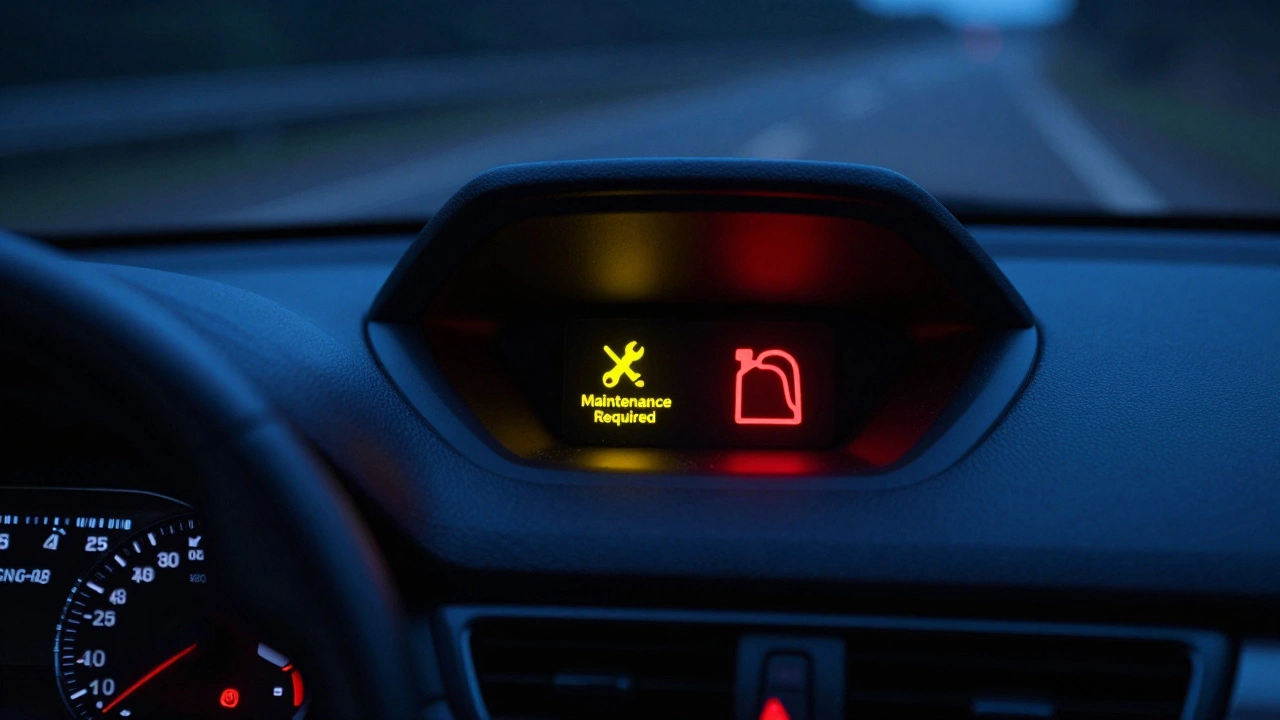
The Maintenance Required light (often a yellow wrench or text reading "Service Due") is essentially a calendar alarm. It doesn’t mean anything is broken right now. It simply means your car’s computer has calculated that you’ve hit the manufacturer’s recommended interval for routine upkeep. This usually happens every 5,000 to 10,000 miles, depending on your model. If this light comes on, you have some time. Schedule an appointment within the next week or two.
Then there is the Low Oil Pressure light. This looks like a red oil can dripping fluid. If this pops up while you’re driving, pull over immediately. This isn’t a suggestion; it’s a crisis. Your engine relies on oil pressure to lubricate moving parts. Without it, metal grinds against metal, causing catastrophic damage in minutes. Never ignore the red oil can.
| Light Icon | Color | Meaning | Action Required |
|---|---|---|---|
| Wrench / Text "Service" | Yellow/Orange | Routine maintenance interval reached | Schedule service soon |
| Oil Can Dripping | Red | Critical low oil pressure | Stop driving immediately |
| Check Engine Light | Yellow/Orange | Generic system fault (could be oil-related) | Get diagnostic scan |
How Modern Cars Calculate Oil Life
You might wonder how your car knows when the oil is dirty. It doesn’t actually test the oil quality directly. Instead, it uses a complex algorithm known as Oil Life Monitoring System (OLMS). This system tracks various factors to estimate degradation:
- Mileage: The simplest factor. More miles mean more heat cycles and contamination.
- Engine Temperature: Frequent short trips where the engine never fully warms up cause moisture and fuel to mix with the oil, speeding up breakdown.
- RPMs: High-revving driving generates more heat and shear stress on the oil molecules.
- Ambient Temperature: Extreme cold or heat affects how well the oil protects the engine.
For example, if you drive a diesel truck in Manchester’s rainy winters, taking short trips around town, your OLMS will drain faster than someone driving a hybrid in sunny Spain on long motorway runs. The system adapts to your specific driving habits, which is why generic "every 3,000 miles" advice is outdated for most vehicles made after 2005.
When the Computer Gets It Wrong
While OLMS is helpful, it’s not perfect. There are scenarios where your car might say you’re fine, but your engine disagrees. Here is when you should override the dashboard:
- Severe Driving Conditions: If you frequently tow heavy loads, drive in dusty environments, or do excessive idling, standard intervals may be too long. Many manufacturers define "severe service" schedules that require changes every 5,000 miles regardless of what the light says.
- Older Vehicles: Cars older than 10-15 years often lack sophisticated monitoring systems. They rely on fixed mileage counters. If your car doesn’t have a digital oil life percentage, stick to a strict mileage schedule (usually 6,000-7,500 miles).
- Visible Contamination: Pull out the dipstick. If the oil looks milky (signaling coolant leak) or smells strongly of gasoline, change it immediately. No amount of green bar on the dashboard fixes a contaminated sump.
Physical Signs Your Oil Needs Changing
Sometimes the electronics fail, or you simply haven’t looked at the dash lately. Your senses can still alert you to trouble. Pay attention to these physical cues:
Noise from the Engine: Clean oil cushions the piston rings and camshafts. As it breaks down, it becomes thinner and less effective. You might hear ticking, knocking, or rumbling noises, especially when starting the car cold. This is a classic sign of insufficient lubrication.
Exhaust Smoke: Blue-tinted smoke from the tailpipe indicates burning oil. While this could mean a seal issue, it also suggests your current oil level is critically low or degraded. Black smoke might indicate rich fuel mixture, but combined with poor performance, it can point to sludge buildup in the intake.
Oil Smell Inside the Cabin: If you smell burnt oil while driving, you likely have a leak where hot oil drips onto the exhaust manifold. This is a fire hazard and requires immediate attention.

Checking Your Oil Manually
Don’t be afraid of the hood. Checking your oil takes two minutes and costs nothing. Here is how to do it properly:
- Park on level ground. An uneven surface gives false readings.
- Wait 5-10 minutes after turning off the engine. This allows the oil to drain back into the sump.
- Locate the dipstick (usually a bright yellow or orange handle).
- Pull it out, wipe it clean with a rag, reinsert it fully, then pull it out again.
- Check the level against the marks. It should be between the "Min" and "Max" dots or lines.
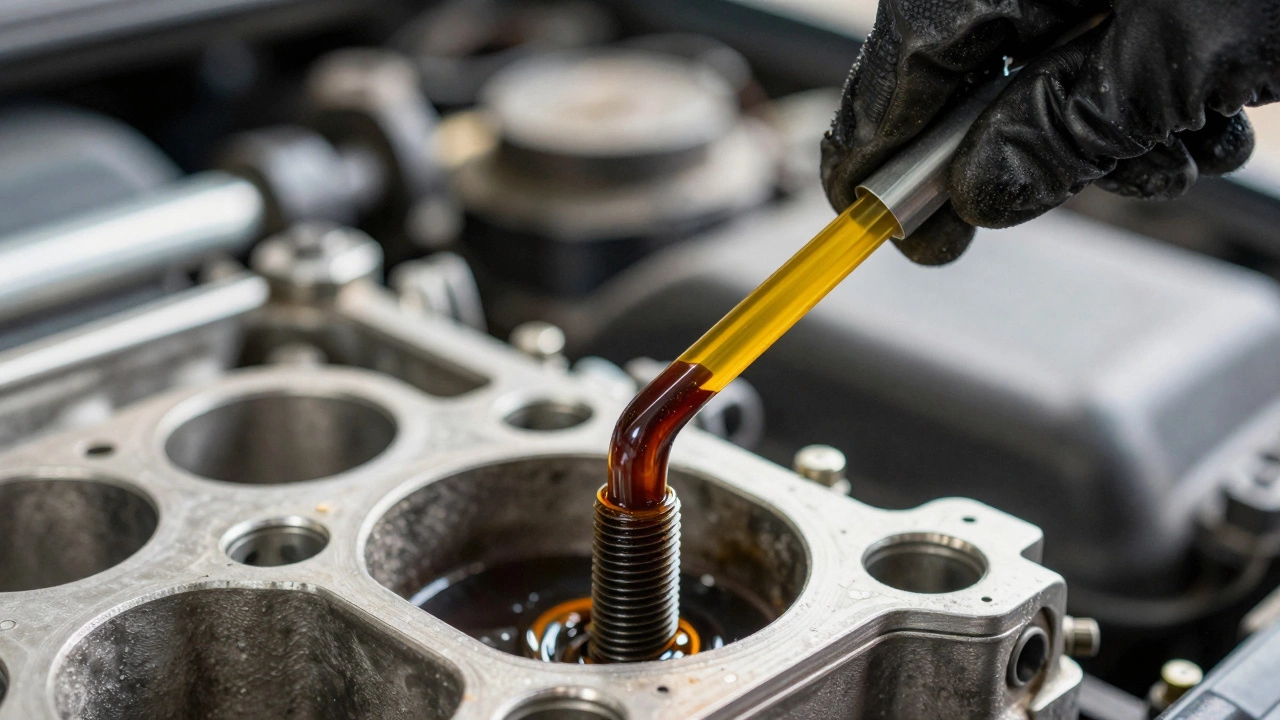
- Observe the color. Fresh oil is amber or light brown. Used oil is dark brown or black. Dark color alone isn’t bad-it means it’s doing its job trapping dirt. But if it’s gritty or smells foul, it’s time for a change.
Resetting the Oil Life Monitor
After you get an oil change, the mechanic should reset the monitor. If you do it yourself, or if the shop forgets, the light will stay on. Leaving it on doesn’t hurt the car, but it’s annoying. Most cars allow you to reset it via the infotainment menu or a button sequence on the dashboard. For instance, many Ford models require holding the trip reset button while turning the key to "on." Consult your owner’s manual for the exact steps for your model.
What does it mean if my oil life is at 15%?
An oil life of 15% means your engine oil has degraded significantly and is nearing the end of its effective lifespan. You should plan to get an oil change within the next 500-1,000 miles. It is not an emergency yet, but you should not delay further.
Can I ignore the maintenance required light?
You can ignore it for a short period, but not indefinitely. Ignoring it regularly voids warranties and leads to premature engine wear. Think of it as a strong recommendation from the manufacturer based on your specific driving data.
Why did my check engine light come on after an oil change?
This is often due to a loose gas cap or an improperly installed oil filter. However, if the mechanic didn't reset the oil life monitor, the car might still think service is due. If the light persists, get a diagnostic code read to rule out sensor issues.
Does synthetic oil last longer than conventional oil?
Yes, synthetic oil resists breakdown better under high heat and stress. Most modern cars using synthetic blend or full synthetic can go 7,500 to 10,000 miles between changes, compared to 5,000 miles for conventional oil. Always follow your manufacturer's specification.
Is it safe to drive with the red oil light on?
No. The red oil light indicates critically low oil pressure. Continuing to drive can destroy your engine in minutes. Pull over safely, turn off the engine, and call for assistance. Do not attempt to drive to a garage.