Suspension Repair Guide & Estimator
Select a component below to see if it can be fixed, recommended actions, and estimated costs.
Shock Absorber
Control Arm
Ball Joint
Tie Rod End
Coil Spring
Bushings
Component Name
Issue description...
Answer...
Click a component to view details
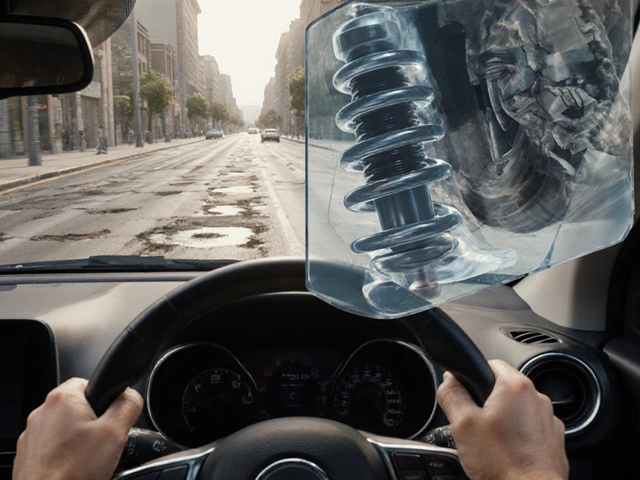
Your car feels like it’s driving on a bucking bronco. Every pothole sends a jolt through your spine, and that strange clunking noise when you turn the wheel has become your daily soundtrack. You might be asking yourself: can this suspension damage be fixed, or is it time for a costly overhaul?
The short answer is yes, most suspension damage can be repaired. However, the definition of "fixed" varies wildly depending on what exactly broke. Sometimes, it’s a simple bolt tightening. Other times, it requires replacing bent metal components that cannot be straightened safely. Understanding the difference between a quick fix and a major rebuild saves you money and, more importantly, keeps you safe on the road.
Understanding What Actually Breaks
To know if something can be fixed, you first need to know what failed. The Suspension System is a complex network of springs, shocks, struts, and linkages that connect your wheels to the chassis. It handles two main jobs: keeping tires in contact with the road for grip, and absorbing bumps so you don’t feel every pebble.
Damage usually falls into three categories:
- Wear and Tear: Rubber bushings rotting, seals leaking oil from Shock Absorbers, or ball joints getting loose.
- Impact Damage: Hitting a deep pothole at speed, bending a Control Arm or snapping a tie rod.
- Corrosion: Rust eating away at mounting points, common in areas with heavy road salt use.
Wear and tear is almost always fixable by replacement. Impact damage is trickier. If a metal arm bends, mechanics rarely bend it back because the metal’s structural integrity is compromised. Instead, they replace the part. This distinction is crucial for budgeting your repair.
The Diagnostic Process: Is It Fixable?
Before any wrench turns, a mechanic needs to confirm the diagnosis. You can do some preliminary checks yourself, but professional assessment ensures nothing is missed. Here is how we determine if the damage is repairable:
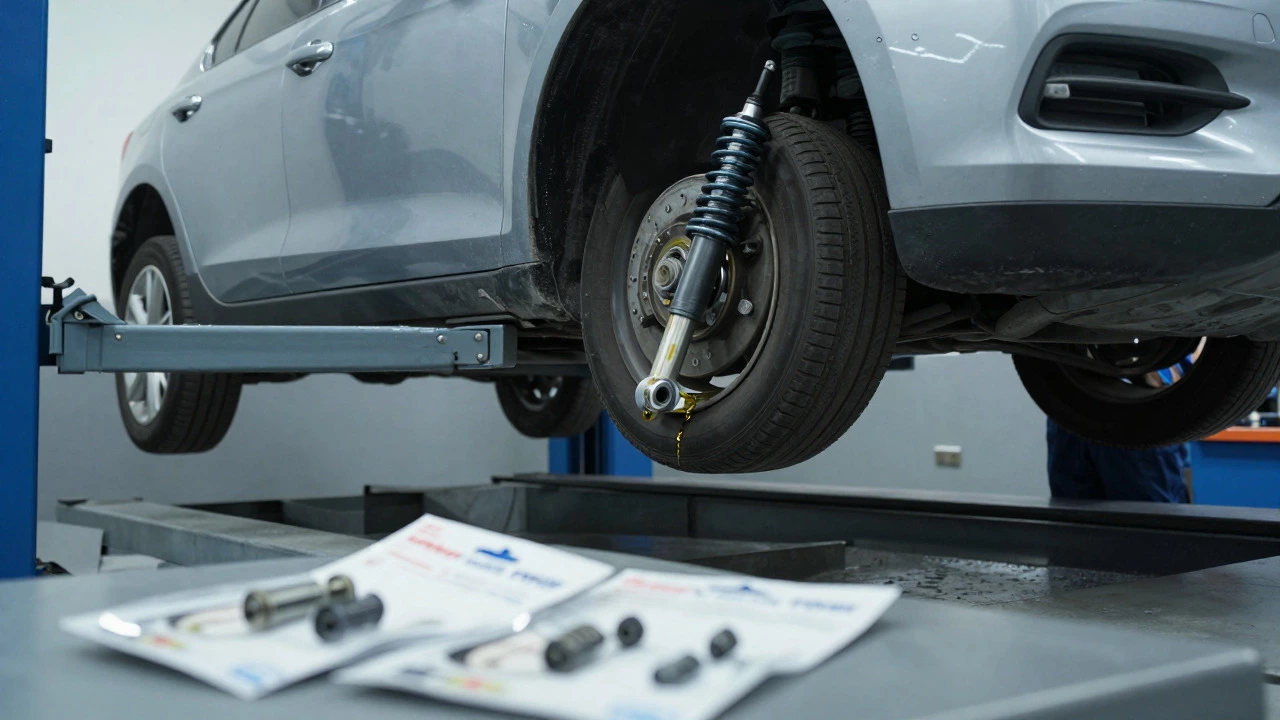
- The Visual Inspection: We look for obvious leaks on shocks and struts. If oil is dripping down the body of the shock, the internal seal is blown. These are sealed units; they cannot be rebuilt cost-effectively. They must be replaced.
- The Bounce Test: Push down hard on each corner of the car. If it bounces more than twice, your dampers are dead. This isn’t "damage" in the catastrophic sense, but it is failure. The fix is replacement.
- The Shake Down: With the car lifted, we grab the tire at 12 and 6 o’clock, then 9 and 3 o’clock. Excessive play indicates worn ball joints or tie rod ends. These parts have tapered splines that wear out over time. Once worn, they cannot be tightened back to spec. They must be swapped out.
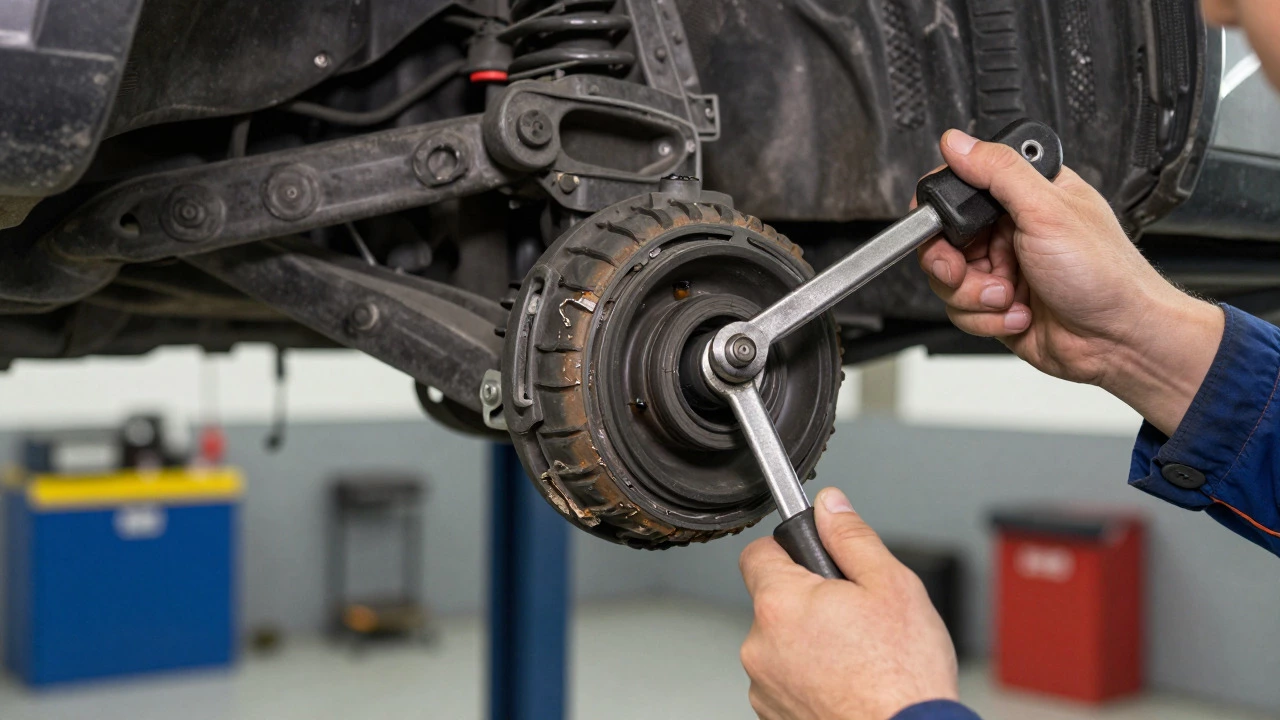
- Checking Bushings: Rubber bushings isolate vibration. Over time, they crack or dry-rot. If a bushing is torn, it can sometimes be pressed out and a new one pressed in. However, many modern cars use integrated bushings where the rubber is molded directly into the metal arm. In these cases, the entire control arm must be replaced.
Repair vs. Replace: Making the Right Call
This is the core dilemma. When does a repair make sense, and when does replacement win? Let’s look at specific components.
| Component | Common Issue | Can It Be Rebuilt? | Recommended Action |
|---|---|---|---|
| Shock Absorber / Strut | Leaking fluid, loss of damping | No (sealed unit) | Replace entirely |
| Control Arm Bushing | Cracked rubber, excessive play | Yes (if serviceable) | Replace bushing or entire arm |
| Ball Joint | Loose connection, clicking noise | No (wear item) | Replace ball joint or control arm |
| Tie Rod End | Steering wander, uneven tire wear | No (wear item) | Replace tie rod end |
| Coil Spring | Broken coil, sagging ride height | No (high tension danger) | Replace spring immediately |
Notice a pattern? Most suspension parts are designed as disposable assemblies. This is intentional. Safety-critical components shouldn't rely on a mechanic's ability to "fix" them in a pinch. They should be swapped for brand-new, factory-spec parts. Trying to weld a cracked control arm is a recipe for disaster. Metal fatigue means the next hit could snap it while you’re merging onto the highway.
Hidden Costs: Alignment and Labor
You might think fixing suspension is just buying a part and bolting it on. That’s where people get burned financially. Whenever you disturb the geometry of the suspension-by replacing control arms, tie rods, or even lowering springs-you change the angles of your wheels.
If you replace a worn ball joint, your camber angle shifts. If you swap a tie rod, your toe setting goes out of whack. Driving with misaligned wheels after a suspension repair leads to rapid, uneven tire wear. You could spend £200 on suspension parts only to burn through a set of tires in 2,000 miles.
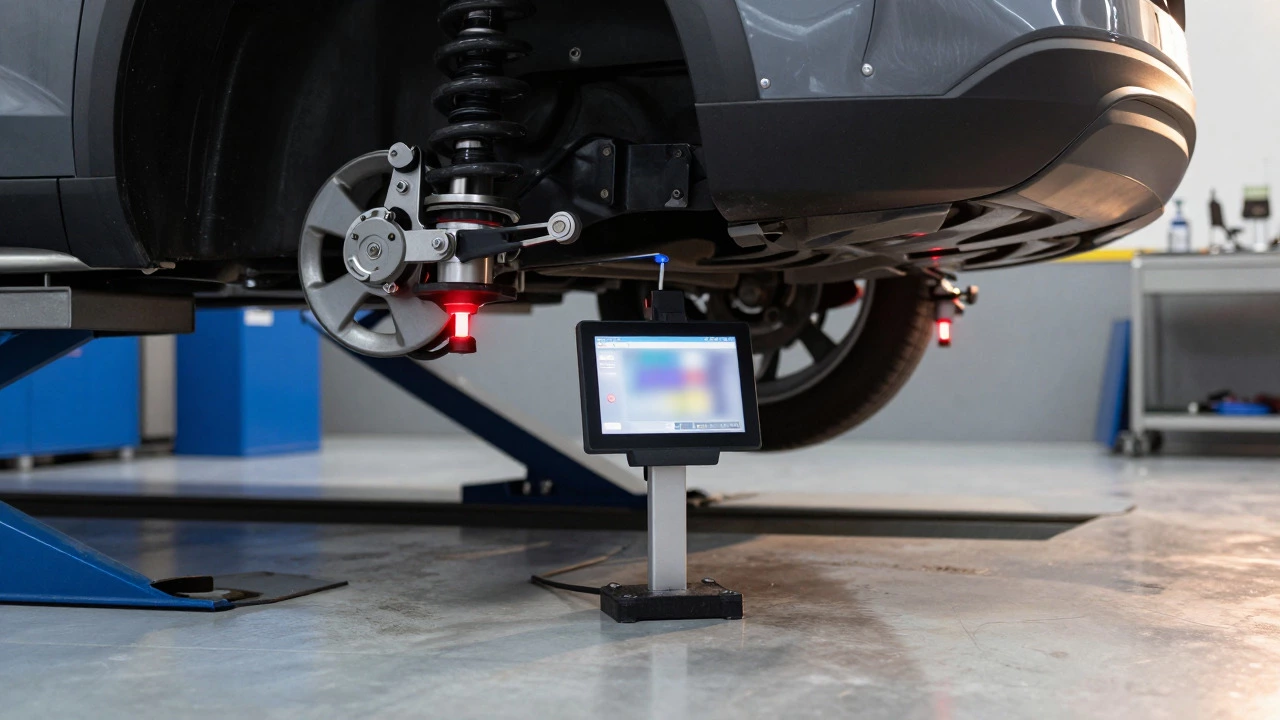
Always factor in a four-wheel alignment after any suspension work. This isn’t optional; it’s part of the fix. Without it, the repair is incomplete. Expect to pay an additional fee for this service, which typically takes about 45 minutes.
When to Walk Away From the Car
Is there ever a point where suspension damage is too much to fix? Yes. It comes down to economics and safety. Consider walking away if:
- The Frame is Bent: If a severe impact twisted the subframe or unibody structure, suspension repairs won’t help. The car will never track straight again without expensive frame straightening equipment.
- Rust Has Compromised Mounting Points: If the holes where bolts go into the chassis are rusted out, welding new patches is risky. The metal around rust is often brittle. A solid mount is essential for safety.
- Cost Exceeds Value: If your car is worth £3,000 and the full suspension overhaul costs £2,500, ask yourself if it’s worth it. While you can drive it longer, the reliability drops significantly after such extensive work.
Preventing Future Damage
Once your suspension is fixed, how do you keep it that way? Prevention is cheaper than cure.
First, slow down for potholes. It sounds obvious, but hitting a hole at 30 mph puts ten times the stress on your parts compared to hitting it at 10 mph. Second, check your tires regularly. Under-inflated tires act like soft springs, transferring more shock to the suspension components. Third, listen to your car. A small squeak from a bushing today prevents a broken control arm tomorrow. Addressing minor wear early extends the life of the entire system.
Finally, consider your driving environment. If you live in Manchester or other rainy UK cities, road salt accelerates corrosion. Rinsing the undercarriage during winter months helps protect those critical metal joints from rusting prematurely.
How long does it take to fix suspension damage?
Simple replacements like tie rod ends or ball joints can take 1-2 hours per side. More complex jobs involving strut removal and spring compression may take half a day. Always add time for a post-repair wheel alignment, which takes another 45-60 minutes.
Is it safe to drive with damaged suspension?
It depends on the severity. Minor wear might just cause noise and roughness. However, failed shocks, broken springs, or loose ball joints are dangerous. They can lead to loss of steering control or wheel collapse. If you hear clunking or feel pulling, avoid high-speed driving until inspected.
Can I fix suspension damage myself?
Experienced DIYers can replace simple parts like sway bar links or tie rod ends. However, working with compressed coil springs requires special tools (spring compressors) and carries significant risk of injury. If you lack proper tools, leave strut and spring work to professionals.
Why does my car pull to one side after suspension repair?
This usually indicates improper wheel alignment or uneven tire pressure. If the suspension components were replaced, the geometric angles changed. A professional alignment adjusts the camber, caster, and toe settings to ensure the car drives straight.
How much does suspension repair cost?
Costs vary widely. Replacing a single tie rod end might cost £50-£100 including labor. A full front-end suspension overhaul with new shocks, control arms, and bushings can range from £800 to £1,500+ depending on the vehicle make and model. Always get a detailed quote before authorizing work.