Oil Change Interval Estimator
Vehicle & Oil Type
Driving Conditions
You’re driving down the highway, glancing at your dashboard. The check engine light isn’t on, but that little wrench icon or "Oil Life" percentage is nagging you. You haven’t been to a shop in six months, and you’re wondering: can I push this a bit further? Or am I about to seize my engine?
The short answer? It depends. But the long answer involves understanding what oil actually does, how modern engines differ from older ones, and why that "5,000 miles" rule your dad swore by might be outdated for your 2024 sedan.
The Real Job of Engine Oil
Think of engine oil as the blood of your vehicle’s heart (the internal combustion engine). It doesn’t just lubricate moving parts; it cools them, cleans out sludge, and seals gaps between pistons and cylinder walls. When oil breaks down, it loses its viscosity-meaning it gets too thin to protect metal surfaces or too thick to flow properly.
If you skip changes for too long, the additives that fight corrosion and neutralize acids get used up. That’s when wear starts. And unlike a flat tire, you won’t always hear the damage happening until it’s expensive.
Old Rules vs. Modern Reality
Your grandfather’s truck probably needed an oil change every 3,000 miles. Why? Because oils back then were mineral-based and broke down quickly under heat and stress. Today, most cars leave the factory with synthetic oil, which lasts much longer because it’s engineered to resist thermal breakdown and oxidation.
Manufacturers like Toyota, Honda, and Ford now recommend intervals of 7,500 to 10,000 miles-or even 12,000 miles for some full-synthetic setups. But here’s the catch: those recommendations assume "normal" driving conditions. If you live in a dusty area, do lots of stop-and-go traffic, or make frequent short trips where the engine never fully warms up, you’re technically in "severe service." In those cases, cutting the interval in half is a smart move.
What Does Your Manual Actually Say?
Ignore the sticker on the windshield from the last quick-lube place. Check your owner’s manual. It’s the only document that knows your specific engine’s tolerances and oil capacity. For example, a turbocharged Subaru WRX runs hotter than a naturally aspirated Honda Civic, so its oil works harder and may need changing sooner despite both being modern cars.
Most newer vehicles also have an Oil Life Monitoring System that calculates remaining oil quality based on actual usage data like RPMs, temperature cycles, and idle time. This system is usually more accurate than mileage alone. If it says 5% left, don’t wait until 0%. Plan your appointment within the next few hundred miles.
Symptoms You’re Overdue
Not all cars have digital monitors. Here’s how to spot trouble manually:
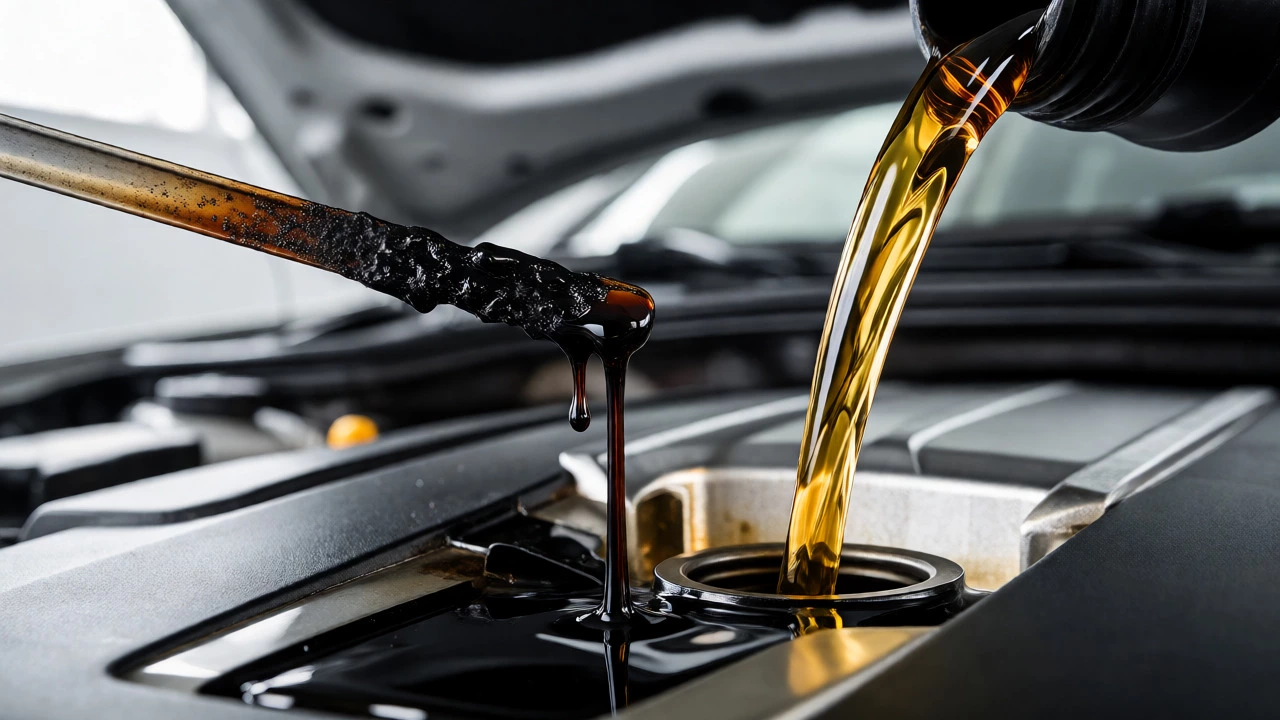
- Dark, gritty oil: Pull the dipstick. Fresh oil is amber and translucent. If it’s black and feels gritty between your fingers, it’s saturated with contaminants.
- Loud ticking or knocking: Low oil pressure means valves and lifters aren’t getting enough lubrication. This noise often gets louder when the engine is cold.
- Burning smell: If oil leaks onto hot exhaust components, you’ll smell it inside the cabin. This isn’t necessarily overdue oil, but it signals a problem that needs attention before levels drop dangerously low.
- Check Engine Light: Sometimes triggered by low oil pressure sensors, not just emissions issues. Don’t ignore it.
Risking It: What Happens If You Wait Too Long?
Let’s say you stretch 7,500 miles into 12,000. What’s the worst-case scenario? Sludge buildup. This gel-like substance blocks oil passages, starving critical components like camshafts and crankshaft bearings. Once sludge forms, no amount of new oil fixes it completely. You might face a top-end rebuild costing $2,000-$4,000.
But if you’re using high-quality synthetic oil and your car has a robust monitoring system, going 1,000 miles over the recommended interval rarely causes immediate harm. It’s not ideal, but it’s not catastrophic either. The danger zone begins when you exceed the interval by 2,000+ miles without checking oil levels.
| Vehicle Type | Typical Interval (Miles) | Time Limit | |
|---|---|---|---|
| Modern Sedan (Synthetic) | 7,500 - 10,000 | 12 Months | Follow Oil Life Monitor |
| Older Car (Conventional) | 3,000 - 5,000 | 6 Months | Check monthly |
| Turbocharged Engines | 5,000 - 7,500 | 6-12 Months | Heat degrades oil faster |
| Diesel Trucks | 7,500 - 15,000 | 12 Months | Varies widely by model |
Factors That Shorten Your Interval
Even if your manual says 10,000 miles, consider these red flags that mean you should change oil sooner:
- Frequent short trips: Under 5 miles. The engine doesn’t reach operating temp, so moisture and fuel dilute the oil instead of evaporating.
- Extreme temperatures: Very hot summers or freezing winters stress oil chemistry.
- Towing or hauling: Adds significant load and heat to the engine.
- Dusty environments: Off-road driving introduces particulates that filters can’t catch indefinitely.
If any of these describe your daily routine, subtract 2,000-3,000 miles from the standard recommendation. It’s cheap insurance compared to engine repair bills.
Can You Just Top Off Instead of Changing?
No. Topping off adds volume but doesn’t remove contaminants. Old oil still contains acids, metal shavings, and degraded additives. Adding fresh oil dilutes the bad stuff slightly but doesn’t reset the clock. Think of it like adding water to dirty bathwater-it’s still dirty.
Always replace both the oil and the oil filter, which traps particles and holds up to a quart of old oil itself. Skipping the filter is a false economy.
Bottom Line: How Long Is Too Long?
For most modern cars using synthetic oil, you’re safe up to 10,000 miles or one year, whichever comes first. If your car lacks a monitor, stick to 5,000 miles as a conservative baseline. Never go beyond 12 months, even if you’ve driven only 1,000 miles. Time alone degrades oil through oxidation.
When in doubt, check the dipstick. Black, smooth oil? Fine. Gritty, milky, or low-level oil? Schedule a change immediately. Your engine will thank you later.
Is it really okay to drive 10,000 miles between oil changes?
Yes, provided your vehicle manufacturer recommends it and you use full synthetic oil. Modern engines are built with tighter tolerances and better filtration systems that allow longer intervals. Always verify against your owner’s manual rather than assuming all cars follow the same schedule.
What happens if I miss an oil change by 1,000 miles?
Nothing catastrophic. Most modern oils have a safety margin built in. Going 1,000 miles over the recommended interval typically won’t cause noticeable wear. However, consistently stretching intervals beyond 2,000 miles over the limit increases the risk of sludge formation and accelerated component wear.
Does driving style affect oil life?
Absolutely. Aggressive acceleration, high RPMs, towing heavy loads, and extensive idling all degrade oil faster than gentle, steady highway driving. Severe service schedules account for these factors by recommending shorter intervals.
Why does my oil look black after only 3,000 miles?
Black color indicates the oil is doing its job by suspending soot and carbon deposits. Dark oil isn’t necessarily bad oil. Check texture and level instead. If it flows smoothly and stays at the correct level, it’s likely still effective despite the color.
Should I change oil once a year even if I don’t drive much?
Yes. Oil oxidizes over time regardless of mileage. Moisture can accumulate inside the crankcase during infrequent use, leading to acid formation. Annual changes prevent corrosion and ensure fresh additives are present, protecting your engine during periods of low activity.