Fuel Pump Diagnostic & Cost Estimator
Step 1: Diagnose the Issue
Analysis & Estimate
Complete the steps on the left to generate a diagnosis and cost estimate.
Your car starts fine in the morning, but halfway through your commute, it sputters and dies. You restart it, and it runs for another ten minutes before giving up again. It’s frustrating, dangerous, and usually points to one specific culprit: a failing fuel pump. If you’ve landed here, you’re probably hoping there’s a quick fix-a spray, a reset button, or a cheap part that swaps in under an hour. I’m going to be blunt with you because your safety depends on it: you generally cannot "fix" a broken mechanical fuel pump. The only real solution is replacement.
That said, understanding *why* it failed and ensuring the problem isn’t something else (like a clogged filter) can save you hundreds of pounds. This guide breaks down how to diagnose the issue, when you might get away with a minor repair, and exactly what replacing the unit involves so you aren’t caught off guard by a mechanic’s bill.
Quick Summary / Key Takeaways
- You can't rebuild most modern pumps: Internal electric fuel pumps are sealed units. If the motor or impeller fails, the whole assembly must be replaced.
- Check the filter first: A clogged fuel filter restricts flow and kills the pump. Replacing this is cheap and easy, often mimicking a new pump performance.
- Listen for the hum: Turn the key to "On" (not start). You should hear a faint whirring from the rear tank area for 2-3 seconds. Silence means trouble.
- Heat soak is a clue: If the car dies when hot but restarts after cooling down, the pump motor windings are likely shorting out due to heat.
- DIY vs. Pro: In-tank pumps require dropping the fuel tank or removing the rear seat. It’s messy and requires handling flammable vapors. Consider professional help if you lack tools or space.
Diagnosing the Problem: Is It Really the Pump?
Before you buy a £150 replacement part, you need to be sure. Misdiagnosis is the most common mistake in DIY auto repair. A bad fuel pump shares symptoms with dirty injectors, a failing mass airflow sensor, or even a weak battery. Let’s isolate the variable.
The first test is auditory. Modern vehicles use an electric fuel pump located inside the fuel tank. When you turn the ignition key to the "On" position-before cranking the engine-the pump primes the system. You should hear a distinct humming or whirring sound coming from the rear of the vehicle for about two seconds. If you hear nothing, or a high-pitched squeal/grinding noise, the pump motor is likely dead or seizing.
If the sound is normal, check the pressure. Fuel systems operate under significant pressure-typically between 40 and 60 PSI for gasoline engines. Low pressure causes lean running conditions, leading to hesitation during acceleration or stalling at idle. You can borrow a fuel pressure gauge from an auto parts store. Connect it to the Schrader valve on the fuel rail (located near the engine). Start the car and watch the needle. If it drops below the manufacturer’s specification (check your owner's manual or online forums for your specific model), you have a pressure issue.
| Symptom | Likely Cause | Severity |
|---|---|---|
| Car won’t start, no crank sound | Dead pump motor or blown fuse | Critical |
| Sputtering at high speeds/load | Pump losing pressure or clogged filter | High |
| Stalls when hot, restarts when cool | Internal pump winding failure (heat soak) | High |
| Hesitation during acceleration | Low pressure or dirty injectors | Medium |
| Rough idle but drives okay | Often not the pump; check spark plugs/MAF | Low |
Pay close attention to the "heat soak" scenario. If your car drives perfectly in the morning but dies every time you try to restart it after sitting in traffic for twenty minutes, the pump’s internal copper windings are likely melting or shorting as they heat up. Once the car cools, the metal contracts, and it works temporarily. This is a classic sign of impending total failure.
The Cheap Fix: Fuel Filters and Additives
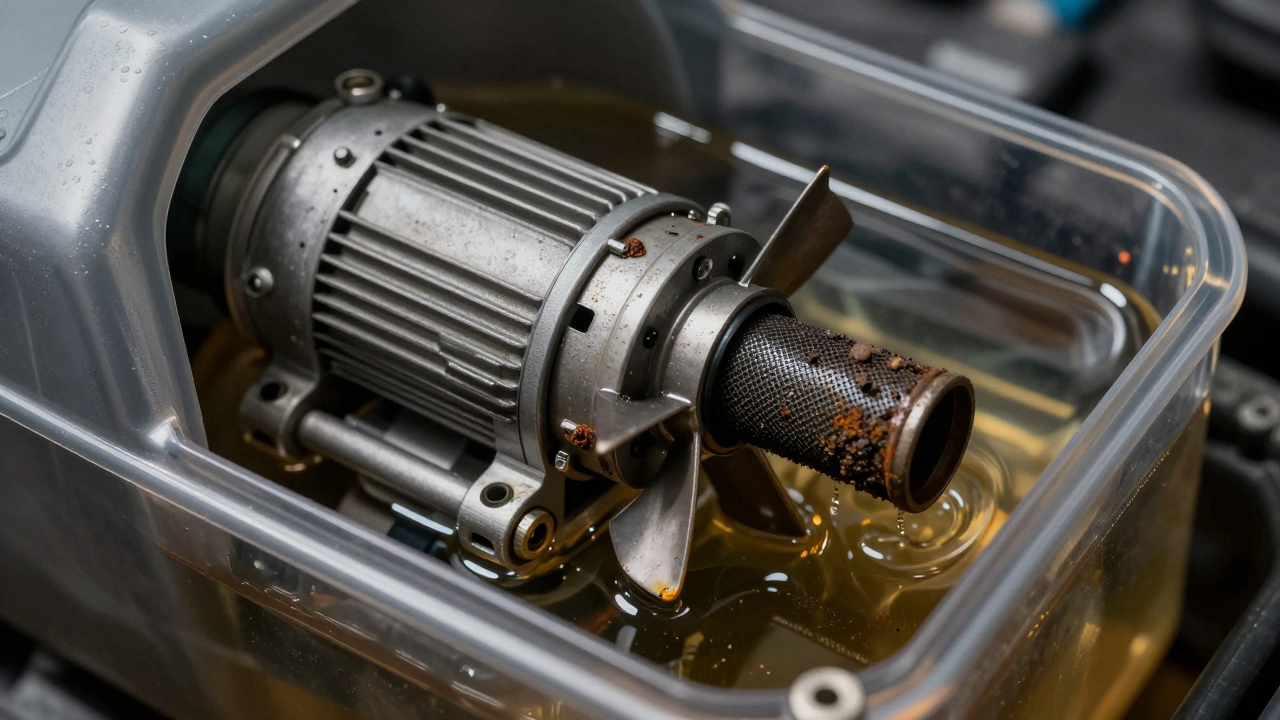
Here is where you might actually "fix" the problem without buying a new pump. Many people assume the pump is broken when it’s simply starved of fuel. The fuel pump sits in the tank, sucking gas through a pickup tube. At the end of that tube is a screen or strainer. Over years, sediment, rust, and debris from the tank bottom clog this screen.
If the screen is blocked, the pump has to work twice as hard to pull fuel, causing it to overheat and fail prematurely. On many older cars, there is also an external inline fuel filter. If this hasn’t been changed in five years, it acts like a kinked hose. Replacing a fuel filter costs less than £20 and takes thirty minutes. It restores proper flow and can extend the life of a struggling pump significantly.
What about fuel additives? Products claiming to "clean" the fuel system can help remove varnish buildup on the pump’s impeller blades. If the impeller is coated in sticky residue, it won’t spin efficiently. A quality injector cleaner poured into a half-empty tank might restore enough efficiency to get you to a shop. However, do not rely on this for a mechanically seized pump. It’s a band-aid, not a cure.
Replacing the Fuel Pump: The Real Solution
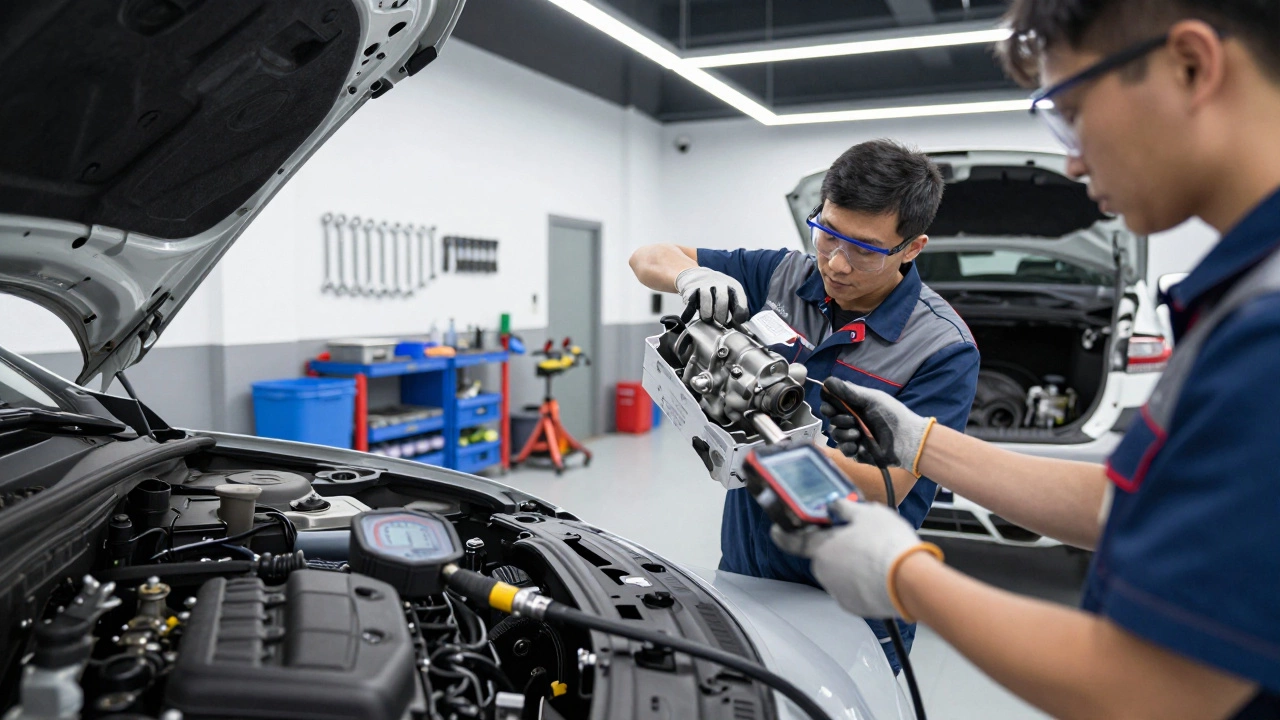
When the motor burns out, the internal gears strip, or the impeller cracks, replacement is the only option. Modern fuel pumps are modular assemblies. They include the pump motor, the fuel pressure regulator, the sending unit (which tells your dashboard how much gas you have), and sometimes the inertia switch. You don’t replace just the motor; you replace the whole module.
For most drivers, this is a job for a professional mechanic. Why? Because access varies wildly by vehicle. On some trucks, you lift the bed liner and unscrew a panel on top of the tank. On others, you must drop the entire fuel tank, which holds gallons of heavy, flammable liquid. This requires jack stands, fuel lines disconnect tools, and patience. Working with fuel carries fire risks. Vapors are heavier than air and can ignite from a small static spark.
If you are determined to do it yourself, follow these critical steps:
- Relieve fuel pressure: Remove the fuel pump fuse, start the car, and let it run until it stalls. Crank it a few more times to bleed the system. Never disconnect fuel lines while pressurized.
- Disconnect the battery: Safety first. Remove the negative terminal to prevent accidental shorts.
- Access the pump: Locate the service panel. Under rear seats for sedans, under the trunk floor for coupes, or under the bed for pickups. If none exist, the tank must be dropped.
- Remove the old module: Disconnect electrical connectors and fuel lines. Use a wrench to break the lock ring holding the pump in the tank. Be careful; the sealant is brittle.
- Install the new unit: Transfer any necessary brackets or filters from the old unit if the new one doesn’t include them. Ensure the O-rings are lubricated with clean diesel or petroleum jelly to prevent tearing during installation.
- Prime the system: Before starting the engine, turn the key to "On" three times to prime the new pump. Listen for the hum. Then start the engine and check for leaks around the fittings.
A new OEM (Original Equipment Manufacturer) pump typically costs between £100 and £300 depending on the brand. Aftermarket options are cheaper but may have shorter lifespans. Given the labor involved, using a high-quality part is worth the extra cost to avoid doing the job twice.
Preventing Future Failures
Fuel pumps are designed to last the life of the vehicle, but they often fail earlier due to neglect. How can you protect your investment? First, keep your tank above a quarter full. The fuel itself acts as a coolant for the pump motor. Running on fumes exposes the pump to air, causing it to overheat. Consistently driving with low fuel is the number one cause of premature pump failure.
Second, change your fuel filter regularly. If your car has an external filter, replace it every 30,000 miles. If it’s internal, ensure the dealer services it during major intervals. Clean fuel means less strain on the pump.
Finally, pay attention to early warnings. That slight hesitation when you step on the gas? Don’t ignore it. Addressing a clogged filter or cleaning injectors early can save you from a roadside breakdown later.
Can I replace just the fuel pump motor inside the assembly?
Generally, no. Most manufacturers sell the pump, sender, and regulator as a single sealed unit. While some third-party companies offer "rebuild kits," the labor to disassemble the housing often exceeds the cost of a new assembly, and the risk of leaking seals increases. For reliability, replace the entire module.
How much does it cost to replace a fuel pump?
Parts alone range from £80 to £300 for OEM quality. Labor adds another £100 to £300 depending on accessibility. If the tank needs to be dropped, expect higher labor costs. Total bills usually fall between £200 and £600.
Is it safe to drive with a failing fuel pump?
It is risky. A failing pump can lose pressure suddenly, causing the engine to stall while driving. This can lead to loss of power steering and braking assistance, increasing accident risk. Additionally, running the pump dry or overheating can cause permanent damage to the engine due to lean combustion.
Does a bad fuel pump throw a check engine light?
Not always. Early stages of failure might not trigger a code. However, if the pressure drops significantly, you may see codes like P0087 (Fuel Rail/System Pressure Too Low) or P0190 (Fuel Volume Regulator Control Circuit). Lack of a check engine light does not rule out pump failure.
Why does my fuel pump make a loud whining noise?
A loud whine often indicates cavitation or wear. This happens when the pump struggles to draw fuel, creating air bubbles that collapse violently inside the pump. Causes include a clogged inlet screen, low fuel level, or internal bearing wear. It is a warning sign that the pump will fail soon.