Clutch vs Transmission Diagnostic Tool
Answer these symptoms to determine if your issue is likely clutch or transmission related. Based on your answers, we'll show you what to check next.
Symptom Analysis
Clutch Symptoms
Transmission Symptoms
Diagnosis Result
Ever felt your car hesitate when you shift gears? Or heard a weird grinding noise when you press the pedal? You start wondering: is it the clutch or the transmission? It’s a common question-and one that can cost you hundreds, or even thousands, if you guess wrong. The truth is, clutch and transmission problems often feel the same. But they’re not the same thing. And fixing the wrong one is a waste of time and money.
What the clutch actually does
Your clutch connects your engine to your transmission. When you press the clutch pedal, you disconnect the engine from the wheels so you can shift gears smoothly. When you let it out, the engine reconnects and power flows again. Simple, right? But that simple mechanism wears out. Clutch kits don’t last forever. Most last between 50,000 and 100,000 miles, depending on how you drive.
Signs your clutch is failing:
- Slipping: The engine revs higher, but your car doesn’t speed up-especially when accelerating hard or going uphill.
- Hard pedal: You have to press the pedal all the way to the floor to get a gear.
- Grinding when shifting: You hear a metal-on-metal scrape when you push the pedal down and try to shift.
- Clutch pedal feels spongy or doesn’t return properly.
- Car lurches forward when you start in first gear without giving it gas.
If your clutch is slipping, you’re not just being lazy-you’re damaging it. Every time it slips, the friction material burns off faster. A worn clutch won’t hold torque. That’s why your car feels weak even when the engine sounds fine.
What the transmission actually does
The transmission takes the engine’s power and turns it into the right speed and torque for your wheels. It has gears that change automatically (in automatics) or manually (in manuals). Inside, there are dozens of moving parts: gears, bearings, bands, valves, and fluid that keeps everything cool and lubricated.
Signs your transmission is failing:
- Delayed engagement: You put the car in drive or reverse, and there’s a 2-5 second delay before it moves.
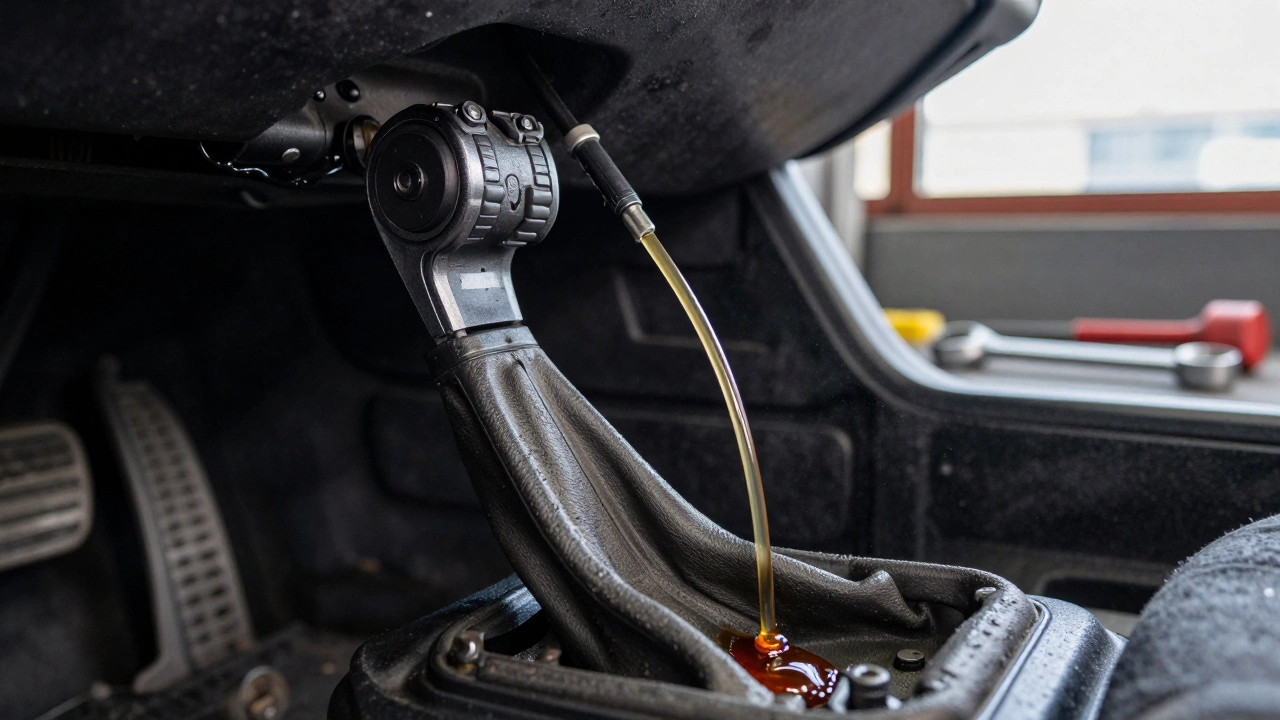
- Fluid leaks: Red or brown fluid under your car-especially near the center or back-is a red flag.
- Shuddering or shaking during shifts: Your car jerks or vibrates when changing gears, even at steady speeds.
- Strange smells: A burnt, acrid odor like overheated plastic or oil means the transmission fluid is breaking down.
- Check engine or transmission warning light on.
- Car won’t shift into certain gears-or slips out of gear while driving.
Transmission fluid isn’t something you top off like oil. It’s a sealed system. If it’s low, something’s leaking. If it’s dark and smells burnt, it’s been overheated or neglected. That’s not normal wear-it’s damage.
How to tell them apart: a quick diagnostic checklist
Here’s how to figure out which one’s acting up-without spending money on a mechanic’s diagnostic fee.
- Test it in neutral: Start the car, put it in neutral, and rev the engine. If it revs normally and sounds smooth, the engine is fine. If it revs erratically or makes noise, it’s not the transmission.
- Try shifting without the clutch: If you’re in a manual, try shifting gears without pressing the clutch. If you can’t get it into gear without grinding, your clutch is worn. If you can shift smoothly without the clutch but still have problems when driving, it’s likely the transmission.
- Check for slipping under load: Drive on a quiet road. Put the car in third gear, floor the accelerator. If the engine RPM spikes but speed doesn’t increase, it’s clutch slip. If the RPM stays steady but the car jerks or hesitates, it’s transmission trouble.
- Look under the car: Check for fluid leaks. Clutch systems use hydraulic fluid (same as brake fluid), usually clear or light amber. Transmission fluid is red or brown. If you see red fluid pooling near the center of the car, it’s transmission. If it’s near the front or side, near the pedal, it’s clutch hydraulic fluid.
- Listen to the noise: Grinding when you press the pedal? Clutch. Whining or humming while driving, especially in gear? Transmission. Rattling only in neutral? Could be a throwout bearing (part of the clutch system).

What happens if you ignore it
Clutch failure? You might be able to limp home by carefully shifting and avoiding hills. But if you keep driving with a slipping clutch, you’ll eventually burn it out completely. Then you’ll need a full clutch kit replacement-flywheel, pressure plate, disc, and release bearing. That’s $800-$1,500.
Transmission failure? That’s worse. A rebuilt transmission can cost $2,500-$4,500. A brand-new one? $5,000+. And if you wait too long, you might also damage the torque converter, valve body, or even the engine mounts.
One guy in Ohio drove his 2015 Honda Civic for six months with a slipping clutch. He thought it was just ‘old.’ When he finally got it checked, the clutch was gone-and the transmission had overheated from the extra strain. He ended up paying $4,200 to replace both.
What to do next
Don’t wait for it to die. If you’re seeing any of these symptoms:
- Slipping, grinding, or hard shifting
- Fluid leaks or strange smells
- Delayed gear engagement
Take it to a shop that specializes in clutch kits and transmissions. Ask them to do a pressure test on the clutch hydraulic system and a fluid analysis on the transmission. A good mechanic will show you the old parts and explain what failed.
If you’re handy and want to save money, you can buy a clutch kit online and install it yourself. But don’t try to rebuild a transmission unless you’ve done it before. Transmission rebuilds require precision tools, clean rooms, and experience. Even a small mistake can ruin it.
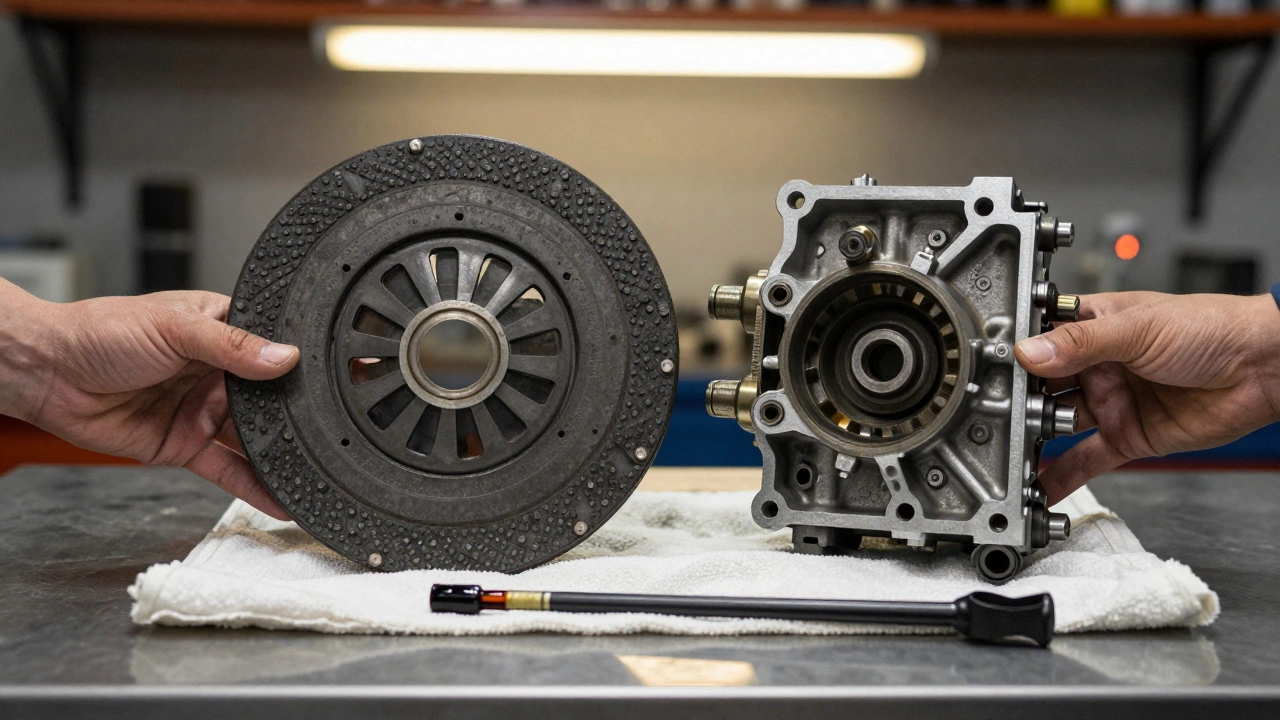
Prevention tips
Clutches and transmissions last longer if you treat them right:
- Don’t ride the clutch. Keep your foot off the pedal when not shifting.
- Don’t ‘pop’ the clutch to start moving. Ease into it.
- Change transmission fluid every 30,000-60,000 miles-check your manual. Most people never do.
- Don’t tow heavy loads without a transmission cooler.
- Use the right fluid. Never mix types.
Clutch wear is normal. Transmission failure isn’t. If your transmission is acting up, it’s not because you drove too much. It’s because something was neglected.
When to replace vs. repair
Clutch: Always replace the whole kit. Don’t just swap the disc. The pressure plate and release bearing wear too. Replacing just one part means you’ll be back in six months.
Transmission: Sometimes you can fix it. If it’s a solenoid or a leaky seal, it’s a $300 fix. If the gears are worn or the torque converter is shot, you need a rebuild or replacement. Ask for a written estimate that breaks down labor and parts.
Pro tip: If your car has over 120,000 miles and you’re replacing the clutch, consider replacing the transmission fluid and filter at the same time. It’s a cheap way to extend the life of both systems.
Can a bad clutch damage the transmission?
Yes. A slipping clutch puts extra strain on the transmission because it’s not transferring power efficiently. This causes the transmission to overheat, the fluid to break down, and the internal components to wear faster. Many transmission failures start as clutch problems that were ignored.
How long does a clutch kit last?
Typically 50,000 to 100,000 miles. Aggressive driving, frequent stop-and-go traffic, or riding the clutch can cut that in half. Highway driving and smooth shifts can push it past 120,000 miles.
Is it cheaper to fix the clutch or the transmission?
Clutch replacement costs $800-$1,500. Transmission repair can cost $1,500-$4,500. If you catch clutch issues early, you’ll save thousands. Ignoring clutch problems often leads to transmission damage.
Can I drive with a bad clutch?
You can, but only for a short time. A slipping clutch will get worse quickly. Driving with it can overheat the transmission, burn out the flywheel, or even cause the clutch to fail completely while you’re on the highway. Don’t risk it.
What does transmission fluid look like?
New transmission fluid is bright red and smells slightly sweet. Old fluid turns dark brown or black and smells burnt. If it’s thick, gritty, or has metal flakes, your transmission is wearing out. Check it with the dipstick or have a mechanic pull a sample.