Radiator Health Diagnostic Tool
Select the symptoms you are currently experiencing to assess your radiator's condition.
Diagnostic Result
Select at least one symptom to see a diagnosis.
Your car’s dashboard lights up like a Christmas tree. The temperature needle is climbing into the red zone, and you can smell something sweet burning under the hood. Panic sets in. Is it just a sensor glitch, or is your cooling system failing? More often than not, that spike in heat points directly to one critical component: the radiator. It’s the unsung hero of your engine, keeping things cool so they don’t melt down. When it starts to fail, it rarely gives a polite heads-up. Instead, it throws subtle hints before the catastrophic failure.
Ignoring these signs is expensive. A blown head gasket or a warped cylinder head costs thousands to fix. Catching a bad radiator early usually means a few hundred pounds at most. So, what exactly should you look out for? Let’s break down the real-world symptoms of a failing radiator, from the obvious steam clouds to the sneaky internal corrosion.
The Obvious Warning: Overheating Engine
The most direct symptom of a bad radiator is an overheating engine. If your temperature gauge consistently reads higher than normal, or if the warning light comes on while driving, your cooling system isn't doing its job. But why does this happen?
A radiator works by transferring heat from the hot engine coolant to the cooler outside air. If the radiator can’t dissipate that heat fast enough, the coolant stays hot, and so does the engine. This isn't always caused by a broken radiator, though. A stuck thermostat or a broken water pump can cause similar issues. However, if the fan is working and the belt is intact, the radiator itself is likely clogged with debris or internally blocked by rust and scale.
In Manchester, where we get plenty of rain and road salt in winter, external blockage is common. Mud, leaves, and bugs pack into the thin fins between the radiator tubes. Air can’t flow through, heat builds up, and the engine cooks. Check the front of your radiator grille next time you wash the car. If it looks like a vacuum cleaner bag full of dirt, that’s your culprit.
Coolant Leaks: Puddles Under the Car
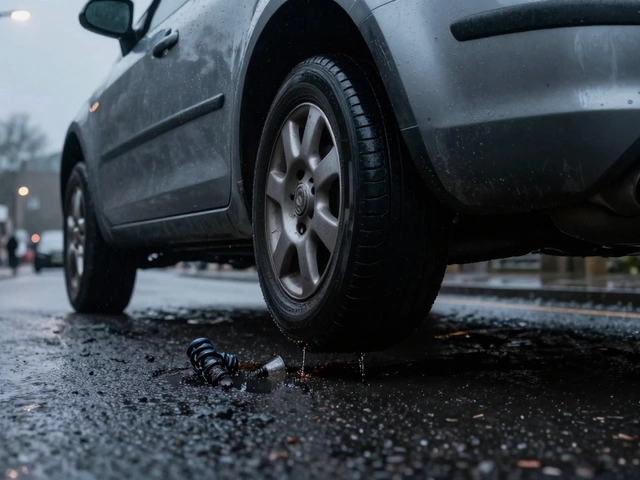
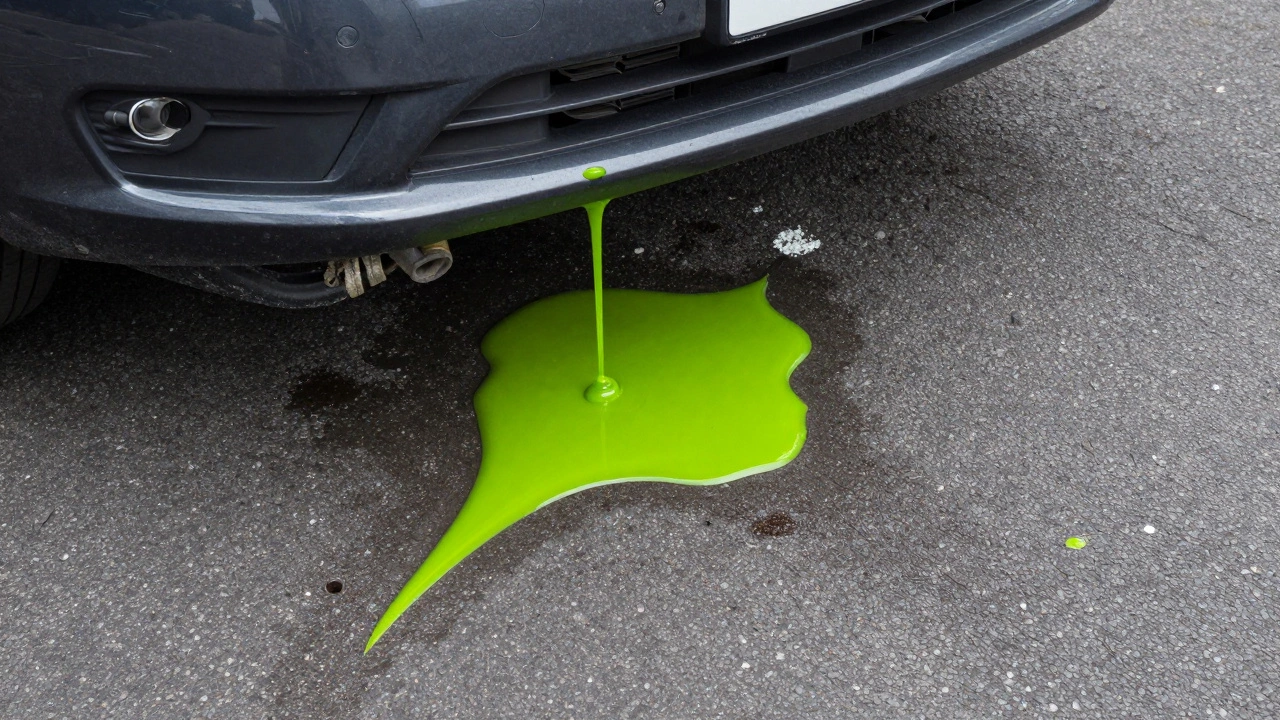
If you park your car overnight and see a puddle underneath in the morning, pay attention to the color. Brake fluid is clear or brownish. Transmission fluid is reddish. Coolant, however, is distinctively bright green, orange, pink, or yellow, depending on the type used in your vehicle.
Coolant leaks are a primary sign of radiator failure. Radiators are made of aluminum or copper tanks connected by thin plastic end caps and metal fins. Over time, vibration from the road causes stress fractures in these plastic tanks. Corrosion eats away at the metal seams. Even a hairline crack can drip steadily.
Look closely at the bottom corners of the radiator. That’s where gravity pulls the leaking fluid. You might also see white or crusty residue around the hoses connected to the radiator. That’s dried coolant. If you notice a drop in your coolant reservoir level without any visible leak, the problem might be internal-like a head gasket issue-but start by checking the radiator for external drips first.
Discolored or Rusty Coolant
Pull the cap off your coolant reservoir (only when the engine is cold!) and take a look at the liquid inside. Fresh coolant is clear and brightly colored. Old coolant turns murky, brown, or rusty. If you see floating particles or sludge, your radiator is corroding from the inside out.
This happens when different metals mix inside the cooling system. Aluminum radiators react with older ethylene glycol formulas that lack proper corrosion inhibitors. The result is galvanic corrosion. Tiny particles of rust and metal flake off the internal walls of the radiator. These flakes circulate through the engine, potentially clogging the narrow passages in the water pump and heater core.
If your coolant looks like chocolate milk, don’t just top it up with fresh stuff. You need a full flush and likely a new radiator. Running contaminated coolant accelerates wear on every part of the cooling system.
Steam Coming from Under the Hood
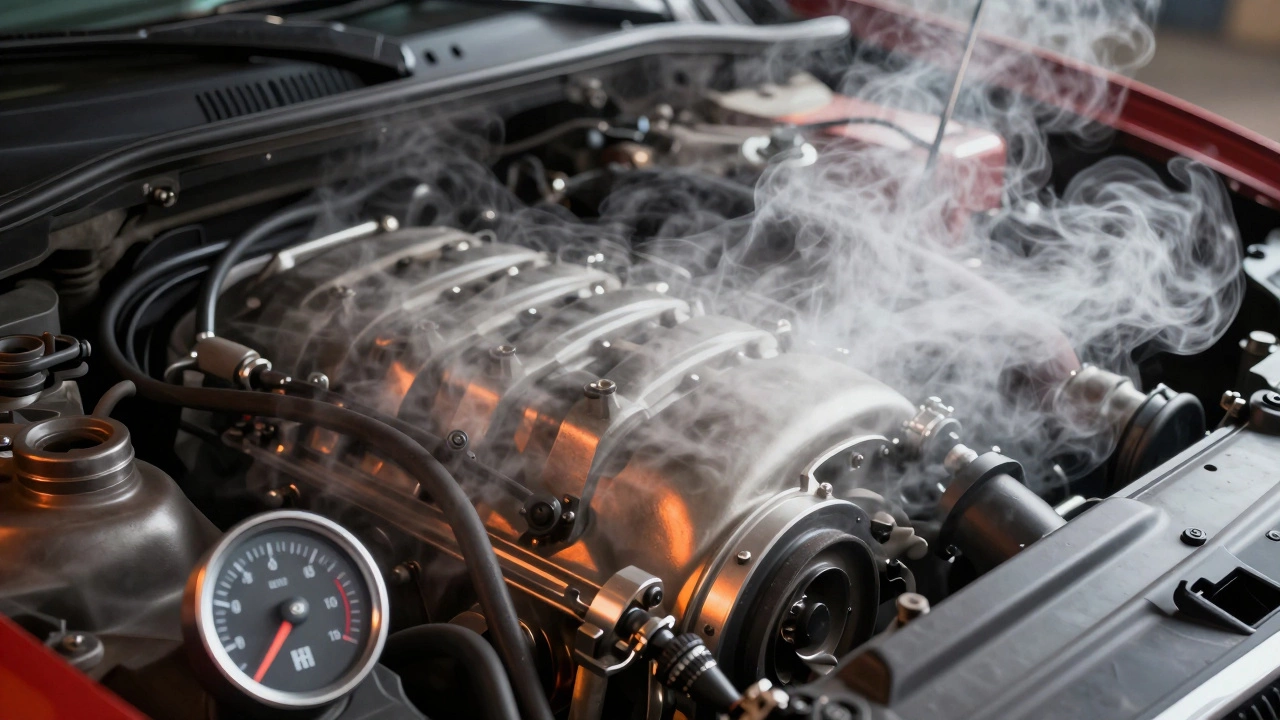
See steam billowing out from under your bonnet? Stop driving immediately. Steam means the coolant has reached boiling point and is escaping as vapor. While this can happen due to a loose cap, it’s frequently a sign of a major breach in the radiator or a severe overheating event.
Radiators operate under pressure to raise the boiling point of the coolant. When a crack forms or a seal fails, that pressurized coolant sprays onto hot engine parts and instantly turns to steam. This is dangerous. Opening the hood too quickly can release a cloud of scalding steam that burns your face and hands. Wait ten minutes for the engine to cool slightly before inspecting.
If you see steam but no external leak, check the radiator cap. A faulty cap won’t hold pressure, causing the coolant to boil over even if the radiator itself is intact. Replace caps every two years as preventative maintenance.
Bent or Damaged Fins
Take a flashlight and peek through the front grille at the radiator fins. They should look like a dense honeycomb. If you see bent, crushed, or missing sections, airflow is restricted. Those fins are essential for releasing heat. Without them, the radiator loses efficiency.
Fins get damaged easily. A stray rock kicked up by another car, a low branch while parking, or even aggressive washing with a high-pressure jet can bend them. In many cases, you can straighten minor damage with a comb-like tool called a fin comb. But if half the face is mashed flat, replacement is cheaper than trying to restore airflow manually.
Sweet Smell Inside the Cabin
Ever smelled maple syrup or vanilla inside your car? That’s the scent of ethylene glycol, the main ingredient in antifreeze. If you detect this smell while driving, especially when the heater is on, you have a leak somewhere in the cooling system.
While this could be a cracked hose, a leaking water pump, or a failed heater core, the radiator is a prime suspect. If the leak is near the firewall or passenger footwell, the fumes enter the cabin through the ventilation system. Breathing coolant vapors is harmful. It irritates the eyes, nose, and throat. Pull over safely, turn off the AC/heater, and open windows to ventilate.
Comparison: Bad Radiator vs. Other Cooling Issues
| Symptom | Bad Radiator | Stuck Thermostat | Broken Water Pump |
|---|---|---|---|
| Overheating | Yes, gradual increase | Yes, sudden spike | Yes, rapid rise |
| Coolant Leak | Common (external) | No | Possible (weep hole) |
| Strange Noises | No | No | Whining or grinding |
| Heater Performance | May reduce | Normal | Reduces significantly |
| Coolant Color | Rusty/sludgy | Normal | Normal |

When to Replace vs. Repair
Not every radiator issue requires a full replacement. Minor fin damage can be combed out. Small pinhole leaks in the core can sometimes be sealed with emergency radiator stop-leak products, but this is a temporary fix. For a permanent solution, consider the age and condition of the unit.
If your car is over ten years old, the radiator has likely suffered years of thermal cycling and chemical degradation. Replacing it entirely is safer. New radiators come with updated materials resistant to modern coolant types. Plus, while you’re there, replace the thermostat, hoses, and cap. Labor costs are the same whether you change one part or five.
Repair shops in the UK typically charge between £150 and £300 for a standard aluminum radiator replacement, including labor. Compare this to the £800+ cost of repairing a warped cylinder head from neglect. The math is simple.
Maintenance Tips to Extend Radiator Life
- Flush regularly: Change coolant every two to three years, or according to your manufacturer’s schedule. Old coolant becomes acidic and corrosive.
- Inspect visually: Every oil change, ask the mechanic to check for leaks and clean debris from the radiator fins.
- Use the right coolant: Mixing incompatible coolants (e.g., organic acid technology with traditional silicate-based) creates gel-like sludge that blocks the radiator.
- Check the cap: Test the pressure rating annually. A weak cap lowers the boiling point, stressing the radiator.
- Drive gently after cold starts: Avoid revving the engine until the temperature gauge moves. Cold engines need gentle warming to distribute lubrication evenly.
Final Thoughts on Radiator Health
Your radiator doesn’t announce its death with a siren. It whispers through small leaks, slight overheats, and strange smells. Paying attention to these cues saves you from roadside breakdowns and massive repair bills. Keep your cooling system clean, use the correct fluids, and address leaks immediately. Your engine will thank you with reliable performance mile after mile.
How much does it cost to replace a car radiator in the UK?
The cost varies by vehicle make and model. For a standard family car, expect to pay between £150 and £300 including labor. Luxury vehicles or those with complex cooling systems may cost upwards of £400. Always get a quote that includes the thermostat and coolant refill.
Can I drive my car if the radiator is leaking?
No. Driving with a leaking radiator risks severe engine overheating. Loss of coolant leads to loss of cooling capacity. Within minutes, you could warp the engine block or blow the head gasket. Tow the vehicle to a repair shop instead.
Why is my car overheating only when idling?
Idling overheating often points to a faulty cooling fan rather than the radiator itself. At speed, airflow cools the radiator naturally. When stopped, the electric or mechanical fan must pull air through. If the fan motor, relay, or blade is broken, heat builds up rapidly.
Is it safe to add water to a low coolant reservoir?
In an emergency, yes. Adding distilled water prevents immediate overheating. However, tap water contains minerals that cause scaling and corrosion. Once you reach a garage, flush the system and refill with proper 50/50 coolant mixture to protect against freezing and rust.
How long does a car radiator last?
Modern aluminum radiators typically last between 5 to 10 years, or roughly 60,000 to 100,000 miles. Lifespan depends heavily on maintenance, climate, and driving conditions. Vehicles driven in harsh winters with road salt experience faster corrosion.