Flowmaster Tone Finder
Not sure which Flowmaster series fits your build? Answer two questions to get a tailored recommendation based on physics and driver preference.
Recommended Series:
- Expected Drone Level:
- Best For:
You want that rumble. That chest-thumping bass note that announces your car before it even rounds the corner. But here is the tricky part: not all Flowmaster systems are created equal when it comes to volume and depth. Some scream like a banshee; others growl like a sleeping bear. If you are chasing the absolute deepest tone, you need to know exactly which series delivers that low-frequency punch without turning into a high-pitched drone that gives you a headache on the highway.
Most people think "louder" equals "deeper." It does not. A cheap straight pipe might be louder, but it sounds tinny and hollow. A well-tuned Flowmaster Super 40 Series muffler produces a rich, aggressive rumble because of its specific internal chamber design. This article breaks down exactly which Flowmaster models hit that sweet spot for deep tones, why they work, and what trade-offs you need to accept to get them.
The Short Answer: Super 40 Series Dominates Depth
If you want the deepest sound possible from a stock-style Flowmaster setup, the Super 40 Series is your winner. Period. It replaces the older Super 50 series and was engineered specifically to lower the pitch while increasing overall volume. The magic lies in its two-chamber design with no perforated tubes inside. Instead, sound waves bounce off solid baffles, canceling out high frequencies and amplifying the low-end roar.
Why does this matter? Because human ears perceive "depth" as low frequency (bass), not just decibels (volume). The Super 40’s geometry naturally filters out the mid-range screech that plagues cheaper mufflers. You get that muscle-car rumble that vibrates your seat. However, if you have a small engine, say under 3.0 liters, the Super 40 might sound too hollow or droney. For those engines, the Super 50 Series often provides a cleaner, albeit slightly less deep, tone.
Understanding How Flowmaster Creates Tone
To pick the right muffler, you need to understand the physics. Flowmasters are straight-through performance mufflers. Unlike conventional glass-pack or turbo-style mufflers that use fiberglass to absorb sound, Flowmasters use reflection. They have internal chambers separated by welded plates with holes.
- Chamber Count: More chambers usually mean more tuning control. The Super 40 has two large chambers. The Super 70 has three, which allows for even more aggressive tone shaping but can introduce turbulence.
- Baffle Design: The Super 40 uses non-perforated tubes in the first chamber. This forces sound waves to reflect back and forth, canceling highs and boosting lows. This is the key to the "deep" sound.
- Inlet/Outlet Diameter: Wider pipes allow more airflow, which generally lowers the pitch. A 3-inch inlet will sound deeper than a 2.25-inch inlet on the same vehicle.
Think of it like blowing across the top of a bottle. A big bottle makes a low note. A small bottle makes a high note. The Super 40 is essentially a bigger acoustic chamber tuned for bass.
Series Breakdown: Which One Fits Your Engine?
Not every Flowmaster works for every car. Choosing the wrong one leads to either a boring quiet ride or an unbearable drone. Here is how the main series stack up against each other regarding depth and application.
| Series | Sound Character | Best Engine Size | Drone Level | Depth Rating (1-10) |
|---|---|---|---|---|
| Super 40 | Aggressive, raspy, deep rumble | V8, Turbocharged 6-cyl | Moderate-High | 9/10 |
| Super 50 | Classic muscle, smooth, moderate | V8, Large V6 | Low-Moderate | 7/10 |
| Super 70 | Loud, raw, unfiltered race tone | Race Engines, High HP | Very High | 8/10 (but harsh) |
| Original Series | Quiet, refined, subtle growl | All sizes | Very Low | 4/10 |
The Super 70 Series is technically louder than the Super 40, but is it deeper? Not necessarily. The Super 70 is designed for maximum flow with minimal restriction, which means it lets through more high-frequency noise. It sounds raw and angry, but often lacks the polished bass notes of the Super 40. Unless you are building a dedicated track car where weight savings and max horsepower trump cabin comfort, skip the Super 70 for daily driving.

The Role of Pipe Diameter and Length
You cannot blame the muffler alone for the sound. The entire exhaust system dictates the final tone. If you install a Super 40 on a system with narrow 2-inch piping, you will not get that deep rumble. You need space for the air to move slowly and deeply.
For the deepest sound, aim for these specs:
- Pipe Diameter: Step up to 3 inches or larger for V8s. For V6s, 2.5 inches is the minimum for decent depth. Anything smaller chokes the engine and raises the pitch.
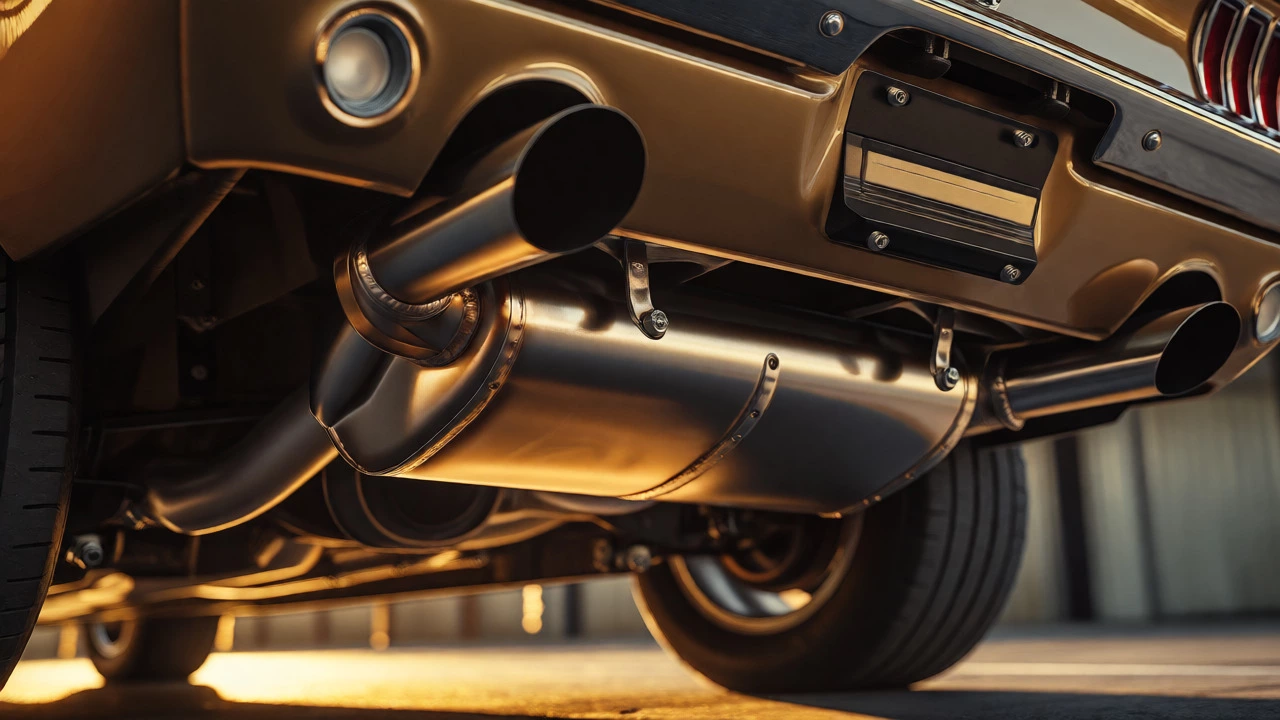
- Muffler Body Size: Larger muffler bodies (like the 4-inch round or oval) resonate at lower frequencies. The Super 40 typically comes in larger body sizes compared to the Original Series.
- Tip Style: While tips don’t change the tone much, a rolled tip can reduce turbulence noise at the exit, keeping the sound clean rather than hissy.
I once installed a Super 40 on a friend’s Mustang GT with only 2.25-inch pipes. It sounded like a lawnmower. We swapped the mid-pipes to 3-inch mandrel-bent stainless steel, and suddenly, that same muffler produced a thunderous idle. The hardware matters as much as the brand name.
Dealing with Drone: The Price of Depth
Here is the catch nobody tells you about the Super 40: drone. Because it emphasizes low frequencies, those frequencies can resonate inside your cabin, especially between 2,000 and 3,000 RPM. This creates a constant hum that can make long drives annoying.
If you hate drone but want depth, consider these tweaks:
- Add Resonators: Install a small inline resonator before the muffler. This cancels out specific drone frequencies without killing the deep tone.
- Use Dual Exhaust: Running dual Super 40s instead of a single unit splits the sound waves, reducing cabin resonance significantly.
- Check Your Tailpipe Length: Longer tailpipes act as additional resonators. Cutting them short removes bass response.
For many drivers, the trade-off is worth it. You sacrifice some cabin quietness for that undeniable presence. Just be honest with yourself about whether you can handle a conversation at highway speeds.

Installation Tips for Maximum Bass
Even the best muffler sounds bad if installed poorly. Follow these steps to ensure you get the deepest sound possible:
- Hang Loose: Use rubber hangers, not metal-to-metal contact. Metal transfers vibration directly into the chassis, creating rattles and changing the tone.
- Seal Everything: Use high-quality exhaust clamps or welds. Leaks create a high-pitched hiss that ruins the deep rumble.
- Orient Correctly: Most Flowmasters have an arrow indicating flow direction. Installing it backward disrupts the internal baffle alignment, leading to poor sound quality and reduced performance.
Also, break-in time is real. New mufflers, especially those with reflective chambers, need heat cycles to settle. Drive the car hard for the first few hundred miles. The sound often deepens slightly after the carbon deposits build up inside the chambers.
Final Verdict: Go Super 40 for Depth
If your goal is purely the deepest sound, buy the Flowmaster Super 40 Series. It offers the best balance of aggressive volume and low-frequency resonance. Pair it with wider piping (3-inch+) and ensure your engine has enough displacement (V8 or large V6) to fill the chambers. Avoid the Super 70 unless you are racing, and skip the Original Series if you want anything beyond a whisper.
Remember, sound is subjective. What sounds "deep" to one person might sound "boomy" to another. Visit a local shop that installs Flowmasters and ask to hear different setups on similar vehicles. Your ears are the final judge.
Is Flowmaster Super 40 louder than Super 50?
Yes, generally speaking, the Super 40 is louder and has a more aggressive tone than the Super 50. The Super 40 was designed to replace the Super 50 with a focus on higher volume and a deeper, rasier note, whereas the Super 50 offers a smoother, more classic muscle car rumble.
Will Flowmaster Super 40 cause drone in my car?
The Super 40 is known for producing some cabin drone, particularly in the 2,000-3,000 RPM range. This is due to its emphasis on low-frequency sound waves. Adding inline resonators or using a dual exhaust setup can help mitigate this issue if it bothers you.
Which Flowmaster is best for a V6 engine?
For most V6 engines, the Flowmaster Super 50 Series is often recommended over the Super 40. V6 engines may not produce enough exhaust volume to fully utilize the Super 40's chambers, potentially resulting in a hollow or overly droney sound. The Super 50 provides a richer tone better suited to smaller displacements.
Does the shape of the muffler affect the sound?
Yes, the physical size and shape of the muffler body impact the tone. Larger bodies tend to resonate at lower frequencies, producing a deeper sound. Round bodies often provide a slightly different tonal character compared to oval bodies, though the internal baffle design (like the Super 40 vs. Super 50) plays a much larger role in defining the core sound.
Can I mix Flowmaster series in my exhaust system?
You can, but it is rarely necessary or beneficial. Most systems use a single pair of mufflers. Mixing series (e.g., Super 40 with Super 50) is uncommon because the differing internal pressures and flow characteristics can create unpredictable tone results and potential drone issues. Stick to matching pairs for consistent performance.