
Spark Plug Health & Replacement Estimator
Enter your vehicle details and select any observed symptoms to receive a maintenance recommendation.
- Inspect electrode gap if comfortable doing so.
- Check for oil fouling or carbon buildup.
- Replace in sets (all cylinders) if changing one.
You’re cruising down the M60, and suddenly your car feels like it’s coughing. The acceleration is sluggish, the idle is rough, or maybe you just noticed your fuel bill creeping up. Before you panic about a blown head gasket or a failing catalytic converter, look at one of the simplest, cheapest components in your engine: the spark plug. It’s a small metal component that delivers electricity to ignite the air-fuel mixture in your engine’s cylinders. When these tiny parts wear out, they don’t usually fail completely all at once; instead, they degrade slowly, causing symptoms that many drivers ignore until the damage gets expensive.
Knowing how to spot the early warning signs can save you hundreds in repair bills. You don’t need to be a mechanic to check this. With a bit of observation and some basic tools, you can diagnose whether your plugs are on their last legs. Here is exactly what to look for, how to check them, and when to replace them.
The Key Symptoms of Worn Spark Plugs
Your car will often tell you something is wrong before the engine light even flashes. The most common sign is an engine misfire. This happens when the spark plug fails to ignite the fuel in one or more cylinders. You’ll feel this as a jerking motion during acceleration or a shuddering sensation while idling at traffic lights. If the car shakes noticeably when stopped, but smooths out when you press the gas, worn plugs are a prime suspect.
Another major indicator is poor fuel economy. A weak spark means incomplete combustion. Your engine burns less efficiently, forcing you to use more petrol to go the same distance. If you’ve filled up recently and your miles per gallon (MPG) has dropped by 10% or more without any change in driving habits, inspect the ignition system. Inefficient burning also leads to unburnt fuel entering the exhaust system, which can overheat and destroy your catalytic converter, a part that costs significantly more than a set of plugs.
- Rough Idling: The engine sounds uneven or vibrates excessively when stationary.
- Hard Starting: The starter motor cranks, but the engine takes several seconds to catch.
- Lack of Acceleration: The car feels hesitant or struggles to climb hills.
- Check Engine Light: Modern cars detect misfires instantly. Codes P0300 through P0308 usually point directly to cylinder-specific ignition issues.
Visual Inspection: What Healthy vs. Dead Plugs Look Like
If you’re comfortable popping the bonnet, a visual check gives you definitive answers. You don’t always need to remove the plugs to see obvious problems, though removing them provides a clearer view. Look for physical damage on the ceramic insulator. Cracks or chips here allow electricity to arc to the ground prematurely, bypassing the electrode gap. This causes a weak spark that won’t ignite the fuel properly.
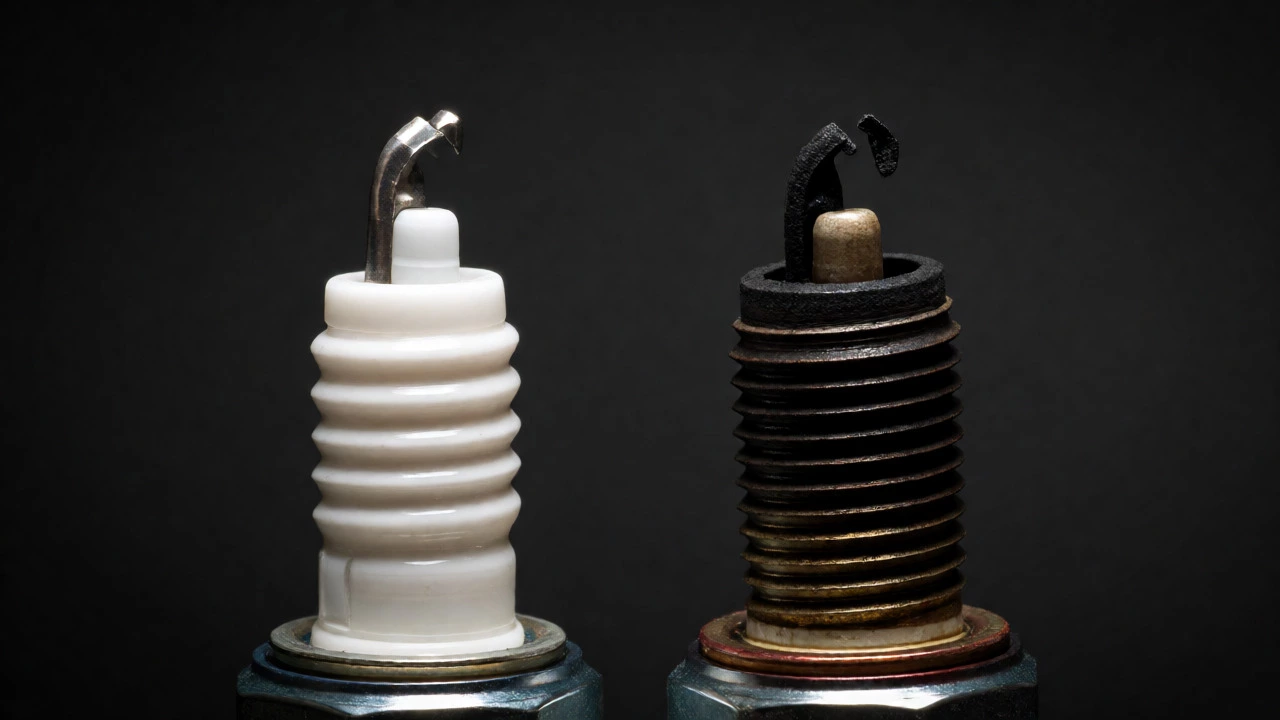
The condition of the electrode tip tells you a lot about your engine’s health. A healthy plug should have a light tan or greyish colour on the insulator nose. This indicates the engine is running correctly with the right air-fuel ratio. If you see black, dry soot, your engine is running rich-meaning too much fuel or not enough air. This could be due to a faulty sensor, but it also coats the plug, preventing proper sparking. Conversely, white or blistered electrodes suggest overheating, possibly from incorrect heat range plugs or pre-ignition.
| Appearance | Likely Cause | Action Required |
|---|---|---|
| Light Tan/Grey | Normal operation | No action needed; clean if necessary. |
| Black Dry Soot | Rich mixture / Short trips | Check air filter, O2 sensors; replace plugs. |
| Oily Black | Oil leakage | Inspect valve seals or piston rings. |
| White/Blisters | Overheating / Lean mix | Check cooling system; verify correct plug type. |
| Worn Electrode | Natural wear | Replace immediately. |
Checking the Gap and Wear Limits
Spark plugs have a specific lifespan measured in kilometres, typically between 30,000 and 100,000 km depending on the material. Copper plugs wear faster, while iridium or platinum plugs last longer. Over time, the electrode erodes, widening the gap between the centre and ground electrodes. A wider gap requires higher voltage to jump across. Eventually, your ignition coil can’t provide enough power, leading to misfires under load.
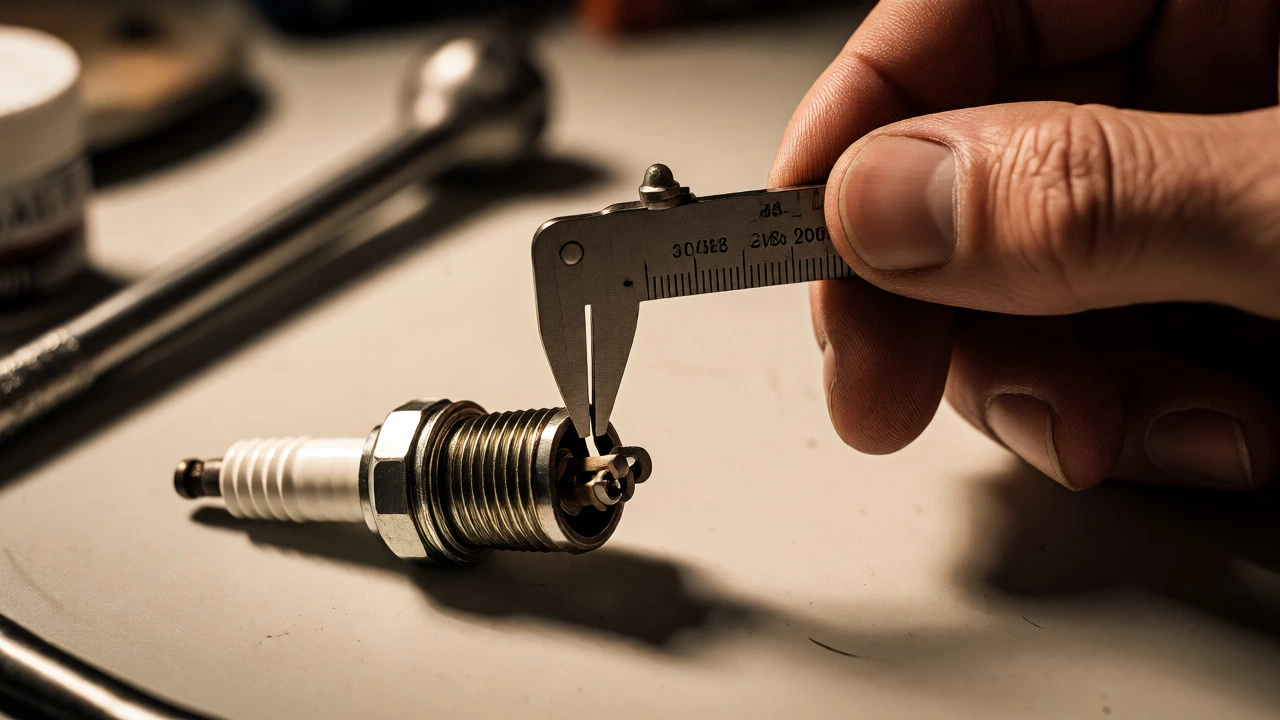
You can measure this gap with a simple feeler gauge tool, available for a few pounds at any auto shop. Consult your owner’s manual for the manufacturer’s specified gap size, often around 0.8mm to 1.1mm for modern vehicles. If the gap exceeds the maximum limit, the plug is done. Trying to bend the electrode back into shape rarely works long-term because the metal fatigues. Replace them instead.
DIY Replacement Tips and Common Pitfalls
Replacing spark plugs is one of the easiest DIY jobs. However, mistakes here can cause serious engine damage. First, ensure the engine is cold. Removing plugs from a hot aluminium head can strip the threads, turning a £50 job into a £500 repair. Use a spark plug socket with a rubber insert to grip the ceramic body gently. Standard sockets can crack the insulator.
When installing new plugs, hand-thread them first to avoid cross-threading. Once seated, tighten them with a torque wrench to the manufacturer’s specification. Over-tightening cracks the ceramic; under-tightening allows compression leaks and loosens the plug over time. Apply a thin layer of anti-seize compound only if recommended by the plug manufacturer; many modern nickel-plated plugs come pre-coated and advise against extra grease, which can alter torque readings.
| Plug Type | Typical Lifespan | Best For |
|---|---|---|
| Copper Core | 30,000 - 40,000 km | Older vehicles, high-performance engines needing frequent changes. |
| Platinum | 60,000 - 80,000 km | Modern daily drivers, balanced cost and longevity. |
| Iridium | 80,000 - 100,000+ km | Newer cars, turbocharged engines, low-maintenance preference. |
When to See a Professional
Sometimes, replacing the plugs doesn’t fix the problem. If you install new plugs and the misfire persists, the issue might lie elsewhere in the ignition system. Faulty ignition coils are a common culprit. Coils convert battery voltage into the thousands of volts needed for the spark. If a coil fails, no amount of new plugs will help. Swap the coil from the misfiring cylinder to another cylinder. If the error code moves with the coil, you’ve found the bad unit.
Also, consider professional help if you encounter seized plugs. On older cars or those with aluminium heads, corrosion can lock plugs in place. Forcing them breaks the plug inside the cylinder head, requiring specialised extraction tools. If you hear a loud "crack" while tightening, stop immediately and consult a mechanic to assess potential thread damage.
Frequently Asked Questions
Can I drive with a bad spark plug?
You can drive short distances, but it’s risky. A single bad plug reduces power and increases emissions. Driving aggressively with a misfire can dump raw fuel into the exhaust, destroying the catalytic converter. Limit speed and RPMs until you can replace the plug.
Do I need to replace all spark plugs at once?
Yes, always replace them in sets. Mixing old and new plugs creates inconsistent firing strength across cylinders, leading to rough running and increased strain on the ignition coils. It ensures uniform performance and saves labour costs since you’re already accessing the engine.
Why does my car smell like petrol after changing plugs?
This often indicates a loose plug or a damaged coil pack boot allowing fuel vapour to escape. Check that each plug is torqued correctly and that the rubber boots on the coil packs are sealed tightly. If the smell persists, check for fuel injector leaks nearby.
Are expensive spark plugs worth it?
For most modern cars, yes. Iridium plugs offer better conductivity and durability, reducing maintenance frequency. However, using a plug with the wrong heat range or gap specification, regardless of price, will cause performance issues. Always match the OEM specifications listed in your vehicle’s manual.
How long does it take to change spark plugs?
For a standard four-cylinder car, expect 30 to 60 minutes for a beginner. V6 or V8 engines may take longer due to tighter access spaces. Ensure you have the correct socket size (usually 16mm or 14mm) and a ratchet with an extension bar before starting.