Car Radiator Repair Decision Calculator
Enter your details below to determine if a radiator replacement makes financial sense or if you should consider selling/scraping the vehicle.
Recommendation:
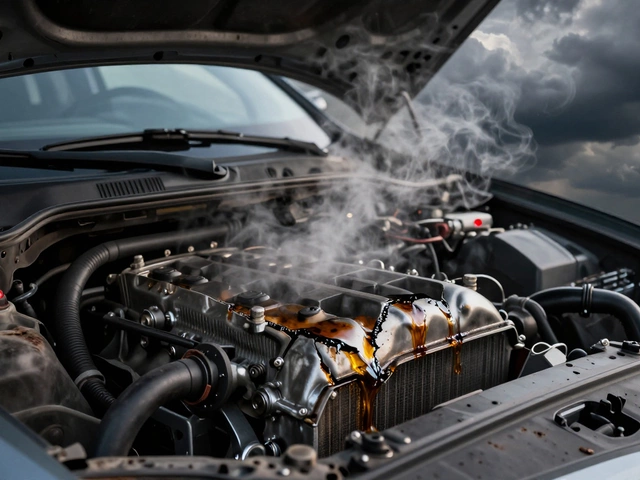
You’re driving down the M60, and suddenly the temperature gauge starts creeping into the red zone. Steam hisses from under the bonnet. You pull over, heart sinking, because you know what this likely means: your car radiator has failed or is leaking. The immediate question isn’t just "how do I fix it?" but "is it worth fixing at all?" With used car prices fluctuating and repair bills rising, many drivers face a tough decision: sink £300-£800 into a new radiator, or put that money toward a newer vehicle?
The answer depends entirely on the specific context of your car’s health. It’s not a black-and-white rule. For some cars, replacing the radiator is a bargain that buys another five years of reliable motoring. For others, it’s throwing good money after bad. Let’s break down exactly how to decide, without the jargon, using real-world numbers and scenarios relevant to UK drivers in late 2026.
When Replacing the Radiator Makes Perfect Sense
If your car is mechanically sound apart from the cooling system, keep it. Here’s why. The radiator is a critical component of the vehicle's cooling system, responsible for dissipating heat from the engine coolant. If the rest of the drivetrain-engine, gearbox, suspension-is healthy, a radiator swap is often the last major hurdle before long-term reliability.
- The Car is Under 10 Years Old: Modern engines are designed to last well beyond 150,000 miles if maintained. If your 2018 Ford Focus has a cracked plastic tank but a smooth-running 1.0 EcoBoost engine, replacing the radiator (approx. £400-£600 installed) is far cheaper than buying a comparable used car (£8,000+).
- No Other Major Faults: Check the service history. If there are no signs of head gasket failure, transmission slipping, or rusted subframes, the radiator issue is isolated.
- Sentimental or Practical Value: Maybe it’s a family car with perfect seats, or a classic with original parts. Sometimes, keeping a known-good vehicle beats the risk of buying an unknown one.
In these cases, the return on investment is high. You’re paying for peace of mind and avoiding the hidden costs of switching vehicles, such as road tax changes, insurance adjustments, and potential immediate repairs on the new purchase.
When It’s Better to Sell or Scrap
Conversely, there are times when spending £500 on a radiator is financially illogical. This usually happens when the radiator failure is a symptom of broader neglect or age-related decay.
- High Mileage with Multiple Issues: If your 2010 VW Golf has 140,000 miles, a blown radiator, worn brake discs, and a noisy wheel bearing, the cumulative repair cost could exceed the car’s market value.
- Rust Damage: In the UK, salted roads cause significant corrosion. If the radiator mounts or the chassis rails near the radiator support are heavily rusted, fitting a new radiator might be futile. The structural integrity is compromised.
- Low Market Value Cars: For a car valued at £1,500, a £600 repair bill represents 40% of its total worth. Statistically, you’ll lose more money in depreciation during the repair process than you’d save by keeping it.
A quick calculation helps here. Take your car’s current trade-in value. Subtract the estimated repair cost. If the result is negative or negligible, consider selling it as-is. Many buyers or scrap services will take a non-runner or a car with a minor mechanical fault for cash, saving you the hassle and expense.
Understanding the True Cost of Replacement
Drivers often underestimate the full cost of a radiator replacement. It’s not just the part price. Labour rates in Manchester and across the UK have risen. Here’s a realistic breakdown for a standard mid-size saloon like a Vauxhall Astra or Nissan Qashqai in 2026.
| Cost Component | DIY Estimate | Independent Garage | Main Dealer |
|---|---|---|---|
| OEM Part Price | £150 - £350 | £180 - £400 | £250 - £500+ |
| Labor Hours | N/A | 2.5 - 4 hours | 3 - 5 hours |
| Labor Rate (per hour) | N/A | £60 - £90 | £100 - £140 |
| Coolant & Consumables | £20 - £40 | £30 - £50 | £40 - £70 |
| Total Estimated Cost | £170 - £390 | £350 - £750 | £600 - £1,200+ |
Note that complex modern cars, especially those with turbocharged engines or electric auxiliary water pumps, can push labour times higher. Some radiators are buried behind crash structures, requiring bumper removal and extensive disassembly. Always get a written quote that specifies whether other components (like fan motors or thermostats) need replacing simultaneously.
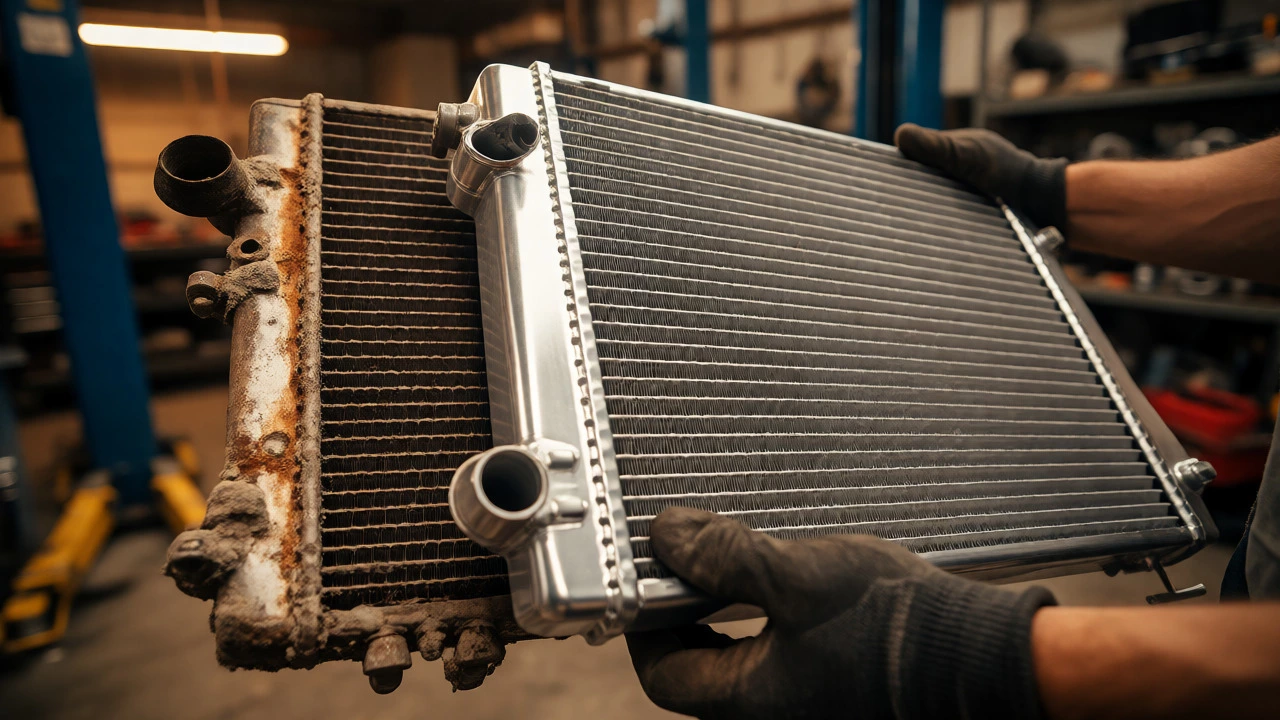
Signs That Confirm the Radiator is the Culprit
Before you spend any money, confirm the diagnosis. Overheating can stem from several sources. Misdiagnosing the problem leads to unnecessary expenses. Look for these specific indicators of radiator failure.
- Visible Leaks: Check for green, pink, or orange fluid puddles under the front of the car. Inspect the radiator core for wet spots or crusty residue around the seams.
- Discoloured Coolant: Open the expansion tank cap (when cold!). If the coolant looks muddy, oily, or rusty, internal corrosion is occurring. This damages the radiator fins and reduces efficiency.
- Bent Fins: From the front grille, look at the radiator fins. If they are flattened or blocked with bugs/debris, airflow is restricted. While cleaning helps, severe damage requires replacement.
- Heater Malfunction: If your cabin heater blows cold air despite the engine being hot, air may be trapped in the system due to a leak, or the coolant level is too low to circulate through the heater matrix.
If the thermostat or water pump is at fault, the repair cost is significantly lower (£150-£300). Don’t replace the radiator unless you’ve ruled out these cheaper fixes. A pressure test by a mechanic is the definitive way to identify leaks.
The Hidden Risks of Ignoring a Bad Radiator
Some drivers try to "make do" with topping up coolant weekly. This is risky. A small leak becomes a burst hose. A clogged radiator causes hotspots. The ultimate consequence is engine seizure.
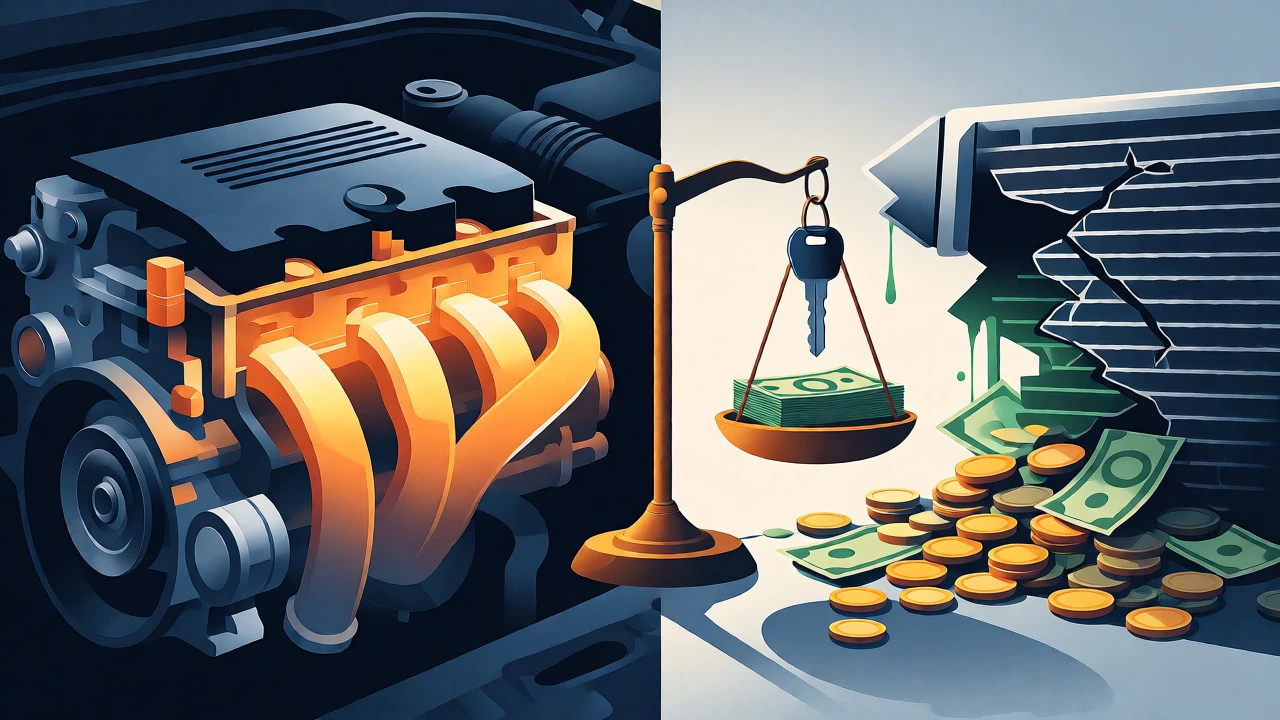
When an engine overheats, metal expands beyond tolerances. Piston rings fail, bearings weld themselves to crankshafts, and head gaskets blow. Repairing a blown head gasket costs £1,000-£2,000. Rebuilding a seized engine can cost £3,000+. Essentially, a £500 radiator replacement protects a £3,000+ asset. If your car has any remaining life expectancy, ignoring the radiator is gambling with thousands of pounds.
Alternatives to Full Replacement
Is there a middle ground? Sometimes, yes.
- Radiator Flush: If the radiator is clogged internally but not leaking, a chemical flush might restore flow. Cost: £50-£100. Success rate varies; it won’t fix physical cracks or corrosion holes.
- Stop-Leak Additives: Products like K-Seal can seal tiny pinhole leaks temporarily. They are a band-aid, not a cure. Use them only if you’re planning to sell the car soon or need to drive home safely. They can clog heater cores if overused.
- Used Radiators: Buying a second-hand radiator from a breaker yard saves 50-70% on parts. Risk: You inherit someone else’s mileage and potential hidden leaks. Ensure the seller offers a short warranty (e.g., 30 days).
For most daily drivers, a new aftermarket or OEM-equivalent radiator is the safest bet. Brands like Nissens, Valeo, and Denso offer high-quality parts that match original specifications without the dealer markup.
Making the Final Decision: A Checklist
Use this simple logic tree to decide right now:
- Check Car Value: Is the car worth more than 3x the repair cost? (e.g., Repair = £500, Car Value > £1,500). If yes, lean towards repair.
- Check Engine Health: Does it run smoothly? No smoke, no knocking, no oil in coolant? If yes, lean towards repair.
- Check Bodywork: Is there heavy rust around the radiator support? If yes, lean towards scrap/sell.
- Check Budget: Can you afford the repair without financial stress? If no, selling as-is might be less painful.
If you decide to replace it, don’t skimp on quality. A cheap £80 radiator from an obscure brand might fail in six months, costing you double in labour. Pay for reliability.
How much does it cost to replace a car radiator in the UK?
The average cost ranges from £350 to £800 at an independent garage. Main dealers charge more, potentially exceeding £1,000. DIY costs are lower (£150-£400) but require tools and time. Prices vary by car model complexity and part availability.
Can I drive my car with a leaking radiator?
Only for very short distances while monitoring the temperature gauge constantly. Even a small leak can lead to rapid overheating. Driving further risks catastrophic engine damage, turning a £500 repair into a £3,000+ disaster.
Are aftermarket radiators reliable?
Yes, reputable aftermarket brands like Nissens, Valeo, and Hella meet or exceed OEM standards. Avoid unbranded, ultra-cheap imports which may use inferior aluminium or poor soldering joints.
Does replacing a radiator increase car value?
It restores value rather than increasing it above market rate. A car with a fresh radiator sells faster and commands a fairer price than one flagged as "overheating," but you rarely recoup the full repair cost in resale value alone.
How long do car radiators last?
Typically 8-10 years or 100,000-150,000 miles. Plastic tanks become brittle with age and heat cycles, leading to cracks. Regular coolant changes extend lifespan by preventing internal corrosion.