Engine Oil Overfill Risk Calculator
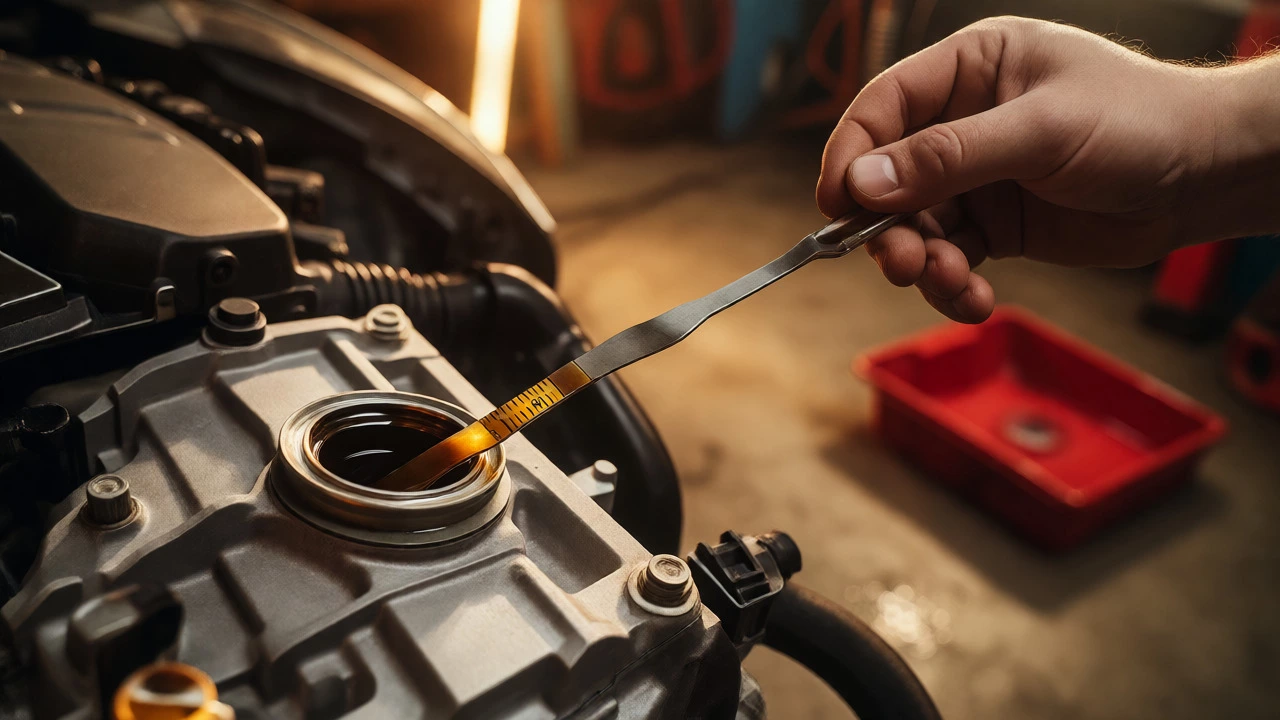
Measure how far above the "Max" or "Full" line the oil sits on your dipstick. If you don't have a ruler, estimate in millimeters (mm).
You’ve just finished your DIY oil change at the garage in Manchester. You wipe the dipstick, check the level, and see that little blob of oil sitting a few millimetres above the "Max" line. Your stomach drops. Did you just ruin your engine? Should you drain it immediately, or is this a minor hiccup you can ignore until next service?
Here’s the blunt truth: slightly overfilled engine oil is rarely catastrophic, but it isn’t entirely harmless either. It depends on how much you overfilled it and what kind of engine you drive. Modern engines are tighter and more sensitive than older ones, so the margin for error has shrunk. Let’s break down exactly when you need to panic and when you can relax.
What Counts as "Slightly" Overfilled?
Before we talk about damage, we need to define the problem. Mechanics generally categorize overfills into three buckets:
- Negligible (1-3 mm above Max): This is often due to residual oil left in the filter housing or slight variations in dipstick angle. Most manufacturers consider this within tolerance.
- Moderate (5-10 mm above Max): This is where things get risky. The crankshaft might start making contact with the oil surface during high-RPM operation.
- Severe (1 cm+ above Max): This is dangerous. You risk hydro-locking cylinders or blowing out seals.
If your dipstick shows oil just touching the top edge of the "Full" mark or slightly above it, you are likely in the negligible zone. If there’s a visible gap between the oil level and the bottom of the cap threads, you’re safe. But if the oil looks like it’s overflowing into the tube, you have a problem.
The Physics: Why Too Much Oil Hurts
Engines aren’t designed to hold extra oil; they’re designed to hold a specific volume that ensures proper lubrication without excess resistance. When you add too much, two main issues arise: aeration and pressure spikes.
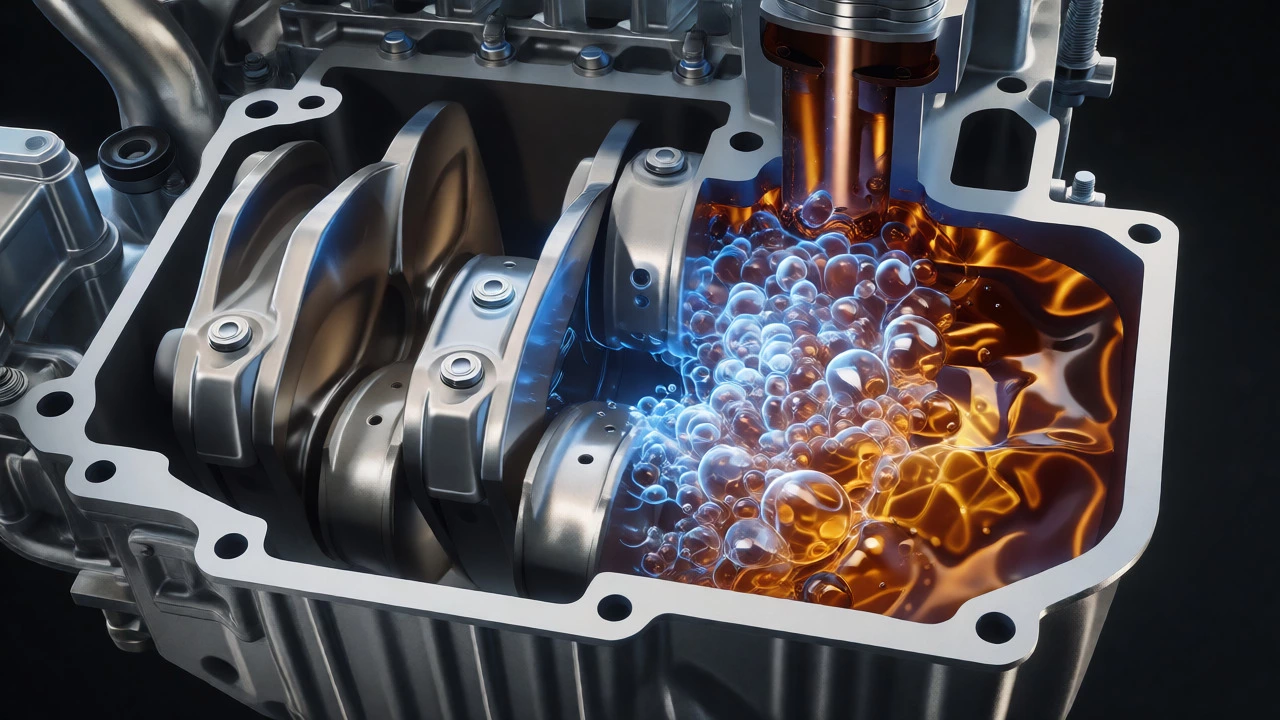
First, let’s talk about aeration, also known as foaming. Your engine’s crankshaft spins at thousands of revolutions per minute. If the oil level is high enough, the counterweights on the crankshaft hit the oil pan’s surface. This whips air into the oil, turning it into a frothy mousse rather than a smooth liquid. Air is compressible; oil is not. If your oil pump sucks up foam instead of liquid, it cannot build proper hydraulic pressure. This leads to poor lubrication of critical components like camshafts and bearings, causing wear even if the dashboard doesn’t light up immediately.
Second, there’s the issue of crankcase pressure. Engines use a Positive Crankcase Ventilation (PCV) system to vent gases. Excess oil restricts the space available for these gases to expand, raising internal pressure. This pressure seeks an escape route, usually through the weakest points: your oil seals and gaskets. A blown rear main seal or leaking valve cover gasket is a common, expensive consequence of chronic overfilling.
Symptoms You Might Notice
Often, a slight overfill produces no immediate symptoms. The car drives fine, sounds normal, and starts easily. However, keep an eye out for these red flags:
- Oil leaks: Look under the car after parking. New wet spots around the oil pan or transmission bell housing suggest pressure is forcing oil past seals.
- Rough idling or stalling: If excess oil gets sucked into the intake manifold via the PCV valve, it fouls the spark plugs. This causes misfires, especially when cold.
- Blue smoke from exhaust: Burning oil creates distinct blue-grey smoke. If you see this after a recent service, suspect overfilling.
- Check Engine Light: While rare for simple overfills, severe cases can trigger sensors related to oxygen levels or misfires.
In my experience working on cars here in the UK, many drivers don’t notice anything wrong until their next service reveals sludge buildup or minor seal degradation. That’s why checking your own oil is vital-you catch the mistake before it becomes a repair bill.
How to Fix It Safely
Don’t rush to drain the whole sump. You only need to remove the excess. Here are two methods, ranked by ease and cleanliness.
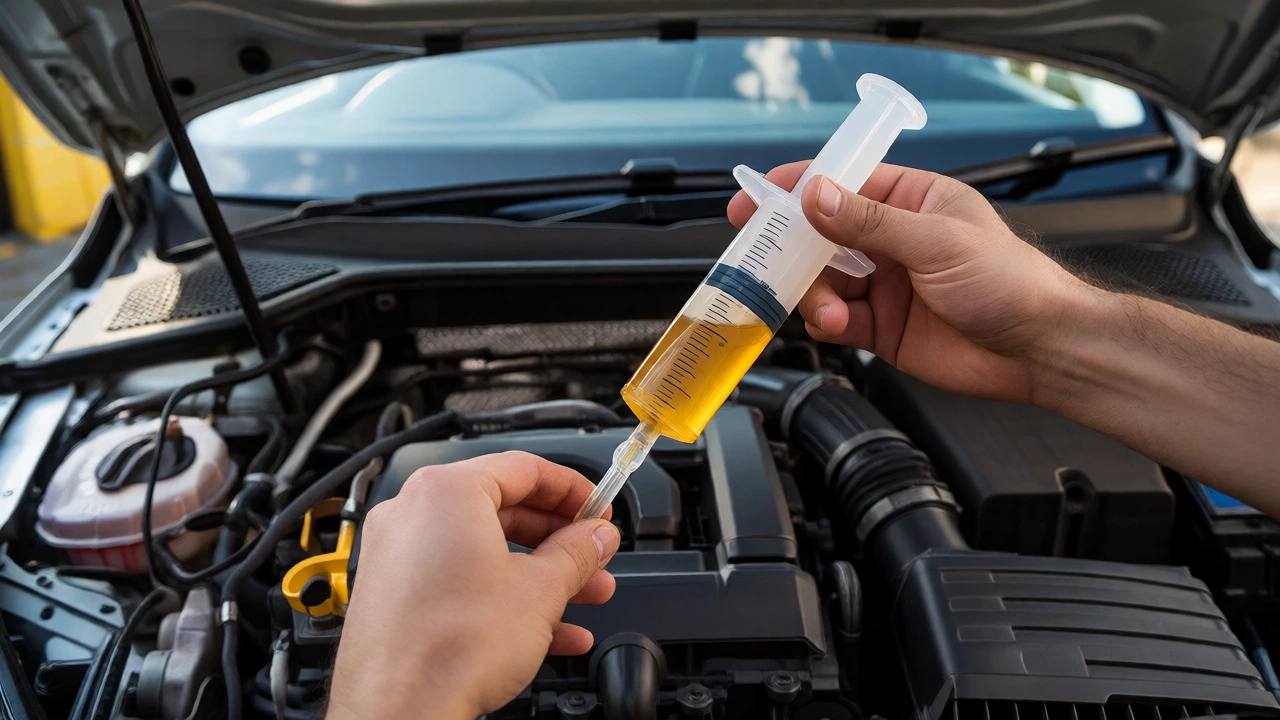
Method 1: The Syringe Trick (Best for Small Overfills)
This is the cleanest way to remove a small amount of oil without getting under the car.
- Buy a large plastic syringe (60ml or larger) from a pharmacy and a length of clear vinyl tubing (about 4mm diameter).
- Insert the tubing into the dipstick tube. Push it down gently until it hits the bottom of the oil pan. You’ll feel resistance.
- Pull back on the syringe plunger. You should see oil flow into the tube.
- Withdraw the tubing, empty the syringe, and repeat until the level drops to the correct mark.
- Re-check the dipstick after letting the car sit for five minutes.
This method works best for removing 100-300ml of oil. It takes patience but saves you from crawling under the car.
Method 2: The Drain Plug Loosen (Best for Larger Overfills)
If you’re significantly overfilled, draining some oil is faster.
- Warm the engine slightly (not hot, just warm) so the oil flows easily.
- Place a drain pan under the oil pan.
- Loosen the drain plug just enough to allow a slow drip. Do not remove it completely.
- Watch the flow closely. As soon as the oil slows to a trickle, tighten the plug back up.
- Clean the area and re-check the dipstick.
Be careful here. It’s easy to overshoot and end up underfilled. Go slow.
| Overfill Amount | Risk Level | Recommended Action |
|---|---|---|
| < 3mm above Max | Low | Monitor. No action needed unless symptoms appear. |
| 3-8mm above Max | Moderate | Remove excess via syringe within 1-2 weeks. |
| > 8mm above Max | High | Drain excess immediately. Check for leaks. |
Modern Engines Are Less Forgiving
Why does everyone seem worried now when old cars ran with half-full sumps? Modern engines, particularly those with variable valve timing (VVT) and direct injection, operate with tighter tolerances. They rely on precise oil pressure to adjust cam phasing. Foamy oil disrupts this hydraulic control, leading to sluggish acceleration or rough running.
Additionally, many modern cars use long-life oils (like 0W-20 or 5W-30 synthetic blends). These thinner oils foam more easily than the thicker 20W-50 mineral oils used decades ago. So, while your grandfather’s Ford Escort might have tolerated a quart of extra oil, your current VW Golf or BMW 3 Series will not.
Preventing Future Mistakes
The easiest fix is prevention. Here’s how to avoid overfilling next time:
- Add less, then top up: If your manual says 4.5 litres, pour in 4.0 litres first. Wait five minutes for the oil to settle in the pan, then check the dipstick. Add the remaining 0.5 litres slowly.
- Use the right dipstick technique: Ensure the car is on level ground. Pull the dipstick, wipe it clean, reinsert fully, and pull again. Angled readings are inaccurate.
- Account for the filter: Some filters hold significant oil. Pre-fill them if recommended, but remember that dry filters absorb oil initially, which can give a false low reading right after starting.
Taking an extra ten minutes to check properly saves you hours of worry later. And remember, if you’re ever unsure, a quick visit to a local mechanic for a visual check costs pennies compared to a new engine seal.
Can I drive with slightly overfilled oil?
Yes, for short distances. If the oil is only a few millimetres above the maximum line, driving normally is usually fine. Avoid high-revving driving or towing heavy loads until you can correct the level. If the oil is significantly higher, limit driving to prevent seal damage.
Will overfilled oil cause my car to fail its MOT?
Not directly. The MOT checks for excessive emissions and major leaks. Unless the overfill has caused a significant leak that drips onto the exhaust or road, it won't fail the test. However, blue smoke from burning excess oil could lead to an emission failure.
How do I know if my engine is damaged from overfilling?
Look for persistent oil leaks, rough idling, or blue smoke. In severe cases, you might hear knocking noises due to lack of lubrication from aerated oil. If correcting the oil level stops the symptoms, permanent damage is unlikely. If problems persist, have a mechanic inspect the seals and spark plugs.
Does synthetic oil make overfilling worse?
Synthetic oils are generally thinner and have different friction modifiers, which can make them prone to foaming if agitated by the crankshaft. Therefore, maintaining the exact correct level is arguably more important with modern synthetics than with older, thicker mineral oils.
Should I drain all the oil if I overfill it?
No, that wastes money and time. Only remove the excess amount. Using a syringe through the dipstick tube is the most efficient way to extract just the right amount without disturbing the rest of the oil supply.