If your car sputters on the highway, struggles to climb hills, or suddenly refuses to start after sitting for a few minutes, you might be dealing with a fuel pump that’s on its last legs. It’s not always loud or obvious - but the signs are there if you know what to look for. A failing fuel pump doesn’t just stop working all at once. It fades out slowly, like a battery losing its charge. And if you miss the early warnings, you could end up stranded with no warning at all.
Engine Sputtering at High Speeds
This is one of the most common early signs. You’re cruising at 60 mph on the motorway, everything’s smooth - then the engine starts to hiccup. It feels like the car is skipping beats. You press the gas harder, and it hesitates. This isn’t a spark plug issue or a dirty air filter. It’s the fuel pump struggling to keep up with demand. At higher speeds, the engine needs more fuel. A weak pump can’t deliver enough pressure, so the engine gets starved. It’s not a one-time glitch. It happens repeatedly, especially after the engine has warmed up.
Difficulty Starting the Car
Turn the key and hear a long, slow cranking sound before the engine finally catches? Or worse - it turns over but won’t start at all? That’s not always the battery. If you’ve ruled out a dead battery and clean spark plugs, the fuel pump could be the culprit. A healthy fuel pump builds pressure instantly when you turn the ignition. A failing one takes longer - sometimes several tries - to build enough pressure to deliver fuel to the injectors. You might notice this more in the morning or after the car’s been sitting for a few hours. It’s not a slow crank from the starter. It’s a silent pause where the fuel system is catching up.
Loss of Power Under Load
Ever been on a steep hill, foot on the gas, and the car just doesn’t respond like it should? Or when you’re towing a trailer and the engine feels like it’s running out of breath? That’s not just the engine being overworked. It’s the fuel pump failing under pressure. Fuel pumps are designed to handle the extra demand when you’re accelerating hard or climbing. When they wear out, they can’t maintain the required pressure. The result? Power drops off right when you need it most. This isn’t a transmission issue. It’s the fuel supply cutting out under stress.
Loud Whining Noise from the Fuel Tank
Most people don’t notice this until it’s loud enough to be annoying. If you hear a high-pitched whining or buzzing coming from the back of the car - especially when the engine is running - it’s likely the fuel pump. A healthy pump makes a quiet hum, almost like a refrigerator. A failing one sounds like a small electric motor struggling. The noise gets louder as the pump wears down. It’s not the fuel level sensor or the tank itself. It’s the motor inside the pump grinding or running inefficiently. If you hear this, don’t wait. The pump could die completely within days or weeks.
Engine Stalling at Idle or During Stops
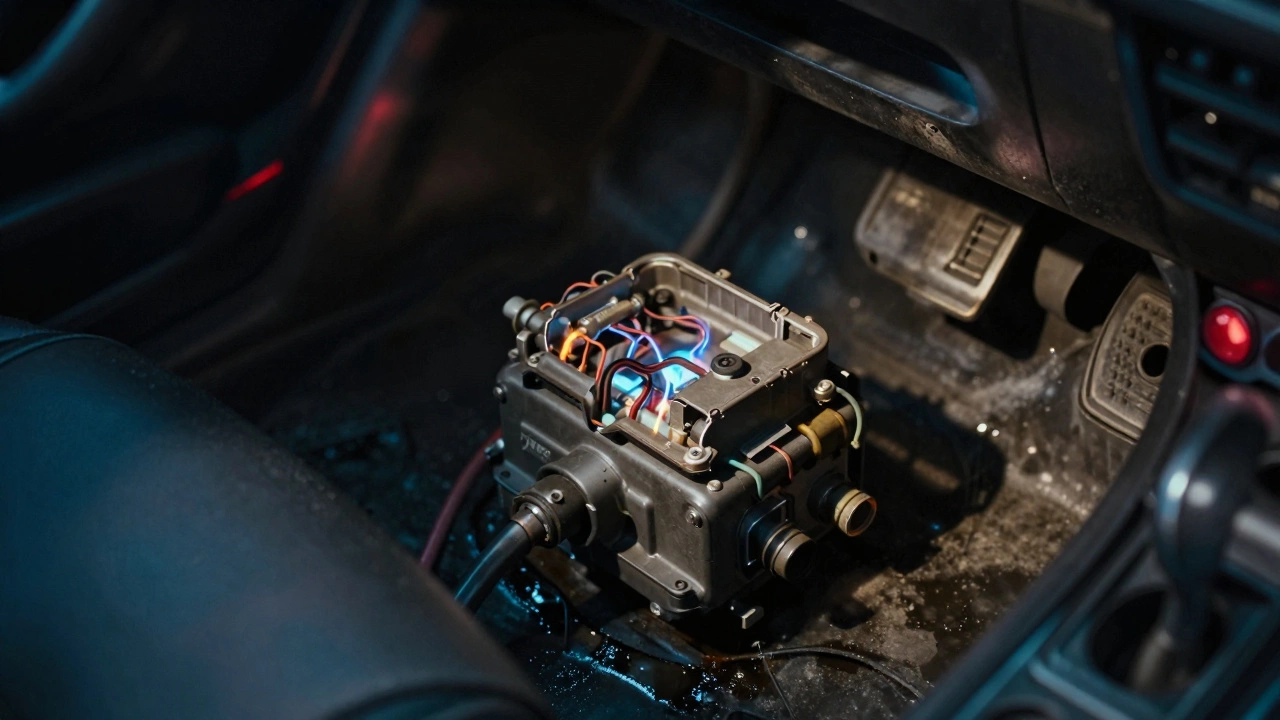
You’re at a red light, foot on the brake, engine idling - then it dies. You restart it, and it runs fine for a few minutes. Then it happens again. This isn’t a dirty throttle body or a bad idle air control valve. It’s the fuel pump failing to maintain steady pressure when the engine is under low load. At idle, fuel demand is low, but the pump still needs to deliver consistent pressure. A weak pump can’t regulate that. It drops pressure too low, and the engine stalls. It often happens in traffic or when you’re stopped for more than a minute. If it’s happening regularly, the pump is the most likely cause.
Car Won’t Start After It Gets Hot
This one catches a lot of people off guard. You drive for 20 minutes, park, run into a shop, and come back out. The car won’t start. You wait 15 minutes, and suddenly it starts right up. What’s going on? Heat. Fuel pumps are sensitive to temperature. When they’re failing, heat builds up inside the tank and causes the pump to overheat and shut down temporarily. Once it cools off, it works again. This isn’t vapor lock - that’s an old problem from carbureted engines. Modern fuel-injected cars don’t get vapor lock. But they do get heat-related pump failure. If your car starts fine when cold but refuses to restart after being driven, the fuel pump is the prime suspect.
Check Engine Light with No Clear Code
Some people ignore the check engine light because they don’t see a code like P0300 or P0420. But a failing fuel pump can trigger vague codes like P0191 (fuel rail pressure too low) or P0087 (fuel pressure too low). These codes mean the engine control unit detected fuel pressure dropping below acceptable levels. It’s not a sensor issue - the sensor is working fine. It’s the pump not delivering what it should. If you get one of these codes and you’ve checked the fuel filter and fuel lines, the pump is next. Don’t just clear the code and drive. The problem will come back - and it’ll get worse.
Lower Fuel Economy
You’ve noticed your tank is emptying faster than usual. You haven’t changed your driving habits. You’re not carrying extra weight. The tires are properly inflated. So why are you getting fewer miles per gallon? A failing fuel pump can cause the engine to run rich - meaning it’s dumping more fuel than needed to compensate for low pressure. The engine’s computer tries to make up for the lack of fuel delivery by opening the injectors longer. That wastes fuel. You’re not just losing power - you’re losing money at the pump. If your fuel economy dropped suddenly and you can’t explain why, check the fuel pump.
What Happens If You Ignore It?
Ignoring these signs doesn’t just mean you’ll get stranded. It can lead to more expensive damage. A fuel pump that’s running dry or overheating can overheat the fuel injectors. It can also cause the engine to run lean, which can damage the catalytic converter. In extreme cases, a completely dead pump can cause the engine to misfire so badly that it damages the valves or pistons. Replacing a fuel pump costs between £300 and £700 in the UK, depending on the car. Replacing a catalytic converter? That’s £1,000 to £2,500. Don’t wait until the worst happens.
How to Confirm It’s the Fuel Pump
You don’t need to guess. A mechanic can test fuel pressure with a gauge connected to the fuel rail. Normal pressure for most modern cars is between 30 and 60 psi. If it’s below 25 psi, the pump is failing. You can also listen for the pump priming when you turn the key to ‘on’ before starting the engine. You should hear a brief whirring sound for 1-2 seconds. If you don’t hear it, the pump isn’t getting power - or it’s dead. You can also check the fuse and relay first. But if those are fine and the pump is silent or noisy, it’s time to replace it.
What to Do Next
If you’re hearing any of these symptoms - especially multiple ones - don’t delay. Book a diagnostic with a trusted mechanic. Bring a list of what you’ve noticed: when it happens, how often, and under what conditions. Most garages will test fuel pressure for free or a small fee. If it’s the pump, get it replaced with a quality OEM or reputable aftermarket part. Cheap pumps fail faster. And if you’re handy, you can replace it yourself - but it’s messy. The fuel tank has to be dropped, and you’re working with pressurized fuel. Safety first. Never attempt it without proper tools and ventilation.