Brake Pad Health & Cost Estimator
Assess your brake pad condition and estimate potential repair costs based on current wear levels.
Current Condition
Analysis & Recommendations
Estimated Repair Costs (UK)
Based on typical family car parts + labour.
Ignoring early signs can double the repair cost by damaging rotors. In wet conditions like Manchester, thin pads reduce braking efficiency significantly.
You are driving down a busy Manchester street, the rain is slicking the tarmac, and you press the brake pedal. Instead of that familiar firm resistance, you hear a high-pitched squeal that makes your teeth ache. Is it just the weather? Or is your car screaming for help?
Most drivers ignore their brake pads until they fail completely. But waiting for total failure is risky. It costs more money and can damage other parts of your braking system. You need to know the signs before you end up stranded on the motorway.
| Symptom | Likely Cause | Urgency Level |
|---|---|---|
| High-pitched squealing | Wear indicator touching rotor | Moderate (Schedule soon) |
| Grinding noise | Metal-on-metal contact | High (Immediate) |
| Vibration in pedal | Warped rotors or uneven pad wear | Moderate |
| Deep clicking sound | Loose hardware or worn clips | Low-Moderate |
| Soft/spongy pedal | Air in lines or low fluid | High (Check fluid first) |
Listen to the Squeal: The Early Warning System
That annoying squeal isn't just bad luck. Modern vehicles use a small metal tab called a wear indicator a steel shim attached to the brake pad that contacts the rotor when friction material wears thin. This tab is designed to vibrate against the brake rotor at a specific frequency, creating a sound humans find irritating. It’s an intentional design flaw to save your life.
If you hear this sound only when you first start driving but it goes away after a few stops, moisture might be the culprit. Rain causes surface rust on rotors overnight. However, if the squeal persists during driving, especially when turning corners, your pads are likely below the safe threshold. In the UK, MOT testers often flag cars with audible wear indicators as a minor defect. Don't wait for them to tell you; act on it yourself.
Feel the Vibration: What Your Pedal Tells You
Braking shouldn't feel like riding a jackhammer. If you notice your steering wheel shaking or the brake pedal pulsating under your foot, something is wrong. This usually points to warped rotors. Rotors warp because of heat stress. When brake pads get too thin, they transfer excessive heat to the metal disc, causing it to bend slightly.
Here is the tricky part: replacing just the pads won't fix warped rotors. You will likely need to replace or resurface the rotors too. This doubles the cost. Catching the vibration early saves you from buying two sets of parts instead of one. Check your pedal feel every time you drive. If it feels different than usual, pay attention.
Inspect the Thickness: The Penny Test
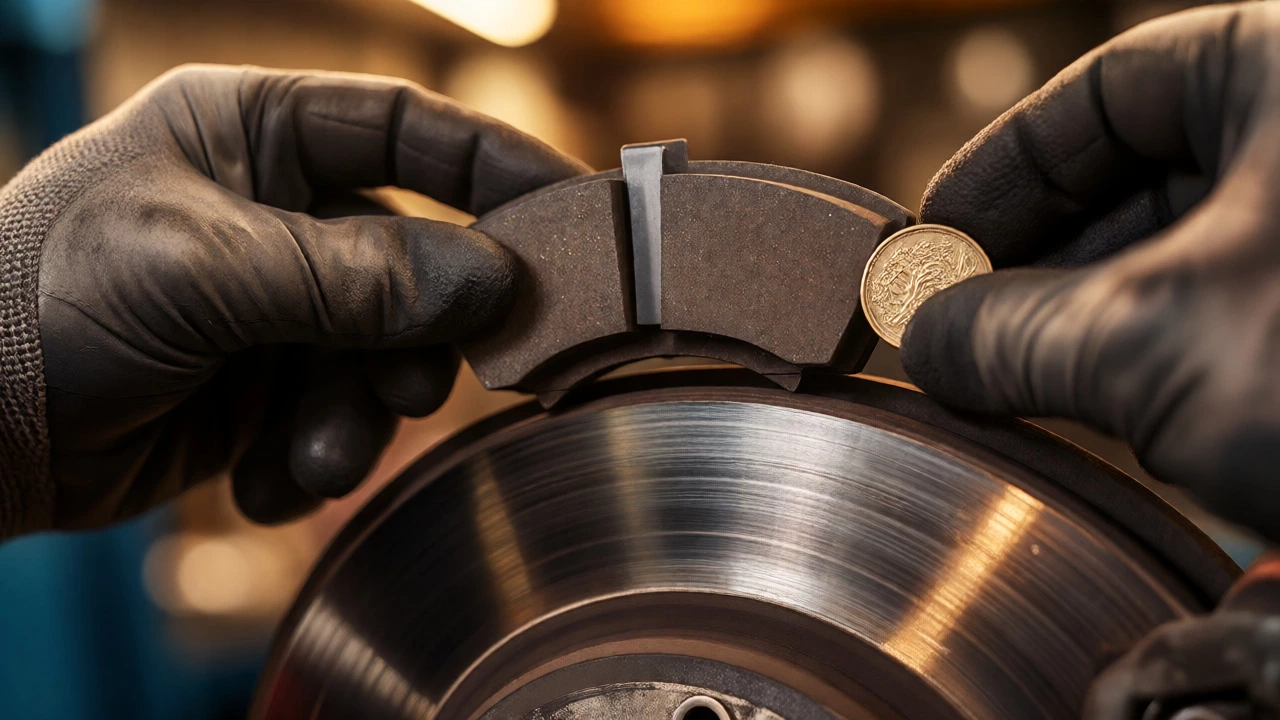
Noise is subjective. Thickness is objective. Most new brake pads come with about 10-12mm of friction material. They become unsafe when this drops below 3mm. Some manufacturers recommend replacement at 4mm to ensure consistent performance in wet conditions.
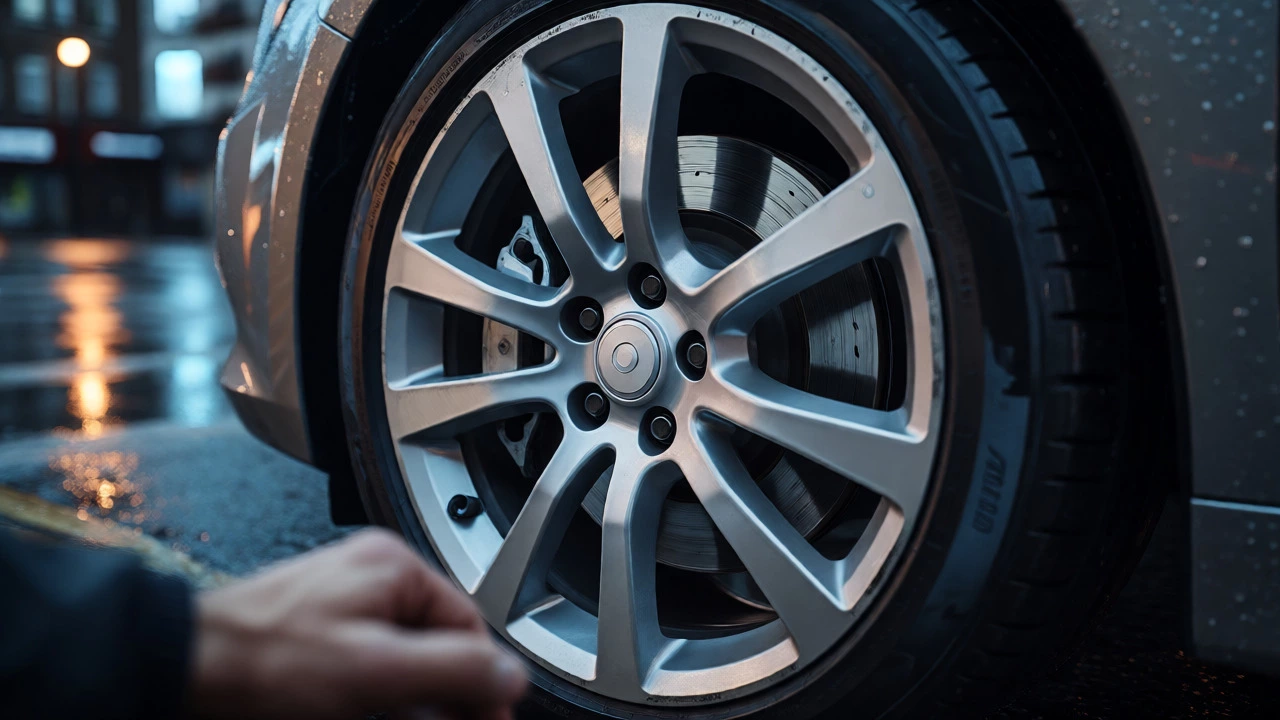
You don't always need to remove the wheel to check. Many alloy wheels have gaps wide enough to see through. Use a flashlight and look at the pad sitting against the rotor. If the friction material looks thinner than a coin, you are in danger zone territory. A standard UK £1 coin is about 3.15mm thick. If the pad looks thinner than the edge of a pound coin, book a garage appointment immediately.
- New Pad: ~10-12mm of material.
- Monitor Closely: 6-8mm remaining.
- Replace Soon: 4-5mm remaining.
- Danger Zone: Less than 3mm remaining.
Watch the Dashboard Lights
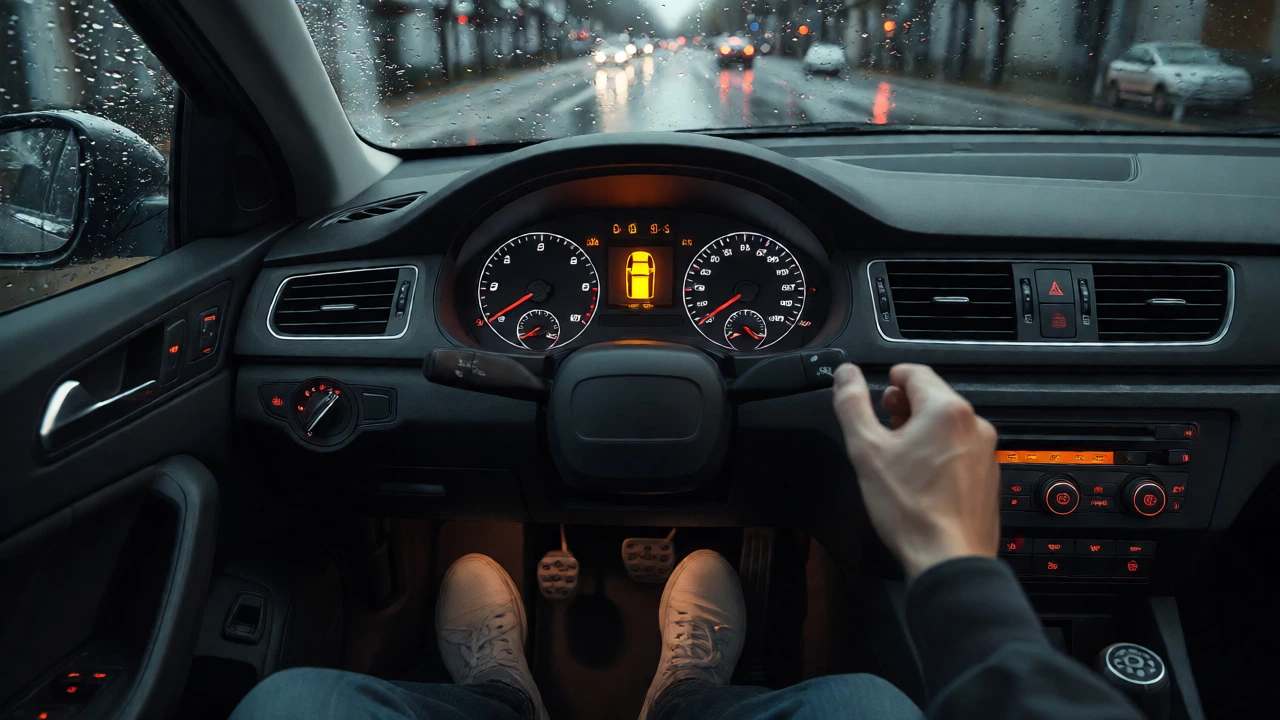
Your car has electronic sensors that monitor brake health. Two lights matter here. The red exclamation mark inside a circle usually means the handbrake is on or fluid is low. But some modern cars, like newer VWs or BMWs, have a separate yellow warning light specifically for brake pad wear. This sensor breaks when the pad gets too thin, completing a circuit that triggers the dashboard alert.
If this light comes on, do not ignore it. Unlike the mechanical squealer, the electronic sensor gives no second chance. Once it trips, the pad is effectively gone. Continuing to drive risks scoring the rotor deeply, which requires expensive replacement rather than simple machining.
Understand the Cost of Waiting
Let's talk money. A set of quality front brake pads for a common family car like a Ford Focus or Vauxhall Astra costs between £40 and £80 for parts alone. Labour adds another £50-£70. Total job? Around £100-£150.
Now, imagine you ignored the squeal. The metal backing plate grinds against the rotor. Now you need new pads AND new rotors. Rotors cost £30-£60 each. Plus, labour takes longer. Total job? £250-£350. Worse still, if the caliper piston seizes due to lack of maintenance, you might face a £400+ repair bill. Ignoring small noises is false economy.
Regional Factors: Why Manchester Driving Matters
Where you drive affects how fast your pads wear. City driving involves constant stop-start traffic. This generates less heat but more frequent application, wearing pads faster. Motorway driving allows pads to cool but uses them less frequently overall.
In the UK, we deal with wet roads year-round. Wet braking puts extra strain on pads because water reduces friction initially. High-quality semi-metallic or ceramic compounds handle this better than cheap organic pads. If you live in hilly areas, gravity does half the braking work going down, but demands full power coming up. Adjust your inspection schedule based on your daily commute habits.
Can I drive with squealing brake pads?
You can drive short distances, but it is not recommended for long periods. The squeal indicates the wear indicator is active, meaning less than 3mm of material remains. Continued driving risks damaging the brake rotor, turning a cheap pad replacement into an expensive rotor-and-pad job. Schedule a mechanic visit within a week or two.
How often should brake pads be replaced?
There is no fixed mileage. It depends on driving style, vehicle weight, and environment. Front pads typically last 25,000 to 65,000 miles. Rear pads can last twice as long. Aggressive city driving may reduce lifespan to 15,000 miles. Always inspect visually or by sound rather than relying solely on mileage estimates.
Why do my brakes grind even after new pads?
If grinding persists after replacement, the rotors were likely scored or damaged previously. New pads cannot conform to deep grooves in old rotors. Alternatively, the installation might have missed cleaning the hub surface, causing uneven seating. Return to the garage immediately; this is often covered under warranty if the job was recent.
Is it dangerous to ignore brake pad warnings?
Yes. Ignoring warnings leads to metal-on-metal contact, which drastically reduces braking efficiency. In emergency situations, stopping distance increases significantly. Extreme neglect can cause the caliper to seize or the hydraulic system to leak, potentially resulting in complete brake failure.
Do all cars have brake wear sensors?
No. Older cars rely on mechanical squealers. Many budget models still use mechanical tabs. Premium brands like Audi, BMW, and Mercedes often include electronic sensors. Check your owner's manual to see if your vehicle features an electronic brake pad wear warning light.